


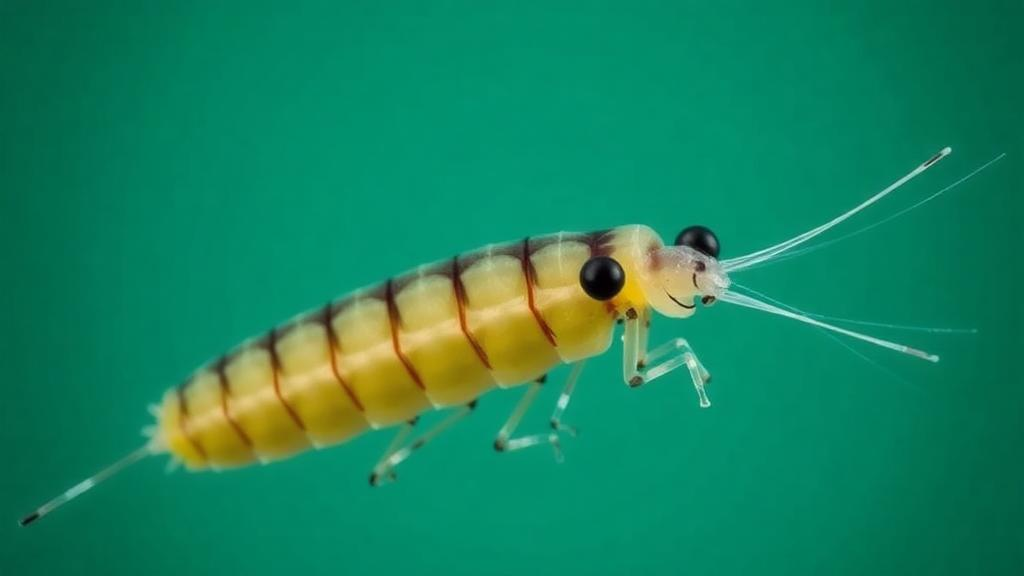
Deep beneath the surface of Iraq’s rivers, marshes, and coastal waters lives a community of tiny crustaceans so abundant and ecologically important that scientists call them the workhorses of aquatic food webs. Copepods, small planktonic relatives of crabs and shrimp, graze on algae, feed fish larvae, shuttle nutrients between freshwater and marine realms, and serve as sensitive barometers of environmental change. Yet until now, no one had ever assembled a complete, taxonomically rigorous inventory of the free-living copepods inhabiting Iraqi waters. A new study published in ZooKeys has changed that, synthesizing more than a century of scattered records into the first modern national checklist of the country’s copepod fauna.
The research team combed through published literature spanning 1921 to 2025, extracting every credible record of free-living copepods from Iraqi freshwater, estuarine, and marine habitats. Only species-level identifications with confirmed Iraqi localities and validated nomenclature were accepted. Parasitic forms, unidentifiable larval stages, and doubtful records were deliberately excluded. The result is a carefully standardized list of 51 confirmed species distributed across three major orders: Calanoida with 26 species, Cyclopoida with 20 species, and Harpacticoida with just 5 species. Each name was cross-checked against the World Register of Marine Species, updating synonyms and correcting misspellings that had accumulated in older literature.
What emerges from this synthesis is a strikingly dual fauna. Of the 51 recorded species, 22, or 43.1 percent, are associated with freshwater habitats, reflecting the strong continental character of the Tigris-Euphrates basin. The remaining 29 species, or 56.9 percent, are of marine origin, concentrated in southern Iraq where tidal intrusion from the northwestern Arabian Gulf creates extensive brackish transitional zones. Cyclopoids dominate inland rivers, marshes, and reservoirs, while calanoids include both freshwater diaptomid genera and a large contingent of estuarine and marine plankton taxa from the Gulf. Harpacticoids, which typically dwell in benthic sediments and interstitial spaces, remain markedly underrepresented, a pattern the authors attribute to undersampling rather than genuinely low diversity.
Among the most significant findings is the confirmation of Phyllodiaptomus irakiensis as Iraq’s only documented endemic copepod. Described in 2008 from the Shatt al-Arab River system in southern Iraq, this calanoid belongs to the blanci group of the genus Phyllodiaptomus, a predominantly Asian lineage. It differs from its closest relative, P. blanci, by stable diagnostic characters including the conspicuous left metasomal wing expansion in females, dorsal hyaline lobes on urosomal somites, and structurally distinct male and female fifth legs. As a Mesopotamian freshwater lineage known only from southern Iraq, P. irakiensis represents a localized evolutionary derivative of an ancestral western Asian Phyllodiaptomus population and places the country at the westernmost confirmed limit of the genus’ main Asian distribution.
Biogeographically, the checklist reveals Iraq as a remarkable crossroads where temperate Palearctic freshwater taxa coexist with tropical marine-derived species. Species such as Eudiaptomus vulgaris and Cyclops vicinus are characteristic elements of temperate Eurasian faunas, more commonly reported from cooler regions of Europe and western Asia. Their persistence in southern Mesopotamia extends the known distribution of several temperate freshwater lineages into an arid subtropical region. Metadiaptomus chevreuxi, a North African-Middle Eastern arid-zone species associated with temporary ponds, reaches its easternmost confirmed population in Iraq, linking Mesopotamian ephemeral waters to western Palearctic desert freshwater systems across a fragmented arid-belt distribution.
The study also documents an emerging anthropogenic pressure: the invasive estuarine cyclopoid Limnoithona tetraspina. Native to East Asia, this small copepod has established populations in the lower Shatt al-Arab transitional zone, almost certainly transported via ballast water from maritime shipping. Its known invasion history elsewhere includes disturbance of estuarine plankton communities, reduction of native zooplankton diversity, and shifts in food web dynamics in brackish ecosystems. Because the species was absent from earlier syntheses of the northwestern Arabian Gulf copepod fauna, its Iraqi occurrence suggests either a relatively recent arrival or previous under-detection in the region. Continued monitoring is needed to determine its current distribution and ecological effects on native estuarine communities.
Another probable non-native species, the calanoid Pseudodiaptomus marinus, has been recorded from Iraqi coastal waters. Originally native to the northwestern Pacific, this estuarine copepod has expanded its range extensively through human-mediated transport, including ballast water, ship traffic, and aquaculture. The Iraqi record, documented among coastal plankton assemblages, is noteworthy because the species’ broader distribution within the Arabian Gulf remains poorly documented. Pending additional records from neighboring Gulf countries and molecular confirmation of Gulf populations, the authors treat P. marinus as a probable non-native species in Iraqi waters, highlighting the vulnerability of the region’s transitional ecosystems to biological invasions.
The checklist also exposes substantial gaps in current knowledge. Regional comparisons show that reported species richness is strongly influenced by sampling effort and habitat coverage. A synthesis of the Turkish part of the Euphrates-Tigris River Basin recorded only 12 copepod species at the basin level, whereas Turkish inland waters as a whole support at least 141 species. Most Iraqi studies have focused on planktonic assemblages in major rivers, reservoirs, and selected marsh systems, leaving benthic sediments, littoral zones, groundwater and hyporheic systems, temporary inland waters, and offshore Gulf sectors largely unexplored. Studies from other regions consistently demonstrate that such habitats harbor a significant proportion of copepod diversity, including cryptic and endemic taxa.
Cryptic species present another challenge. Molecular and integrative taxonomic studies have shown that many widespread freshwater copepods previously regarded as single, broadly distributed species actually comprise complexes of genetically distinct lineages. Paracalanus parvus, for example, is now recognized as a complex of at least 10 to 12 distinct taxa globally, with populations formerly assigned to it reassigned to sibling species in several regions. Canthocamptus staphylinus, Iraq’s only confirmed freshwater harpacticoid, exhibits deep phylogeographic divergence among European populations based on mitochondrial COI, suggesting it may represent a cryptic species complex rather than a single homogeneous taxon. Morphology-based identifications alone may therefore underestimate regional diversity and obscure biogeographical patterns.
The authors conclude that Iraq likely supports a far more diverse copepod fauna than currently documented, and that the apparent discrepancy with neighboring regions reflects differences in research intensity rather than fundamental ecological constraints. Future progress will depend on systematic surveys across underrepresented environments, re-examination of doubtful historical records, and the application of integrative taxonomic approaches combining detailed morphology with molecular tools. Long-term monitoring across freshwater-to-marine salinity gradients will also be essential for detecting biodiversity change under increasing pressures from salinization, hydrological alteration, habitat degradation, and biological invasions, all of which are rapidly reshaping Iraq’s aquatic ecosystems. This first modern national baseline provides a critical reference framework for future ecological, taxonomic, and biogeographical studies, forming an essential foundation for biodiversity assessment, ecosystem monitoring, and conservation planning in Iraq while contributing to a broader understanding of freshwater biodiversity across the Middle East.
Subject of Research: An annotated checklist of free-living Copepoda (Crustacea) of Iraq: diversity, distribution, and biogeographical affinities
Article Title: An annotated checklist of free-living Copepoda ( Crustacea ) of Iraq: diversity, distribution, and biogeographical affinities
Article References: Naser, M., Yasser, A., Karpowicz, M., & de Los Ríos-Escalante, P. R. (2026). An annotated checklist of free-living Copepoda (Crustacea) of Iraq: diversity, distribution, and biogeographical affinities. ZooKeys, 1292, 177-225. https://doi.org/10.3897/zookeys.1292.196683
Image Credits: AI Generated
DOI: 10.3897/zookeys.1292.196683
Keywords: annotated, checklist, free-living, Copepoda, Crustacea, Iraq, diversity, distribution, biogeographical, affinities, scientific research
Cite Scienmag News
Drew Townsend. (October 17, 2026). Iraq’s Copepods Revealed: 51 Species and One Surprising Invader. Scienmag. https://scienmag.com/iraqs-copepods-revealed-51-species-and-one-surprising-invader/
Drew Townsend. "Iraq’s Copepods Revealed: 51 Species and One Surprising Invader." Scienmag, 17 October 2026, https://scienmag.com/iraqs-copepods-revealed-51-species-and-one-surprising-invader/. Accessed 17 October 2026.
Drew Townsend. "Iraq’s Copepods Revealed: 51 Species and One Surprising Invader." Scienmag. October 17, 2026. https://scienmag.com/iraqs-copepods-revealed-51-species-and-one-surprising-invader/


