


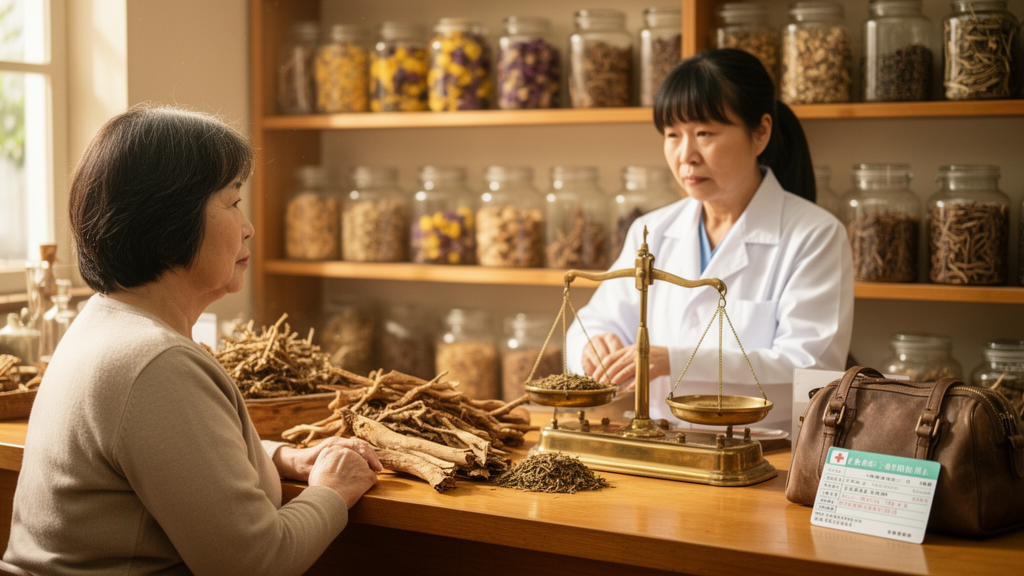
Among all cancer patients in Taiwan, those with breast cancer are the most frequent users of traditional Chinese medicine, and many of them take herbal prescriptions and receive acupuncture alongside chemotherapy, radiotherapy, and endocrine therapy rather than instead of it. A new qualitative study published in BMC Complementary Medicine and Therapies offers a rare insider view of this dual-track care model, drawing on in-depth interviews with experienced TCM physicians who treat these patients every day. The findings, from researchers at National Taiwan University’s Institute of Health Policy and Management, map out why patients seek TCM, what effects physicians believe it delivers, and where the system itself is failing the people caught between two medical traditions.
The research team, led by Kai-Wei Chen and Kuo-Piao Chung, recruited seven attending TCM physicians with up to 25 years of clinical experience. Purposive sampling identified seasoned clinicians first, and a snowball technique then extended recruitment through professional networks until data saturation was reached, meaning further interviews stopped yielding new themes. Each interview was semi-structured, recorded, transcribed verbatim, and subjected to content analysis, a method that codes narrative data into thematic categories and counts how often each category appears across participants. The study protocol was approved by the Research Ethics Committee of Taipei City Hospital and conducted in accordance with the Declaration of Helsinki, with every physician signing informed consent before interviews.
The picture that emerges begins with distress. The physicians described patients with breast cancer as often deeply troubled after receiving their diagnoses, a psychological state that shapes nearly every subsequent decision about care. In Taiwan’s health system, where TCM is licensed, insured, and delivered in dedicated hospitals and clinics, patients do not have to choose between the two medicines; they routinely use both at the same time. That simultaneity is precisely what makes the physicians’ observations valuable, because they see patients navigating conventional oncology and traditional care in parallel rather than abandoning one for the other.
Three intentions dominated the reasons patients walk through the TCM clinic door. The first is symptom relief: conventional breast cancer treatments, from chemotherapy-induced nausea and fatigue to the hot flashes and joint pain caused by endocrine therapies, generate side effects that patients hope herbal formulas and acupuncture can soften. The second is a wish to prevent tumor recurrence, an intention rooted in the TCM concept of strengthening the body’s constitution, or zheng qi, to keep disease at bay after the visible tumor has been removed. The third is recommendation, whether from Western medicine physicians who actively refer patients to TCM colleagues or from family members and friends who urge patients to seek traditional care. That physicians of both traditions refer back and forth is a striking feature of the Taiwanese model, and one that most health systems elsewhere lack entirely.
When the researchers asked what effects the physicians had observed, the answers clustered around three benefits. TCM, in the participants’ clinical experience, mitigates the side effects of breast cancer treatment, easing the toxic burden that chemotherapy, radiotherapy, and hormonal therapy place on patients. It enhances the body’s constitution in ways the physicians believe help control the tumor itself, a claim that aligns with the traditional framework of supporting the body’s resistance rather than attacking the cancer directly. And it improves overall mental well-being and quality of life, an effect that may matter as much as any physiological outcome, given the anxiety and depression that frequently accompany a cancer diagnosis and its long treatment arc.
These observations are grounded in clinical practice rather than in controlled trials, and the study is careful to present them as physicians’ perspectives rather than as proven efficacy. Qualitative work of this kind cannot establish that herbal formulas shrink tumors or extend survival, and the physicians themselves did not claim to have cured cancer with TCM. What the interviews establish is the perceived role of TCM within a functioning dual system: as a complement that patients and, notably, conventional physicians believe adds value to standard oncology care. For researchers designing clinical trials on TCM adjuncts for breast cancer, the study identifies precisely which outcomes, side-effect burden, recurrence anxiety, and quality of life, patients and clinicians care about most.
The challenges the physicians described are less about herbs and more about systems. They underscored the need for genuine integration of TCM with Western medicine, meaning coordinated care plans, shared medical records, and communication between oncologists and TCM practitioners rather than parallel treatment that neither side fully sees. Without such integration, patients bear the cognitive load of reconciling two treatment narratives, and clinicians risk missing herb-drug interactions, the pharmacological collisions that can arise when herbal compounds meet endocrine therapies or chemotherapy agents. The study frames integration not as an idealistic slogan but as an operational requirement for safe, simultaneous care.
Beyond clinical integration, the physicians called for reforms in health policy, health insurance, and medication restrictions. In Taiwan, National Health Insurance covers TCM, but coverage for cancer-related TCM care is constrained, and medication rules limit what physicians can prescribe and how. These restrictions, the participants argued, prevent TCM from playing its full supportive role in oncology. The study’s conclusion is aimed squarely at health policymakers: if the goal is to improve health outcomes and quality of care for patients with breast cancer, the policy architecture surrounding TCM, not just the clinical practice itself, needs attention.
The significance of the study extends past Taiwan’s borders. Breast cancer is the most commonly diagnosed cancer in women worldwide, and surveys consistently show that a large proportion of these patients use some form of complementary and alternative medicine, often without telling their oncologists. Where patients in many countries self-medicate with supplements of unknown provenance, patients in Taiwan receive TCM from licensed physicians within an insured system, a model that offers a template for regulated integration elsewhere. The Taiwanese experience suggests that the question is not whether patients will combine traditional and conventional medicine, because they will, but whether the system will be designed to make that combination safe, coordinated, and beneficial.
What the seven physicians ultimately reveal is a care model in transition, one where the demand for simultaneous TCM and Western medicine is already a clinical reality but the institutional scaffolding has not caught up. The study’s value lies in naming the friction points, referral gaps, insurance constraints, and prescription limits, that stand between patients and the integrated care both traditions of medicine believe they can deliver. For the growing number of health systems experimenting with integrative oncology, the message from Taipei is clear: listen to the physicians who work at the interface, because they see where the system helps patients and where it leaves them stranded between two medicines that were never designed to talk to each other.
Subject of Research: Intentions, effects, and challenges associated with the use of traditional Chinese medicine for breast cancer: a qualitative study from TCM physicians
Article Title: Intentions, effects, and challenges associated with the use of traditional Chinese medicine for breast cancer: a qualitative study from TCM physicians
Article References: Chen, K.-W., & Chung, K.-P. (2026). Intentions, effects, and challenges associated with the use of traditional Chinese medicine for breast cancer: a qualitative study from TCM physicians. BMC Complementary Medicine and Therapies. https://doi.org/10.1186/s12906-026-05635-5
Image Credits: AI Generated
DOI: 10.1186/s12906-026-05635-5
Keywords: Traditional Chinese Medicine, Breast Cancer, Complementary Medicine, Oncology, Taiwan, Integrative Medicine, Intentions, effects, challenges, associated, traditional, Chinese
Cite Scienmag News
Nathaniel Bowman. (October 17, 2026). Why Breast Cancer Patients in Taiwan Are Turning to Traditional Chinese Medicine. Scienmag. https://scienmag.com/why-breast-cancer-patients-in-taiwan-are-turning-to-traditional-chinese-medicine/
Nathaniel Bowman. "Why Breast Cancer Patients in Taiwan Are Turning to Traditional Chinese Medicine." Scienmag, 17 October 2026, https://scienmag.com/why-breast-cancer-patients-in-taiwan-are-turning-to-traditional-chinese-medicine/. Accessed 17 October 2026.
Nathaniel Bowman. "Why Breast Cancer Patients in Taiwan Are Turning to Traditional Chinese Medicine." Scienmag. October 17, 2026. https://scienmag.com/why-breast-cancer-patients-in-taiwan-are-turning-to-traditional-chinese-medicine/


