


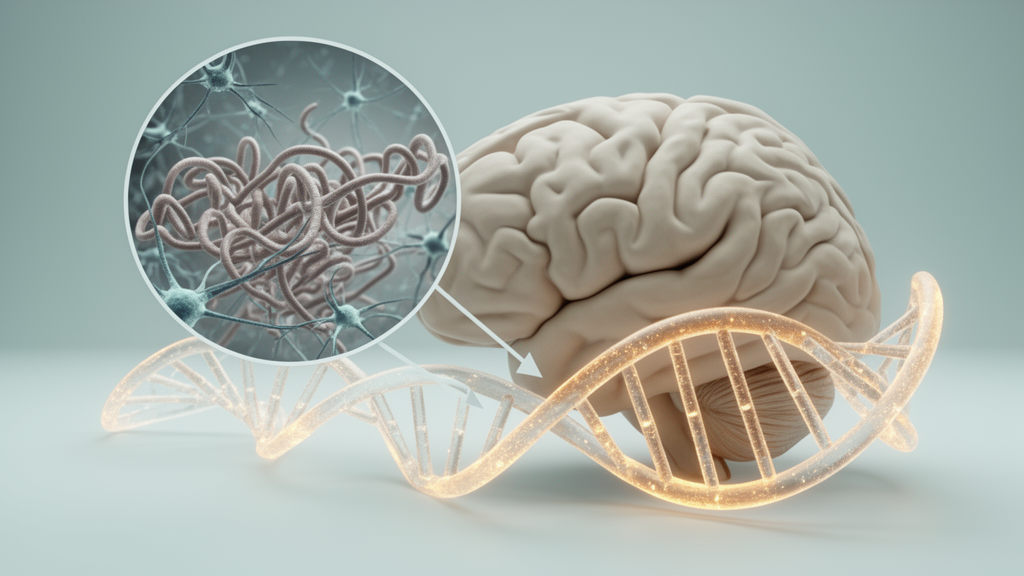
Corticobasal degeneration has long been one of the most elusive targets in neurodegenerative research, a rare 4-repeat tauopathy that dismantles motor control, cognition, and behavior while offering clinicians few disease-modifying options. Now a systematic review and meta-analysis published in the Journal of Neurology has delivered the most comprehensive synthesis to date of its genetic underpinnings, pooling evidence from twenty-two studies conducted between 2001 and 2025. The findings, assembled by Jacob Thompson and Paula K. Johnson at Texas Tech University Health Sciences Center El Paso, confirm what tau biologists have suspected for decades: the genetic susceptibility to corticobasal degeneration is overwhelmingly dominated by the architecture of the MAPT gene, the blueprint for the tau protein itself.
The research team followed PRISMA guidelines to identify studies evaluating genetic associations with corticobasal degeneration through August 2026. Eligible studies reported effect estimates for MAPT haplotypes, MAPT subhaplotypes, MAPT single-nucleotide polymorphisms, or non-MAPT candidate loci. Risk of bias was assessed using the ROBINS-E framework, and pooled associations were calculated through inverse-variance meta-analysis, a statistical technique that weights each study’s contribution by the precision of its effect estimate. This rigorous methodology allowed the investigators to distill a quarter-century of fragmented candidate-gene and genome-wide findings into a coherent picture of genetic vulnerability.
The most consistent signals converged on MAPT haplotype architecture. The H1 haplotype, and particularly the homozygous H1/H1 genotype, showed increased susceptibility to corticobasal degeneration, while the H2 haplotype displayed a protective association. This pattern echoes the well-established inversion polymorphism at chromosome 17q21.31, where MAPT-containing H1 and H2 haplotypes diverge in ways that influence total MAPT expression in postmortem brain tissue. The H1/H1 genotype has also been linked to symptom severity in corticobasal syndrome, suggesting that MAPT architecture shapes not only who develops the disease but how aggressively it manifests.
Beneath the haplotype level, the meta-analysis revealed that specific MAPT H1 subhaplotypes carry disproportionate weight. Among the H1 subhaplotypes, H1c, H1d, and H1q demonstrated significant risk associations, whereas other subhaplotypes showed less pronounced effects. This granularity matters because MAPT subhaplotypes have been shown to influence disease risk, severity of tau pathology, and clinical features in corticobasal degeneration, and they also modulate progressive supranuclear palsy phenotypes. The findings suggest that fine-scale linkage disequilibrium within the H1 background, rather than the haplotype as a monolithic unit, drives much of the genetic risk.
At the single-nucleotide polymorphism level, MAPT associations were generally modest, though several variants showed small yet significant protective or risk-related effects. This is consistent with the broader literature on primary tauopathies, where SNP-level signals are often diluted by the strong haplotype structure of the MAPT region. The meta-analysis also identified contributions from variants upstream of MAPT, including 5′-upstream variants of CRHR1 that have been associated with age at onset in progressive supranuclear palsy and corticobasal degeneration, hinting that regulatory elements beyond the coding sequence shape tau-centered vulnerability.
Beyond MAPT, the analysis identified three non-MAPT loci associated with corticobasal degeneration risk: C9orf72, MOBP, and KIF13B. The C9orf72 finding is particularly intriguing because intermediate repeat expansions in that gene have been linked to corticobasal degeneration, increased C9orf72 expression, and disruption of autophagy, a cellular clearance pathway increasingly recognized as central to neurodegeneration. Recent work has shown that C9orf72-related poly-glycine-alanine proteins promote tau phosphorylation and cell death through ERK1/2 interactions in cellular models, providing a mechanistic bridge between C9orf72 biology and tau pathology.
The MOBP association aligns with genome-wide analyses that have implicated MAPT, MOBP, and APOE loci in sporadic frontotemporal dementia, suggesting shared genetic architecture across the frontotemporal lobar degeneration spectrum. MOBP encodes myelin-associated oligodendrocyte basic protein, pointing toward glial biology as a relevant pathway in corticobasal degeneration pathogenesis. Meanwhile, KIF13B, a member of the kinesin family involved in axonal transport and netrin-1-induced axonal development, adds a motor-protein dimension to the genetic risk profile, consistent with growing evidence that kinesin family members play roles in neurological diseases.
The findings also resonate with parallel advances in progressive supranuclear palsy, another 4-repeat tauopathy that shares clinicopathologic features with corticobasal degeneration. Genetic, transcriptomic, histological, and biochemical analyses of progressive supranuclear palsy have implicated glial activation and novel risk genes, and MAPT H2 haplotype has been shown to influence risk of Pick’s disease in international consortium studies. The convergence of tau-centered genetic vulnerability across these disorders suggests that MAPT haplotype architecture may represent a common gateway to 4-repeat tauopathy susceptibility, with disorder-specific modifiers determining the ultimate clinical and pathological phenotype.
The meta-analysis acknowledges significant heterogeneity within and beyond MAPT, reflecting the substantial clinicopathologic variability that has long complicated corticobasal degeneration research. Primary tau pathology, rather than copathology, correlates with clinical symptoms in progressive supranuclear palsy and corticobasal degeneration, yet expanding clinical phenotypes of corticobasal degeneration continue to blur diagnostic boundaries. The authors note that their extracted summary-level data, available from the corresponding author upon reasonable request, provide a foundation for future biomarker, mechanistic, and precision-medicine studies.
For a disease with few therapeutic options and substantial diagnostic uncertainty, the meta-analysis offers something rare: a unified genetic architecture that confirms tau-centered vulnerability while highlighting candidate pathways relevant to glial biology, autophagy, and broader neurodegenerative susceptibility. As the field moves toward tau-targeted therapies and precision-medicine frameworks, the identification of H1c, H1d, and H1q as specific risk subhaplotypes, alongside C9orf72, MOBP, and KIF13B as non-MAPT contributors, provides a molecular roadmap that could ultimately stratify patients, predict disease trajectory, and guide the development of disease-modifying interventions for this devastating tauopathy.
Subject of Research: Neuroscience
Article Title: Genetic correlates of corticobasal degeneration: a systematic review and meta-analysis
Article References: Thompson, J., & Johnson, P. K. (2026). Genetic correlates of corticobasal degeneration: a systematic review and meta-analysis. Journal of Neurology, 273(11), Article 668. https://doi.org/10.1007/s00415-026-14218-w
Image Credits: AI Generated
DOI: 10.1007/s00415-026-14218-w
Keywords: Genetic, correlates, corticobasal, degeneration, systematic, review, meta-analysis, scientific research
Cite Scienmag News
Juliet Wilcox. (October 17, 2026). Tau Gene Architecture Dominates Genetic Risk in Corticobasal Degeneration. Scienmag. https://scienmag.com/tau-gene-architecture-dominates-genetic-risk-in-corticobasal-degeneration/
Juliet Wilcox. "Tau Gene Architecture Dominates Genetic Risk in Corticobasal Degeneration." Scienmag, 17 October 2026, https://scienmag.com/tau-gene-architecture-dominates-genetic-risk-in-corticobasal-degeneration/. Accessed 17 October 2026.
Juliet Wilcox. "Tau Gene Architecture Dominates Genetic Risk in Corticobasal Degeneration." Scienmag. October 17, 2026. https://scienmag.com/tau-gene-architecture-dominates-genetic-risk-in-corticobasal-degeneration/


