


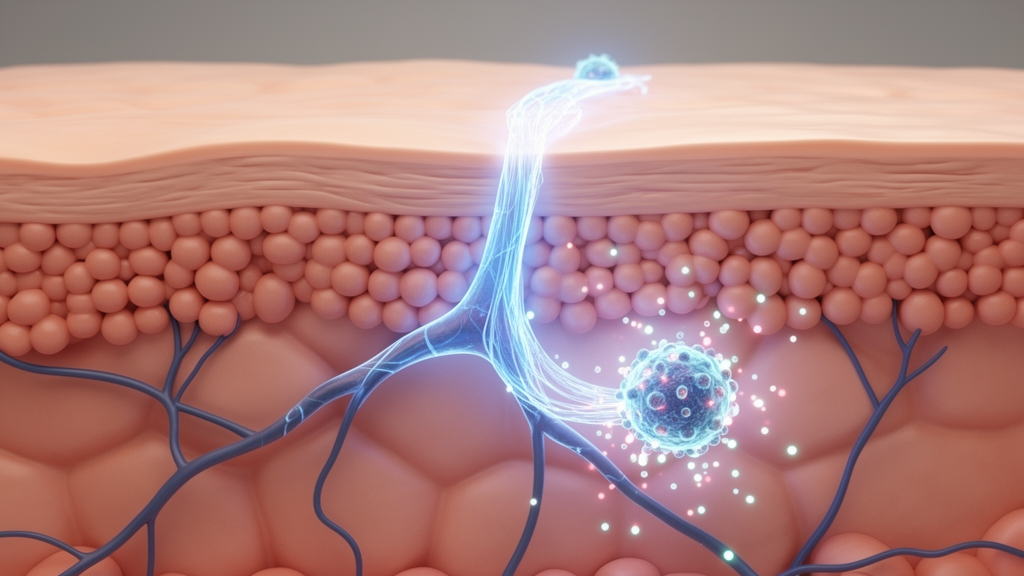
For millions of people living with atopic dermatitis, the most punishing feature of the disease is not the red, flaking skin that others can see. It is the itch. Persistent, often unbearable pruritus disrupts sleep, erodes daytime functioning, and diminishes quality of life in both children and adults, frequently outweighing the visible inflammation in its impact. A comprehensive review published in the Journal of Cutaneous Immunology and Allergy by researchers from Kaohsiung Chang Gung Memorial Hospital and National Sun Yat-sen University in Taiwan now synthesizes the mechanistic evidence behind this burden and argues for a fundamental reframing: itch in atopic dermatitis is not a passive symptom of inflamed skin but an active disease driver that reshapes both the epidermal barrier and the nervous system itself.
The review’s central thesis is that atopic dermatitis itch emerges from a dynamic, bidirectional conversation between keratinocytes, the dominant cells of the epidermis, and the sensory neurons that innervate the skin. When the epithelial barrier breaks down, whether through genetic vulnerability, environmental insult, or the mechanical trauma of scratching, stressed keratinocytes release a cocktail of damage-induced mediators known as alarmins. Chief among these are thymic stromal lymphopoietin (TSLP), interleukin-33 (IL-33), and interleukin-25 (IL-25). These signals do not merely recruit immune cells; they act directly on cutaneous nerve fibers, activating or sensitizing them and thereby amplifying itch transmission. The result is a self-reinforcing itch-scratch-injury cycle in which each bout of scratching further damages the barrier, releases more pruritogens, and entrenches neural hypersensitivity.
TSLP has emerged as perhaps the clearest example of epithelial-to-neural signaling. This keratinocyte-derived cytokine signals through a receptor complex comprising the TSLP receptor and the IL-7 receptor alpha subunit, potently activating dendritic cells and skewing immunity toward a type 2 profile dominated by Th2 cells, mast cells, and natural killer T cells. Serum TSLP is significantly elevated in patients with atopic dermatitis and correlates with disease severity. Crucially, work by Wilson and colleagues showed that calcium-dependent ORAI1/NFAT signaling in keratinocytes regulates TSLP release, and that TSLP in turn directly activates TRPA1-positive sensory neurons to induce itch. The same epithelial-neuronal crosstalk operates in airway epithelial cells, suggesting a mechanistic bridge that may help explain the atopic march, the progression from eczema to asthma and allergic rhinitis.
IL-33 presents a more complicated picture. It induces type 2 cytokines including IL-4, IL-5, and IL-13, synergizes with IL-4 to drive production of IL-31, a key pruritogen, and enhances histamine-induced itch through mast cell activation and IL-13 release. Its receptor, ST2, is expressed on dorsal root ganglion neurons in both humans and mice, and IL-33 can sensitize these neurons to IL-4- and IL-13-mediated signaling. In the spinal cord, IL-33/ST2 signaling activates an astrocytic JAK2-STAT3 pathway that engages the gastrin-releasing peptide (GRP) axis, a canonical spinal itch circuit whose serum levels correlate with disease severity and itch intensity in patients. Yet the review is candid about the limits of the evidence: some studies found no correlation between circulating IL-33 and pruritus severity, and neuronal-restricted IL-33 receptor signaling proved dispensable for itch in an AD-like mouse model. Genetic variants in the IL33 gene have been linked to itch severity, hinting that predisposition modulates the pathway, but a direct causal role in human AD itch remains unproven.
The strongest clinical case belongs to the type 2 cytokines IL-4 and IL-13. Both can directly activate mouse and human sensory neurons, and IL-4 additionally sensitizes neurons to a broad range of pruritogens. Mechanistically, chronic itch requires neuronal IL-4Ralpha-JAK1 signaling: deleting IL-4Ralpha or JAK1 specifically in sensory neurons markedly reduces scratching in mice, and JAK inhibition relieves recalcitrant chronic itch in patients unresponsive to conventional immunosuppressants. Recent work with human dorsal root ganglion neurons showed that IL-4, IL-13, and IL-33 sensitize neurons to both histaminergic and non-histaminergic pruritogens within just two hours of exposure, with IL-4 and IL-13 inducing a shared, cytokine-specific transcriptional program distinct from that triggered by other inflammatory stimuli. Type 2 immunity, in other words, has been co-opted by the nervous system itself.
Interleukin-31 stands out as the most thoroughly validated cytokine linking immune activation to neuronal itch signaling. Produced mainly by Th2 cells but also by basophils, macrophages, and, as recent evidence shows, M2-polarized macrophages in lesional skin, IL-31 signals through a receptor complex of IL-31 receptor A and the oncostatin M receptor. In a restricted population of IL-31RA-positive, TRPV1-positive, TRPA1-positive sensory neurons, IL-31 triggers intracellular calcium release and ERK activation. It also induces rapid STAT3 activation in these neurons, and STAT3 transcriptionally upregulates the IL-31 receptor itself, creating a feed-forward loop that amplifies sensitivity. Beyond the periphery, IL-31 induces expression of B-type natriuretic peptide (BNP), encoded by the NPPB gene, which transmits itch signals through natriuretic peptide receptor A in the spinal cord, and promotes axonal elongation and branching in small-diameter sensory neurons, providing a mechanistic explanation for the increased cutaneous nerve fiber density seen in chronic disease. The clinically approved antibody nemolizumab targets this axis.
The review also highlights periostin, a matrix protein secreted by dermal fibroblasts downstream of type 2 inflammation, as a conserved pruritogen that induces itch across mice, dogs, and non-human primates. Periostin binds integrin alphavbeta3 on sensory neurons, triggering extracellular calcium influx and spontaneous firing in an itch-related, TRPV1- and TRPA1-dependent manner, with BNP as a key neuropeptide effector. Remarkably, periostin also reciprocally induces keratinocyte-derived TSLP through the JAK2-STAT3 pathway, closing a feed-forward epithelial-neuronal loop. Serum periostin levels are elevated in patients and correlate with disease severity, positioning it as an emerging therapeutic target.
Neurotrophic factors and neuropeptides add a structural dimension to the story. Nerve growth factor (NGF) is markedly elevated in the stratum corneum of lesional skin, correlating with itch severity, erythema, xerosis, eosinophil counts, and serum lactate dehydrogenase, and blocking NGF signaling ameliorates dermatitis and scratching in the NC/Nga mouse model. Substance P, classically acting through the neurokinin-1 receptor, drives neurogenic inflammation and correlates with itch intensity and even depression scores, but recent work shows it can also evoke non-histaminergic itch by activating MRGPRX2 on mast cells and MRGPRA1 on sensory neurons, and it has displayed paradoxically protective, barrier-restoring effects in some experimental settings. Calcitonin gene-related peptide (CGRP) promotes keratinocyte proliferation and epidermal thickening, with atopic keratinocytes showing heightened CGRP responsiveness and exaggerated hyperplasia. Artemin, a glial cell line-derived neurotrophic factor, is upregulated in lesional skin downstream of both the aryl hydrocarbon receptor, activated by organic components of air pollution, and toll-like receptor signaling triggered by house dust mite, linking environmental exposures directly to sensory nerve sprouting and warmth-provoked itch.
Woven through all of these pathways is the JAK-STAT signaling cascade, which the authors identify as the most clinically validated convergence point between immune cytokines and pruritus. Lesional skin from patients shows broad activation of phosphorylated JAK1-3 and STAT2/3 across epidermal and dermal compartments, and a spontaneous mouse model with an epidermal JAK1 gain-of-function mutation demonstrated that keratinocyte-intrinsic JAK1 hyperactivation alone is sufficient to drive barrier dysfunction, chronic inflammation, and pruritus. JAK1 is also enriched in pruriceptive neurons, where it mediates IL-4, IL-13, and IL-31 signaling, and electrophysiological studies suggest that JAK1-selective inhibitors such as upadacitinib can directly modulate cortical neuronal activity, hinting at central neuromodulatory effects beyond immune suppression.
The conceptual payoff of the review is a continuum model of chronic itch. It begins as peripherally driven, epithelial-mediated signaling, but repeated stimulation progressively sensitizes sensory neurons and broadens their responsiveness until itch becomes partially decoupled from peripheral cues and increasingly reflects structural and functional remodeling within itch-processing circuits. The finding that even non-lesional skin of patients exhibits heightened cowhage-induced itch underscores that altered sensory responsiveness is an intrinsic feature of the disease, not merely a byproduct of visible inflammation. The authors argue that early intervention to interrupt repetitive itch-scratch cycles, before central sensitization and neuronal remodeling become entrenched, may be essential to prevent long-term chronicity, treatment resistance, and the psychological comorbidities that so often shadow this disease.
Subject of Research: Neuroimmune mechanisms of chronic itch in atopic dermatitis
Article Title: Pruritogenic mediators in atopic dermatitis: mechanisms of neurogenic crosstalk
Article References: Wong, L.-S., Yang, J.-H., Yen, Y.-T., & Yang, J.-L. (2026). Pruritogenic mediators in atopic dermatitis: mechanisms of neurogenic crosstalk. Journal of Cutaneous Immunology and Allergy, 9, Article 16460. https://doi.org/10.3389/jcia.2026.16460
Image Credits: AI Generated
Keywords: atopic dermatitis, chronic itch, pruritus, keratinocytes, sensory neurons, TSLP, IL-31, IL-4, IL-13, JAK-STAT signaling, neuropeptides, neuroimmune crosstalk
Cite Scienmag News
Ophelia Keating. (October 17, 2026). How Skin Cells and Nerves Conspire to Drive the Relentless Itch of Eczema. Scienmag. https://scienmag.com/how-skin-cells-and-nerves-conspire-to-drive-the-relentless-itch-of-eczema/
Ophelia Keating. "How Skin Cells and Nerves Conspire to Drive the Relentless Itch of Eczema." Scienmag, 17 October 2026, https://scienmag.com/how-skin-cells-and-nerves-conspire-to-drive-the-relentless-itch-of-eczema/. Accessed 17 October 2026.
Ophelia Keating. "How Skin Cells and Nerves Conspire to Drive the Relentless Itch of Eczema." Scienmag. October 17, 2026. https://scienmag.com/how-skin-cells-and-nerves-conspire-to-drive-the-relentless-itch-of-eczema/


