


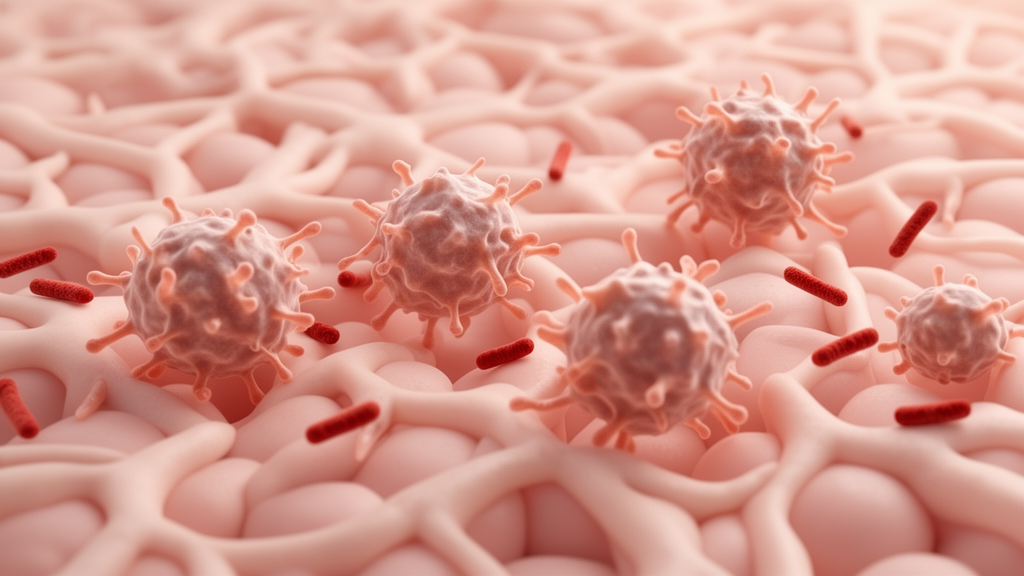
Mycobacterium abscessus is an environmental opportunist that most healthy lungs dispatch without ceremony, yet in people with cystic fibrosis, bronchiectasis, or chronic obstructive pulmonary disease it can establish infections that resist months of multidrug therapy. A new study from researchers at National Jewish Health, published in Frontiers in Tuberculosis, offers a mechanistic clue to this vulnerability: the immune defenses that matter depend critically on where in the lung the bacteria land. Resident alveolar macrophages, long regarded as the lung’s first line of cellular defense, proved essential for clearing infection in the alveoli but dispensable when the same bacterium lodged in obstructed small airways, a setting that mimics the damaged airways of bronchiectasis.
The team, led by Kelsey Haist and Katherine Hisert, compared two mouse models of infection. In one, mice inhaled M. abscessus in liquid suspension, depositing planktonic bacteria in the alveoli, the thin-walled air sacs where gas exchange occurs. In the other, bacteria were embedded in agar beads roughly 100 to 200 micrometers in diameter, which lodge in small airways when instilled into the oropharynx. The bead model has been refined over decades for studying chronic opportunistic infections, and it reproduces several features of human bronchiectasis: focal airway obstruction, reduced mucociliary transport, localized hypoxia with expression of hypoxia-inducible factor 1 alpha, and lung pathology that closely resembles what clinicians see in patients with chronic M. abscessus disease.
The contrast in outcomes was stark. Mice given planktonic bacteria carried more than a thousand-fold fewer organisms by two weeks after infection, and virtually all had cleared the infection by three weeks. Mice infected with bacteria-laden beads, by contrast, maintained bacterial loads near the size of the initial inoculum at two weeks, and more than half still harbored detectable bacteria at six weeks. Most bead-infected mice eventually cleared the organism by ten to sixteen weeks, but the kinetics were slow and heterogeneous, echoing the protracted course of human disease. Histology revealed acid-fast bacilli persisting within remnants of infected beads at two weeks, and granulomatous structures that endured even after bacterial clearance, only beginning to resolve by sixteen weeks.
Flow cytometry of digested lung tissue and bronchoalveolar lavage fluid exposed a fundamentally different immune landscape in the two models. During the first two weeks of bead infection, absolute numbers of neutrophils in the lungs rose sharply and far exceeded the modest neutrophil influx seen with alveolar infection, while the relative abundance of recruited macrophages was lower. Bronchoalveolar lavage at two weeks showed roughly tenfold more neutrophils in bead-infected mice than in mice given planktonic bacteria. Notably, the sterile beads themselves provoked little inflammation, indicating that the intense neutrophilic response required living bacteria rather than obstruction alone. Yet the paradox remained: despite this robust cellular recruitment, bacteria persisted far longer in the airways than in the alveoli.
The resident alveolar macrophages themselves behaved differently depending on the infection site. These long-lived, self-renewing cells, identifiable by markers including Siglec-F and CD11c, are normally found in the alveolar spaces. In bead-infected mice, most resident alveolar macrophages upregulated CD11b, a surface marker of inflammatory activation, by one week after infection and maintained high expression at three weeks, even though the infection was confined to the airways rather than the alveoli. The authors suggest two possible explanations: bacterial debris and organisms shed from degrading beads may filter down into the alveoli, or the macrophages may respond to inflammatory cytokines released by stressed epithelial cells and recruited neutrophils throughout the inflamed lung.
To test whether these activated cells actually mattered for bacterial control, the researchers depleted resident alveolar macrophages using clodronate-loaded liposomes delivered oropharyngeally one day before infection. The depletion was rapid and sustained, eliminating more than ninety percent of the cells. In alveolar infection, the consequence was immediate: mice lacking resident alveolar macrophages carried tenfold more bacteria at three days after infection than control mice, demonstrating that these cells are essential for containing early bacterial replication in the air sacs. The depleted mice eventually regained control, likely through a compensatory flood of neutrophils and blood-derived macrophages into the airspaces, but their bacterial burdens remained elevated throughout the ten-day observation period.
In the bead model, the same depletion produced no effect whatsoever on bacterial burden over fourteen days. Mice without resident alveolar macrophages controlled airway infection just as well as intact mice, and the magnitude of neutrophil recruitment was unchanged. The only detectable difference was a modest increase in recruited macrophages in the lavage fluid of depleted mice, possibly reflecting monocytes entering the alveoli to replace the ablated resident population. The implication is striking: the immune cell that matters most in the alveoli is not the one that matters in the obstructed airway, where other players, presumably recruited neutrophils and monocyte-derived macrophages acting within a very different microenvironment, take over the task of bacterial containment.
These findings align with a growing literature on macrophage heterogeneity. Work in fruit flies, zebrafish, and other models has consistently shown that macrophages are critical for controlling M. abscessus, and prior mouse studies using both liposome depletion and genetic ablation confirmed the importance of resident alveolar macrophages for alveolar infection. But macrophage phenotypes are shaped by their local tissue environment, by pathogen-associated and damage-associated molecular patterns, and by cues from neighboring cells. The new study extends this principle across lung compartments: alveoli and airways are anatomically continuous, yet they generate overlapping but distinct immune responses to the same pathogen.
The results also mirror observations in human patients. Studies of sputum and lung samples from people with bronchiectasis and chronic obstructive pulmonary disease find that airway immune cells are largely recruited from the blood, with resident alveolar macrophages minimally represented or absent. The bead-infected mice recapitulate this pattern, lending confidence that the model captures relevant features of human disease. The authors caution, however, that their analysis focused on the first two weeks and on myeloid cells; lymphocytes became more prominent later and participated in granuloma formation, and the study could not fully distinguish whether the altered response stems from the airway location itself or from the obstruction, epithelial stress, and hypoxia that accompany it.
The broader significance lies in therapy development. Current antibiotic regimens for M. abscessus lung disease last months to years, carry substantial side effects, and frequently fail, partly because laboratory susceptibility testing does not reflect how bacteria behave within living tissue. Understanding which macrophage populations occupy the infection site, and how the airway niche alters bacterial metabolism and host-pathogen interactions, could guide host-directed therapies designed to bolster the right defenses in the right compartment. As the authors conclude, characterizing the immune milieu of damaged airways may ultimately reveal why some infections resolve while others become chronic, and how medicine might tip that balance in favor of the patient.
Subject of Research: Differential roles of resident alveolar macrophages in controlling alveolar versus airway Mycobacterium abscessus infection in mice
Article Title: Differential roles of resident lung macrophages during control of murine alveolar and airway Mycobacterium abscessus infection
Article References: Haist, K. C., Congel, J. H., Corley, J. M., Ochoa, A. E., McClendon, J., Hume, P. S., Nick, J. A., Janssen, W. J., Malcolm, K. C., & Hisert, K. B. (2026). Differential roles of resident lung macrophages during control of murine alveolar and airway Mycobacterium abscessus infection. Frontiers in Tuberculosis, 4, Article 1781507. https://doi.org/10.3389/ftubr.2026.1781507
Image Credits: AI Generated
DOI: 10.3389/ftubr.2026.1781507
Keywords: Mycobacterium abscessus, nontuberculous mycobacteria, alveolar macrophages, bronchiectasis, cystic fibrosis, lung immunity, agar bead infection model, neutrophils, macrophage depletion, clodronate liposomes, chronic lung infection, host-directed therapy
Cite Scienmag News
Kristina Jarvis. (October 17, 2026). Where the Bug Lands Decides Which Lung Cells Fight It: Macrophages and Mycobacterium abscessus. Scienmag. https://scienmag.com/where-the-bug-lands-decides-which-lung-cells-fight-it-macrophages-and-mycobacterium-abscessus/
Kristina Jarvis. "Where the Bug Lands Decides Which Lung Cells Fight It: Macrophages and Mycobacterium abscessus." Scienmag, 17 October 2026, https://scienmag.com/where-the-bug-lands-decides-which-lung-cells-fight-it-macrophages-and-mycobacterium-abscessus/. Accessed 17 October 2026.
Kristina Jarvis. "Where the Bug Lands Decides Which Lung Cells Fight It: Macrophages and Mycobacterium abscessus." Scienmag. October 17, 2026. https://scienmag.com/where-the-bug-lands-decides-which-lung-cells-fight-it-macrophages-and-mycobacterium-abscessus/


