


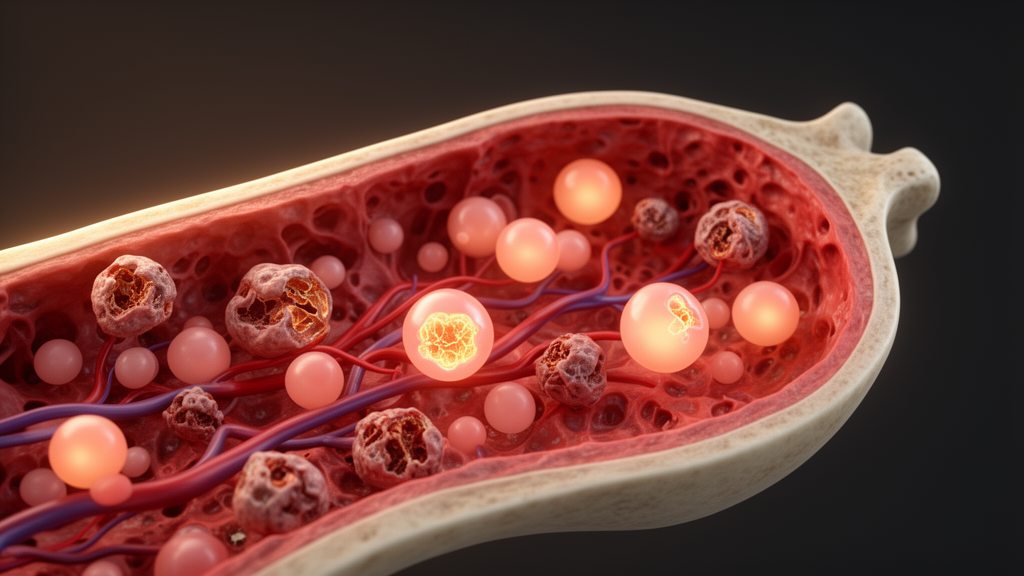
For decades, oncologists have treated chemotherapy-induced thrombocytopenia, or CIT, as a simple arithmetic problem: the platelet count drops, the chemotherapy is delayed or the dose is reduced, and the count eventually climbs back. A new narrative review published in Supportive Care in Cancer argues that this reactive mindset has reached a plateau, and that CIT is better understood as a systemic collapse of the entire bone marrow ecosystem, a
The distinction between transient and persistent forms of thrombocytopenia emerges as one of the most clinically consequential themes in the review. When platelet counts recover between cycles, the injury is best understood as a temporary suppression of production, and conventional supportive measures may suffice. When counts fail to recover, however, the authors argue that the underlying pathology likely involves durable damage to the progenitor compartment and to the niche cells that support it. This framing matters because it implies that the two situations may respond differently to thrombopoietin receptor agonists. A marrow that retains its architectural and cellular integrity can be pushed to produce more platelets when c-Mpl signaling is amplified, whereas a marrow whose sinusoidal vessels, stromal cells, and immune milieu have been remodeled may not be able to translate that signal into effective platelet release regardless of receptor stimulation.
The reviewers identify several characteristics that appear to enrich for response to romiplostim in the persistent setting. Lower baseline endogenous thrombopoietin is one such factor, and the logic is straightforward: patients whose own thrombopoietin production is already elevated may have less capacity for further stimulation, whereas those with relatively low levels may retain responsive megakaryocyte progenitors that can be recruited by exogenous agonism. The absence of marrow infiltration by tumor, the absence of prior pelvic irradiation, and the absence of temozolomide exposure also appear among the candidate response modifiers. Each of these factors plausibly reflects a different mechanism of niche destruction. Tumor cells infiltrating the marrow cavity physically displace hematopoietic elements and secrete inflammatory mediators. Pelvic irradiation delivers direct cytotoxic injury to the marrow stroma and vasculature in the pelvis, where a substantial fraction of adult active marrow resides. Temozolomide, an alkylating agent used in glioblastoma and other tumors, is notorious for producing cumulative and sometimes prolonged myelosuppression that outlasts the treatment period itself. The convergence of these factors in the non-response profile suggests that the drug works best when the seed, meaning the megakaryocyte lineage, remains viable enough to respond, and that failure is more likely when the soil has been too thoroughly damaged.
The phase 3 evidence cited in the review deserves particular attention because it moves the field beyond mechanistic speculation. Romiplostim, a peptibody that binds c-Mpl and mimics thrombopoietin, was shown in a 2026 trial to reduce chemotherapy dose modifications attributable to persistent thrombocytopenia. This is a meaningful endpoint because dose modifications are the mechanism through which CIT translates into reduced relative dose intensity and, ultimately, inferior survival outcomes. Prior to this trial, the evidence base for TPO receptor agonists in CIT consisted largely of small studies, extrapolation from immune thrombocytopenia, and observational data. The demonstration that a TPO receptor agonist can preserve chemotherapy intensity in a randomized setting establishes a clinical foothold, even as the reviewers caution that biomarker-guided patient selection remains unvalidated and that the trial results should not be overinterpreted as evidence for microenvironmental repair.
The mechanistic account of how TPO receptor agonists engage their target adds another layer of nuance. Peptide agonists such as romiplostim and small-molecule agonists such as eltrombopag do not interact with c-Mpl in identical ways, and the downstream signaling consequences differ. The review describes distinct patterns of AKT, ERK, and STAT pathway activation depending on which class of agonist is used. These pathways govern proliferation, differentiation, and survival in megakaryocyte progenitors, and the differential engagement may have implications not only for efficacy but also for the profile of effects beyond platelet production. Whether these signaling differences translate into clinically meaningful distinctions between agents in the CIT population is not yet established, but the framework suggests that the choice of agonist may not be interchangeable across all clinical scenarios.
The historical record of thrombopoietic agents offers a sobering counterpoint to current optimism. The development of pegylated recombinant human megakaryocyte growth and development factor was halted after it became clear that the molecule induced neutralizing antibodies against endogenous thrombopoietin, producing the paradoxical outcome of worsening thrombocytopenia rather than relieving it. This episode illustrates a fundamental risk in manipulating a tightly regulated endocrine axis: introducing a foreign version of a native growth factor can trigger an immune response that eliminates the body’s own supply. Recombinant human interleukin-11, though approved for CIT in the United States, has been limited by fluid retention, arrhythmias, and heart failure, side effects that are particularly problematic in oncology patients who may already have compromised cardiovascular reserve. Recombinant human thrombopoietin has found a place in clinical practice in China but has not achieved universal regulatory approval elsewhere, leaving a geographic patchwork in which access to thrombopoietic support depends heavily on where a patient is treated.
Against this backdrop, the second-generation TPO receptor agonists represent a meaningful advance in molecular design. Romiplostim was engineered to share no sequence homology with native thrombopoietin, specifically to avoid the antibody cross-reactivity that doomed its predecessor. Eltrombopag is a small molecule that binds c-Mpl at a site distinct from the thrombopoietin binding region, further reducing immunogenic risk. These design choices reflect lessons learned from the first generation of agents and have enabled the sustained use of these drugs in chronic immune thrombocytopenia and, more recently, in other cytopenic conditions. The extension of this pharmacologic class into CIT is a natural next step, but the reviewers emphasize that the biology of CIT differs from that of immune thrombocytopenia in important ways, particularly with respect to the state of the marrow microenvironment.
The four-module framework the reviewers use to organize microenvironmental injury provides a useful structure for thinking about what goes wrong in CIT beyond the megakaryocyte itself. Altered extracellular matrix mechanical signaling refers to changes in the stiffness, composition, and topography of the marrow scaffold, which normally provides positional and mechanical cues that guide megakaryocyte maturation and proplatelet extension into sinusoidal vessels. Impaired metabolic coupling reflects the dependence of hematopoietic and stromal cells on each other for metabolic support, a relationship that chemotherapy can disrupt through damage to either partner. Chronic inflammatory remodeling describes the shift toward a pro-inflammatory milieu that can persist after the acute cytotoxic insult has passed, potentially suppressing regenerative signaling. Vascular-sinusoidal damage encompasses injury to the specialized blood vessels through which newly formed platelets must pass to enter the circulation. Each of these modules represents a distinct target for future therapeutic intervention, and each is currently supported by evidence that derives largely from preclinical models or from thrombocytopenic conditions other than CIT.
The reviewers are explicit about the indirectness of much of this evidence, and this candor is a strength of the review rather than a weakness. Findings from immune thrombocytopenia, aplastic anemia, transplantation settings, radiation models, and in vitro systems are informative but cannot be assumed to transfer wholesale to the chemotherapy-exposed marrow. The chemotherapy patient presents a distinct physiological context: repeated cytotoxic exposure, tumor-related systemic inflammation, age-related changes in marrow composition, and concurrent supportive medications all shape the biology in ways that animal models and other disease states do not fully capture. The reviewers’ decision to retain indirect evidence while flagging its limitations reflects a reasonable middle path between ignoring mechanistic insights and overstating their applicability.
The seed and soil metaphor, borrowed from oncology’s long tradition of describing tumor-microenvironment interactions, serves as an organizing device rather than a claim of conceptual novelty. Its value lies in directing attention to the reciprocal relationship between the platelet-producing lineage and the niche that supports it. A purely seed-focused therapeutic strategy, exemplified by TPO receptor agonists, may be sufficient when the soil remains intact. A soil-focused strategy, which might eventually involve agents that protect or restore stromal cells, vascular integrity, or immune balance, would address the component of CIT that current therapies leave untouched. The reviewers suggest that combination approaches targeting both compartments may ultimately be needed for the subset of patients whose CIT is driven by durable niche damage, but they are careful to note that such combinations remain hypothetical pending prospective testing.
The epidemiological contours of CIT provide context for why this problem warrants sustained attention. Up to roughly one in five patients with solid tumors experiences thrombocytopenia during chemotherapy, with the burden concentrated in regimens containing gemcitabine, platinum agents such as carboplatin and oxaliplatin, and anthracyclines. In hematologic malignancies, the incidence rises substantially, reaching between half and three-quarters of patients. These figures underscore that CIT is not a rare complication but a routine clinical reality that shapes treatment decisions across a broad swath of oncology. The consequences extend beyond bleeding risk: every dose delay or reduction represents a departure from the intended therapeutic intensity, and the cumulative effect of such departures on tumor control is well documented in the literature on dose intensity and survival.
Platelet transfusion, the only emergency option for severe thrombocytopenia or active bleeding, carries its own set of limitations that the review enumerates. The short circulating half-life of transfused platelets means that the count rise is transient, providing a bridge rather than a solution. Repeated exposure to donor platelets risks alloimmunization, in which the recipient develops antibodies against donor antigens, ultimately leading to transfusion refractoriness and diminishing the utility of future transfusions. The scarcity of platelet products, the risk of infection transmission, and the possibility of allergic reactions further constrain this resource. These limitations reinforce the argument that a therapy addressing the underlying production failure, rather than replacing the missing cellular element, would represent a meaningful advance in supportive oncology.
The methodological transparency of the review, including the disclosure of artificial intelligence tools used in drafting and organization, and the explicit statement that the authors verified all citations and numerical data against original publications, reflects evolving norms in scientific publishing. The reviewers also acknowledge that their synthesis was narrative rather than systematic, without protocol registration, formal risk-of-bias assessment, or quantitative pooling. This candor about the limits of the evidence base is consistent with the overall tone of the review, which presents the seed and soil model as hypothesis-generating rather than established, and which calls for prospective studies before microenvironment-directed combinations or biomarker thresholds can be incorporated into clinical practice. The gap between mechanistic plausibility and clinical validation remains the central challenge, and the review positions itself as a roadmap for the research needed to close it.
Subject of Research: Health
Article Title: Chemotherapy-induced thrombocytopenia: from “platelet counting” to ecological repair of the bone marrow
Article References: Liu, T., Xie, R., He, Q., & Ma, J. (2026). Chemotherapy-induced thrombocytopenia: from “platelet counting” to ecological repair of the bone marrow. Supportive Care in Cancer, 34(9), Article 914. https://doi.org/10.1007/s00520-026-11114-x
Image Credits: AI Generated
DOI: 10.1007/s00520-026-11114-x
Keywords: chemotherapy-induced thrombocytopenia, thrombopoietin receptor agonists, bone marrow microenvironment, megakaryocytes, oncology, precision medicine, Chemotherapy-induced, thrombocytopenia, platelet, counting, ecological, repair
Cite Scienmag News
Nathaniel Bowman. (October 17, 2026). Chemotherapy Wrecks the Bone Marrow Ecosystem, Not Just Platelet Counts, Review Argues. Scienmag. https://scienmag.com/chemotherapy-wrecks-the-bone-marrow-ecosystem-not-just-platelet-counts-review-argues/
Nathaniel Bowman. "Chemotherapy Wrecks the Bone Marrow Ecosystem, Not Just Platelet Counts, Review Argues." Scienmag, 17 October 2026, https://scienmag.com/chemotherapy-wrecks-the-bone-marrow-ecosystem-not-just-platelet-counts-review-argues/. Accessed 17 October 2026.
Nathaniel Bowman. "Chemotherapy Wrecks the Bone Marrow Ecosystem, Not Just Platelet Counts, Review Argues." Scienmag. October 17, 2026. https://scienmag.com/chemotherapy-wrecks-the-bone-marrow-ecosystem-not-just-platelet-counts-review-argues/


