


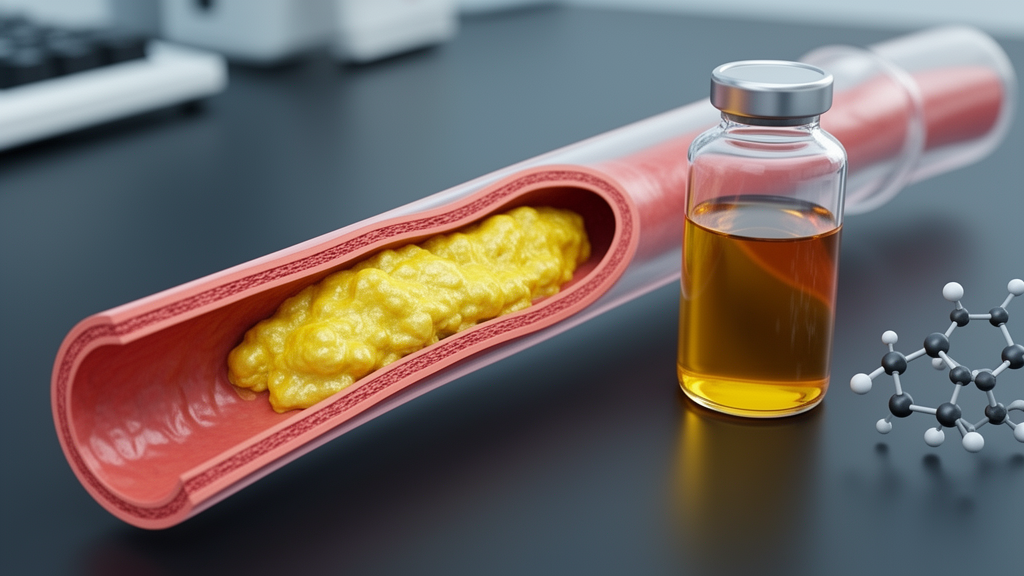
Two routine blood tests that cost almost nothing to perform may, when divided by one another, reveal something about the silent narrowing of the arteries in the neck. A new retrospective cohort study from Zhejiang, China, published in Frontiers in Nutrition, reports that adults with a higher uric acid-to-HDL-cholesterol ratio (UHR) were more likely to develop carotid atherosclerosis over a mean follow-up of just 2.7 years. The finding is statistically robust, biologically plausible, and comes with an important caveat: the ratio did not meaningfully improve risk prediction beyond the traditional cardiovascular risk factors clinicians already measure.
The study, led by Hezhi Wen and colleagues at the Health Management Center of the Second Affiliated Hospital of Zhejiang University School of Medicine, drew on 16,572 adults who underwent at least two consecutive annual health examinations between 2022 and 2025. All participants had complete baseline measurements of serum uric acid and HDL cholesterol, and none showed evidence of carotid artery lesions on baseline ultrasound. The researchers calculated UHR by dividing serum uric acid in micromoles per liter by HDL cholesterol in millimoles per liter, then tracked who developed carotid intima-media thickening or plaque during follow-up.
The biological logic behind the ratio is elegant. Uric acid, the terminal product of purine metabolism, promotes atherogenesis through oxidative stress, activation of the NLRP3 inflammasome, endothelial dysfunction, and proliferation of vascular smooth muscle cells. HDL cholesterol counteracts these processes through reverse cholesterol transport, antioxidant activity, and anti-inflammatory signaling. Because the two components push vascular health in opposite directions, the ratio between them may capture the net balance between oxidative-inflammatory burden and lipoprotein-mediated vascular protection as a single number.
Over the follow-up period, 4,454 incident carotid artery lesions occurred. In the fully adjusted Cox proportional hazards model, which accounted for age, sex, body mass index, systolic and diastolic blood pressure, fasting blood glucose, triglycerides, total cholesterol, creatinine, and estimated glomerular filtration rate, each one-standard-deviation increment in baseline UHR was independently associated with a 6 percent higher hazard of incident carotid lesions (hazard ratio 1.06, 95 percent confidence interval 1.01 to 1.11; p = 0.015). Restricted cubic spline analysis showed no significant departure from linearity once confounding was addressed, and the association survived Winsorization at alternative percentiles, exclusion of first-year events to minimize reverse causation, and bootstrap internal validation with 1,000 resamples.
The dose-response relationship differed from the J-shaped or U-shaped patterns often reported for serum uric acid alone in clinical populations. In this general health examination cohort, the adjusted curve showed a modest protective trend at low UHR values, followed by a progressive rise above the median, reaching a hazard ratio of approximately 1.20 at the upper extreme of the observed distribution. The authors attribute the absence of a J-shape to the cohort’s rigorous exclusion of prevalent cardiovascular disease and preserved kidney function, which means low UHR here likely reflects favorable metabolic health rather than cachexia, malnutrition, or xanthine oxidase inhibitor therapy.
Exploratory sex-stratified analyses revealed a striking asymmetry. Among male participants, the association remained statistically significant (hazard ratio 1.07, 95 percent confidence interval 1.02 to 1.12; p = 0.010), but among females it vanished entirely (hazard ratio 0.98, 95 percent confidence interval 0.93 to 1.04; p = 0.524). Yet the formal test for a multiplicative UHR-by-sex interaction did not reach significance (p = 0.261), precluding definitive conclusions about sex-specific effects. The authors point to the well-established uricosuric effect of estrogen and sex differences in HDL metabolism, which produced extreme sex imbalance across UHR trajectory groups: 96.9 percent of the High UHR group was male, while 79.7 percent of the Low UHR group was female. This collinearity between UHR and sex, combined with the substantially compressed female UHR distribution (one standard deviation of 71.08 units versus 114.83 in males), limited statistical power in the female subgroup.
The researchers also applied latent class growth analysis to annual UHR measurements, identifying three trajectory groups: Low (51.7 percent), Moderate (36.3 percent), and High (12.0 percent). In unadjusted models, both the Moderate and High trajectory groups showed significantly higher hazard of incident carotid lesions relative to the Low reference group. But after full adjustment for individual metabolic components, these trajectory-based associations attenuated to non-significance, suggesting that trajectory membership captured distinct cardiometabolic phenotype clusters whose variance overlapped with traditional risk factors. Notably, baseline UHR modeled as a continuous variable retained independent predictive value, indicating that in health examination populations where metabolic parameters are routinely monitored, a single baseline measurement may provide adequate information about long-term UHR exposure without repeated testing.
The incremental predictive performance analysis delivered the study’s most sobering message. Adding UHR to a base model already containing traditional cardiovascular risk factors produced a negligible change in the C-statistic (delta C = 0.0003 overall, 0.0006 in males). Integrated discrimination improvement was essentially zero, and continuous net reclassification improvement was marginal at best. Although individual predicted event probabilities changed significantly in males (median improvement of 0.1 percent, p = 0.008), decision curve analysis at a two-year prediction horizon showed that the UHR-added model and the base model yielded nearly identical net benefit across all clinically relevant risk thresholds, with curves overlapping almost completely. The authors conclude that UHR does not improve population-level discrimination or clinical decision-making.
This negative finding tempers enthusiasm for UHR as a clinical screening biomarker, even as it confirms the ratio’s independent prognostic information. The base model already achieved a C-statistic of 0.73 to 0.74, and the established difficulty of improving discrimination in models performing adequately explains the negligible delta. The authors prioritized more robust metrics such as the C-statistic and decision curve analysis over NRI and IDI, which are sensitive to model specification and prone to false positive findings when discrimination improvement is negligible.
The study has important limitations. The mean follow-up of 2.7 years is insufficient to capture true de novo atherosclerotic development, which occurs over decades; many incident cases likely represent progression of pre-existing subclinical disease. Requiring at least two consecutive annual health examinations excluded roughly 75 percent of the initial cohort, introducing selection bias toward more health-conscious participants with better healthcare access and higher socioeconomic status. Single-center recruitment, unavailability of data on urate-lowering and lipid-lowering agents, and the smaller female subgroup further constrain generalizability. Future studies with larger female cohorts, menopausal substratification, and longer follow-up are needed to clarify sex-specific effects and determine whether UHR offers clinical utility in higher-risk populations where its variability may be greater.
Subject of Research: Cardiovascular Research
Article Title: Uric acid-to-HDL-cholesterol ratio and incident carotid atherosclerosis: a retrospective cohort study
Article References: Wen, H., Shao, K., Li, Y., Cai, R., & Sun, T. (2026). Uric acid-to-HDL-cholesterol ratio and incident carotid atherosclerosis: a retrospective cohort study. Frontiers in Nutrition, 13, Article 1951708. https://doi.org/10.3389/fnut.2026.1951708
Image Credits: AI Generated
DOI: 10.3389/fnut.2026.1951708
Keywords: carotid atherosclerosis, uric acid-to-HDL-cholesterol ratio, cardiovascular risk prediction, biomarker, retrospective cohort study, Frontiers in Nutrition, Zhejiang University, HDL cholesterol, uric acid, Cox proportional hazards, Uric, acid-to-HDL-cholesterol
Cite Scienmag News
Daisy Hatcher. (October 17, 2026). Uric Acid-to-HDL Ratio Predicts Carotid Atherosclerosis But Fails to Sharpen Risk Prediction. Scienmag. https://scienmag.com/uric-acid-to-hdl-ratio-predicts-carotid-atherosclerosis-but-fails-to-sharpen-risk-prediction/
Daisy Hatcher. "Uric Acid-to-HDL Ratio Predicts Carotid Atherosclerosis But Fails to Sharpen Risk Prediction." Scienmag, 17 October 2026, https://scienmag.com/uric-acid-to-hdl-ratio-predicts-carotid-atherosclerosis-but-fails-to-sharpen-risk-prediction/. Accessed 17 October 2026.
Daisy Hatcher. "Uric Acid-to-HDL Ratio Predicts Carotid Atherosclerosis But Fails to Sharpen Risk Prediction." Scienmag. October 17, 2026. https://scienmag.com/uric-acid-to-hdl-ratio-predicts-carotid-atherosclerosis-but-fails-to-sharpen-risk-prediction/


