


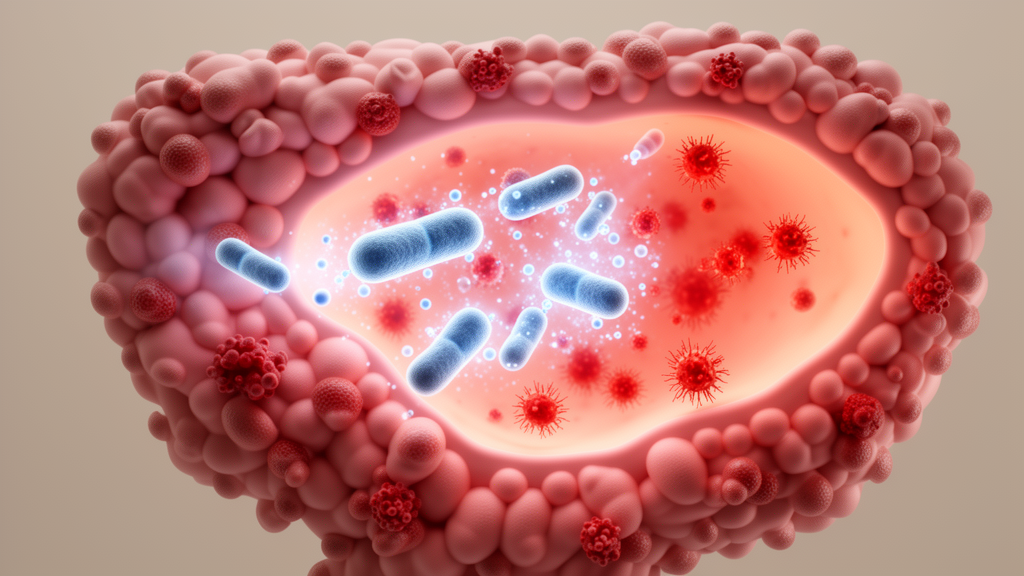
The race to replace antibiotics in livestock feed has taken a striking turn. In a new study published in MicrobiologyOpen, researchers report that two bacteriocin-producing lactic acid bacteria, Lactiplantibacillus pentosus AA86 and Pediococcus pentosaceus AA94, selectively modulated the developing gut microbiota of young calves without disrupting the overall microbial community. The finding lands at a moment of mounting pressure on global agriculture: demand for animal-source protein continues to climb with population growth, urbanization, and rising incomes, particularly in low- and middle-income countries, while regulatory bans on in-feed antimicrobials in the European Union and other regions have left producers scrambling for safe, effective alternatives to antibiotic growth promoters.
For decades, sub-therapeutic doses of antibiotics were routinely folded into animal feed to suppress intestinal pathogens, reduce sub-clinical infections, lower immune activation, and improve nutrient utilization. That convenience came at a steep price. The practice is now recognized as a major driver of antimicrobial resistance determinants circulating among pathogenic bacteria and commensal microbiota of animal origin, alongside dysbiosis and persistent antibiotic residues in meat, milk, and other animal products. The search for replacements has increasingly focused on probiotics, live microorganisms that promote growth performance by stabilizing gut microbial homeostasis, reinforcing intestinal barrier integrity, regulating tight junction expression, and stimulating mucosal immunity during critical developmental windows.
What sets the two strains at the heart of this study apart is their capacity to produce bacteriocins, ribosomally synthesized antimicrobial peptides that selectively inhibit competing and pathogenic microorganisms. Unlike conventional antibiotics, which can broadly bulldoze the gut ecosystem, bacteriocin production enables targeted suppression of undesirable taxa while preserving the resident microbial community. Both strains were previously isolated from cattle feces at the University of Ibadan Teaching and Research Farm and extensively characterized for probiotic properties, including tolerance to acidic pH and bile, absence of hemolytic activity, and organic acid production.
Before any calf received a single dose, the researchers turned to whole-genome sequencing to establish a rigorous safety profile. L. pentosus AA86 yielded a genome of 3,665,302 base pairs assembled into 112 contigs, while P. pentosaceus AA94 produced a smaller genome of 1,843,469 base pairs across 71 contigs. Critically, neither genome contained antimicrobial resistance genes, virulence factors, or plasmid-related elements, apart from a single Rep28 plasmid replicon carried by L. pentosus. More intriguingly, genomic screening with the BAGEL4 tool revealed pediocin-encoding genes in both isolates. Pediocin is a well-characterized class II bacteriocin with documented inhibitory activity against a broad range of bacterial taxa, including several Gram-positive pathogens and, under certain conditions, Gram-negative organisms. This genomic blueprint positioned the strains as candidates with built-in antimicrobial functionality before they ever entered an animal trial.
The feeding trial itself was elegantly simple. Eight calves, each weighing approximately 50 kilograms, were ear-tagged, penned individually to prevent cross-contamination, and randomly assigned to two groups. Six calves received a daily 10-milliliter oral gavage of a mixed suspension containing both bacterial strains at roughly 8.3 × 10^10 colony-forming units per milliliter, resuspended fresh each day in 10 percent reconstituted skimmed milk. Two control calves received sterile skimmed milk alone. No antibiotics or antibiotic feed additives were administered to any animal throughout the experiment. Fecal samples were collected directly from the rectum at three time points: before the intervention, at day 15, and at day 30, capturing the microbiota before, during, and after the probiotic course.
The sequencing pipeline was equally meticulous. The V3–V4 region of the 16S rRNA gene was amplified and sequenced on the Illumina MiSeq platform with paired-end chemistry, then processed through QIIME2 with Deblur denoising and Greengenes-based taxonomic classification. Alpha diversity metrics including Shannon index, observed features, Faith’s phylogenetic diversity, and Pielou’s evenness were computed alongside beta diversity measures such as weighted and unweighted UniFrac, Bray-Curtis, and Jaccard distances. Taxonomic read counts were then modeled with generalized linear mixed-effects models using a negative binomial distribution, with treatment, sampling time, and their interaction as fixed effects and calf identity as a random intercept to account for repeated measurements from the same animals. P-values were adjusted with the Benjamini-Hochberg false discovery rate correction.
The headline result was one of selective modulation rather than wholesale restructuring. Shannon diversity did not differ significantly between treatment groups or across sampling stages, and principal coordinate analysis of beta diversity showed no significant separation between intervention and control calves. This absence of a global diversity effect is consistent with a growing body of evidence that lactic acid bacteria-based probiotics often do not markedly alter overall microbial diversity, and with systematic reviews and meta-analyses of randomized trials reporting minimal probiotic effects on alpha diversity. The calf gut microbiota is, after all, in a state of gradual ecological assembly during early life, shaped by diet, host development, and microbial succession rather than abrupt compositional overhauls.
At the phylum level, however, the story sharpened considerably. Firmicutes showed a significant treatment-by-time interaction between the initial and final sampling points, with significantly lower abundance in probiotic-treated calves than in controls at day 30. Crucially, the two groups did not differ at baseline, and control calves showed no significant change over the same period, indicating that the divergence reflected a treatment-associated shift in microbial trajectories rather than a pre-existing difference. Bacteroidetes followed a complementary pattern: their abundance increased significantly from initial to final sampling within probiotic-treated calves, and estimated marginal means showed significantly higher Bacteroidetes levels in treated animals at the midpoint of the intervention. This compositional trend is widely interpreted as a gut ecosystem increasingly optimized for carbohydrate fermentation and metabolic efficiency, since Bacteroidetes in developing ruminants play a central role in degrading starch, fiber, and dietary protein while supporting short-chain fatty acid production during the transition toward functional ruminancy.
The direction of the Firmicutes-to-Bacteroidetes shift carries real health implications. Disproportionate expansion of Firmicutes relative to Bacteroidetes has been associated with dysbiosis across species; in calves, elevated Firmicutes coupled with reduced Bacteroidetes has been linked to diarrheal disease and impaired gut health, while similar shifts in humans have been connected to obesity, altered glucose metabolism, and gastrointestinal disorders. Genus-level patterns added further texture. In control calves, the abundance of Bacteroides, Parabacteroides, Mycoplasma, Shigella, and Staphylococcus decreased significantly between the middle and final sampling points, whereas Helicobacter rose significantly over the same interval. None of these temporal fluctuations appeared in the probiotic-treated calves, suggesting that supplementation may have attenuated some of the compositional volatility observed in the untreated microbiota. Lactobacillus abundance declined significantly in controls from initial to final and from middle to final sampling, while treated calves showed a decline only from initial to midpoint, hinting at a relative maintenance of resident Lactobacillus populations in the latter phase, though the absence of a significant treatment-by-time interaction means this observation remains explorative.
The authors are candid about the study’s constraints. The 30-day intervention was relatively short, limiting the ability to capture longer-term microbial adaptation or functional maturation, and the small cohort of eight calves, constrained by herd size at the research facility, may have reduced statistical power to detect subtle effects, particularly at the genus level. Relative abundance profiling also does not directly quantify absolute microbial loads or metabolic activity, and in vivo bacteriocin production was not measured. Still, the core message is compelling: early-life supplementation with genomically safe, pediocin-producing lactic acid bacteria appears to steer selected components of calf gut microbiota development, favoring a Bacteroidetes-enriched, fermentation-optimized ecosystem, without substantially altering global microbial diversity or community structure. Whether these taxonomic changes translate into measurable functional benefits, improved feed efficiency, and greater resilience to enteric disturbances will demand larger cohorts, extended follow-up, strain-resolved sequencing, functional metagenomics, metabolomic profiling, and host health outcomes. For now, the study offers a plausible microbiological basis for bacteriocin-producing probiotics as precision tools in the post-antibiotic era of livestock production.
Subject of Research: Modulation of Early‐Life Calf Gut Microbiota by Bacteriocin‐Producing Lactiplantibacillus pentosus AA86 and Pediococcus pentosaceus AA94
Article Title: Modulation of Early‐Life Calf Gut Microbiota by Bacteriocin‐Producing Lactiplantibacillus pentosus AA86 and Pediococcus pentosaceus AA94
Article References: Adetoye, A. A., Afolayan, A. O., Olatoye, I. O., Faneye, A. O., & Ayeni, F. A. (2026). Modulation of Early‐Life Calf Gut Microbiota by Bacteriocin‐Producing Lactiplantibacillus pentosus AA86 and Pediococcus pentosaceus AA94. MicrobiologyOpen, 15(5), Article e70438. https://doi.org/10.1002/mbo3.70438
Image Credits: AI Generated
DOI: 10.1002/mbo3.70438
Keywords: Modulation, Early, Life, Calf, Microbiota, Bacteriocin, Producing, Lactiplantibacillus, pentosus, AA86, Pediococcus, pentosaceus
Cite Scienmag News
Morgan Morrow. (October 17, 2026). Bacteriocin-Producing Probiotics Reshape Calf Gut Microbiota Without Antibiotics. Scienmag. https://scienmag.com/bacteriocin-producing-probiotics-reshape-calf-gut-microbiota-without-antibiotics/
Morgan Morrow. "Bacteriocin-Producing Probiotics Reshape Calf Gut Microbiota Without Antibiotics." Scienmag, 17 October 2026, https://scienmag.com/bacteriocin-producing-probiotics-reshape-calf-gut-microbiota-without-antibiotics/. Accessed 17 October 2026.
Morgan Morrow. "Bacteriocin-Producing Probiotics Reshape Calf Gut Microbiota Without Antibiotics." Scienmag. October 17, 2026. https://scienmag.com/bacteriocin-producing-probiotics-reshape-calf-gut-microbiota-without-antibiotics/


