


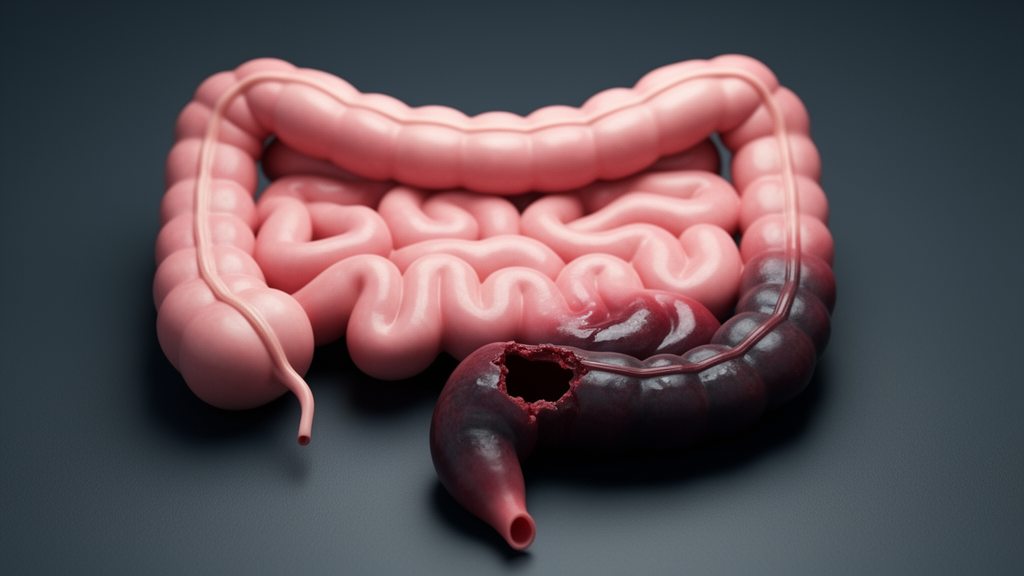
Cocaine has long been notorious for what it does to the heart and the brain, but a comprehensive new review argues that medicine has been dangerously overlooking another organ system under siege. A team of physicians at BronxCare Health System in New York, writing in Frontiers in Gastroenterology, has compiled the most detailed map yet of how the world’s second most widely used illicit drug tears into the gastrointestinal tract, producing everything from self-limited colitis to catastrophic bowel infarction, perforation, liver failure, and spontaneous splenic rupture. Their synthesis, drawing on literature spanning nearly four decades, makes a striking claim: cocaine is a significant and under-recognized contributor to severe gastrointestinal morbidity and mortality, and clinicians are missing it.
The scale of exposure is enormous. According to the World Drug Report, roughly 0.4 percent of the global population aged 15 to 64 reported cocaine use in 2019, corresponding to about 20 million people. In the United States, cocaine has been implicated in approximately one in five overdose deaths, and an estimated 5 million Americans report using the drug. The European Monitoring Centre for Drugs and Drug Addiction ranks cocaine as the second most commonly used illicit substance in the European Union after cannabis. Yet while emergency physicians routinely associate the drug with chest pain, stroke, and seizure, its abdominal presentations remain comparatively obscure, a gap the review’s authors set out to close with a narrative synthesis of PubMed/MEDLINE, Embase, and Scopus literature searched from January 1987, the year of the first published report of cocaine-associated gastroduodenal perforation, through July 2026.
Understanding how cocaine damages the gut requires understanding its pharmacology. Cocaine is a tropane alkaloid derived from the leaves of Erythroxylon coca that acts primarily by blocking the presynaptic reuptake of norepinephrine, dopamine, and serotonin through inhibition of their membrane transporters, DAT, NET, and SERT. The resulting accumulation of catecholamines at postsynaptic receptors produces a state of profound sympathetic overdrive: tachycardia, hypertension, and, critically for the bowel, intense vasoconstriction. The drug also blocks sodium channels, producing its local anesthetic effect, and interacts with NMDA, sigma, and kappa-opioid receptors, though the clinical implications of those interactions remain incompletely characterized.
The vascular story deepens at the level of the microcirculation. Cocaine activates platelets by increasing expression of platelet factor 4, thromboglobulin B, and P-selectin, and induces endothelial dysfunction through increased endothelin-1 with concurrently reduced nitric oxide. It raises fibrinogen, von Willebrand factor, and plasminogen activator inhibitor-1 while lowering protein C and antithrombin III, creating a pro-thrombotic state that heightens platelet sensitivity to agonists such as ADP and collagen. Cocaine also increases reactive oxygen species production in hepatocytes and endothelial cells, and its hepatic cytochrome P450 metabolism generates norcocaine and cocaethylene, metabolites more hepatotoxic than the parent compound. The net effect is a drug that simultaneously chokes off blood flow, promotes clotting, and poisons cells directly.
The ischemic consequences are the most dramatic. Cocaine-induced mesenteric vasospasm can critically reduce intestinal blood flow, and intestinal ischemia is generally considered to occur with a reduction of 75 percent or more in intestinal blood flow sustained for more than 12 hours. Symptoms begin anywhere from one hour to two days after use, occasionally delayed up to 72 hours. Acute mesenteric ischemia presents classically with sudden, severe abdominal pain out of proportion to examination findings, and reported cases include fatal superior mesenteric artery thrombosis in chronic users. Chronic mesenteric ischemia, or intestinal angina, produces recurrent postprandial pain as digestive demand for blood flow exceeds the supply constrained by chronic vasoconstriction and structural arterial change; one 2024 case report described chronic bowel ischemia manifesting as small-bowel obstruction from extensive intestinal-wall fibrosis in a young woman.
Ischemic colitis is among the more commonly reported complications, ranging from transient self-limited inflammation to fulminant disease. The colon’s watershed areas, the splenic flexure and rectosigmoid junction, are particularly vulnerable because of limited collateral circulation. An earlier case series identified 28 reported cases of cocaine-associated colonic ischemia with a mean patient age of just 32.6 years and symptom onset ranging from one hour to two days after use. The quantitative picture, thin as it is, is sobering: Elramah and colleagues, in a hybrid cohort/case-control study, found that cocaine-associated ischemic colitis carried a substantially higher mortality risk, with an odds ratio of 5.77 and reported mortality as high as 26 percent, compared with non-cocaine-related ischemic colitis, and more recent single-center reports describe mortality approaching 50 percent in severe, delayed-diagnosis presentations. A 2025 case report even described cocaine-associated non-occlusive ischemic colitis mimicking acute appendicitis in a previously healthy 27-year-old woman who required ileocecal resection for transmural necrosis.
Beyond ischemia, the review catalogs ulcerative and perforative disease. Crack cocaine is particularly associated with gastroduodenal perforation, first systematically described in a 1990 case series, most often affecting the first portion of the duodenum or the pylorus. Prepyloric perforation accounted for 42 percent of gastric perforations in one study of patients with a history of cocaine use, and approximately 16 percent of patients with perforated peptic ulcer disease at one large safety-net hospital had cocaine exposure. The pathophysiology is multifactorial: vasoconstrictive ischemia, direct chemical mucosal injury, and potentially increased intragastric pressure from altered motility and air-swallowing during smoking. Notably, Schuster and colleagues found that antiulcer surgical procedures were associated with no recurrence, whereas simple omental patch closure carried a 50 percent recurrence rate, suggesting the underlying ischemic mechanism demands definitive repair.
The liver and pancreas are not spared. Cocaine-associated acute pancreatitis is well recognized but rarely reported, with only seven published case reports available as of 2021, a scarcity the authors attribute to under-recognition and under-reporting rather than a true absence of cases. Hepatotoxicity ranges from mild transaminase elevation to acute liver failure, driven by reactive metabolites that undergo redox cycling, generate oxidative stress, and injure mitochondria through inhibition of respiration, ATP depletion, and caspase-3-mediated apoptosis. The review also documents splenic infarction, hematoma, and atraumatic rupture, with cocaine shown to cause up to a 20 percent transient reduction in splenic volume through vasoconstriction, plus rarer entities including gastric antral vascular ectasia, an inflammatory bowel disease-mimicking phenotype driven by cytokine-mediated barrier disruption and dysbiosis, and, in a single 2024 report, acalculous cholecystitis attributed to vasospasm of the cystic vasculature.
The authors are unusually candid about confounders. Concurrent alcohol use generates cocaethylene, which has a longer half-life and greater toxicity than cocaine itself, with an LD50 of 60 to 68.8 milligrams per kilogram versus 93.0 for cocaine; in the Miami Adult Studies on HIV cohort, concomitant cocaine-and-alcohol users with detectable cocaethylene had an odds ratio of 4.97 for liver fibrosis compared with 1.3 for cocaine-only users. Tobacco use, an independent risk factor for atherosclerosis and impaired mucosal healing, is inconsistently reported. Most striking is levamisole, a veterinary anthelmintic used to adulterate cocaine that was identified in up to 69 percent of cocaine samples analyzed in the United States as of July 2009, and that independently causes vasculopathy and agranulocytosis, compounding cocaine’s own vasospastic and thrombotic effects.
Perhaps the review’s most important contribution is its epistemic honesty. The evidence base underlying nearly every complication described remains dominated by single case reports and small case series rather than comparative studies; only three studies provide quantitative risk data, two limited to ischemic colitis and one systematic review of 53 studies and 69 patients examining route of use, which found broadly similar mortality and surgical rates across routes of cocaine use. The authors call for registry-based or multicenter comparative studies with standardized case definitions and toxicological confirmation of adulterants. In the meantime, their clinical message is unambiguous: in young patients presenting with abdominal pain or ischemic features, particularly without conventional vascular risk factors, cocaine-related gastrointestinal disease deserves a place at the top of the differential, because diagnostic delay in this population can be lethal.
Subject of Research: Cocaine's gastrointestinal complications: mechanisms, clinical spectrum, confounders, and the case-report-dominated evidence base
Article Title: Gastrointestinal complications of cocaine use: a narrative literature review
Article References: Qasim, A., Dasan, S. L. A. M., Veena, F., Kandhi, S., & Patel, H. (2026). Gastrointestinal complications of cocaine use: a narrative literature review. Frontiers in Gastroenterology, 5, Article 1907090. https://doi.org/10.3389/fgstr.2026.1907090
Image Credits: AI Generated
DOI: 10.3389/fgstr.2026.1907090
Keywords: cocaine, gastrointestinal complications, ischemic colitis, mesenteric ischemia, bowel perforation, hepatotoxicity, pancreatitis, levamisole, cocaethylene, Frontiers in Gastroenterology, Gastrointestinal, complications
Cite Scienmag News
Sophia Mitchell. (October 17, 2026). Cocaine’s Hidden Toll: How the Drug Ravages the Gut From Ischemia to Perforation. Scienmag. https://scienmag.com/cocaines-hidden-toll-how-the-drug-ravages-the-gut-from-ischemia-to-perforation/
Sophia Mitchell. "Cocaine’s Hidden Toll: How the Drug Ravages the Gut From Ischemia to Perforation." Scienmag, 17 October 2026, https://scienmag.com/cocaines-hidden-toll-how-the-drug-ravages-the-gut-from-ischemia-to-perforation/. Accessed 17 October 2026.
Sophia Mitchell. "Cocaine’s Hidden Toll: How the Drug Ravages the Gut From Ischemia to Perforation." Scienmag. October 17, 2026. https://scienmag.com/cocaines-hidden-toll-how-the-drug-ravages-the-gut-from-ischemia-to-perforation/


