


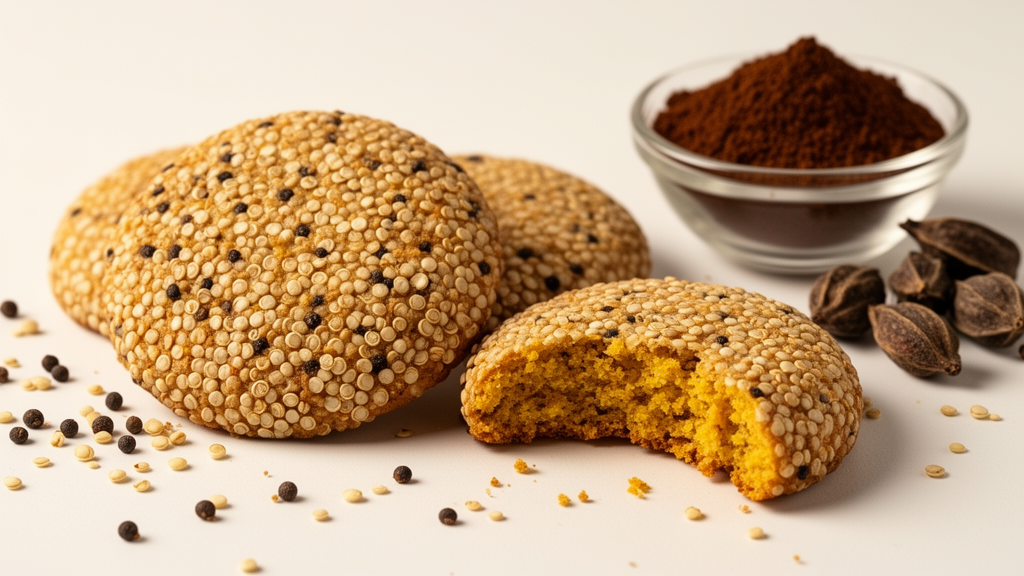
Baking transforms dough into the golden, aromatic cookies we love, but the same high temperatures that create desirable color and flavor also drive the Maillard reaction, a complex non-enzymatic browning process between reducing sugars and amino groups of proteins. While this reaction is essential for sensory appeal, it also generates unwanted compounds including acrylamide, 5-hydroxymethylfurfural, and advanced glycation end products, or AGEs, which have raised health concerns due to their links to diabetes, cardiovascular disease, and neurodegenerative processes. Now, a team of Peruvian researchers has investigated whether phenolic extracts from tara pods, a native Andean plant rich in hydrolysable tannins, can mitigate the formation of these thermally induced contaminants in cookies made from quinoa and cañihua, two Andean pseudocereals prized for their nutritional profile.
The study, published in Food Chemistry: X, evaluated both hydrolyzed and unhydrolyzed tara pod phenolic extracts in a bovine serum albumin–methylglyoxal model system and in real quinoa and cañihua cookies baked at 180 °C for 16 minutes. The researchers chemically characterized the extracts using UPLC–PDA–QTOF–MS and found that acid hydrolysis progressively converted gallotannins, specifically polygalloylquinic acids, into free gallic acid. After 20 hours of hydrolysis, the gallic acid content reached 833 mg per gram of dry weight, compared with only 6 mg in the unhydrolyzed extract. Increasing the degree of hydrolysis was associated with higher total phenolic content and greater antioxidant capacity, attributed to structural modifications that increase the availability of phenolic hydroxyl groups with radical-scavenging ability.
In the BSA–MGO model system, which bypasses the initial conversion of reducing sugars into reactive carbonyl compounds, tara extracts exhibited marked concentration-dependent antiglycation activity. At the highest concentration tested, 10 mg gallic acid equivalents per milliliter, the unhydrolyzed tara extract showed the numerically highest inhibition of fluorescent AGEs formation at 90.3 percent, comparable to the prototype inhibitor aminoguanidine, which reduced fluorescence by approximately 82 percent. Interestingly, at lower concentrations, inhibition tended to increase with the degree of hydrolysis, suggesting that the antiglycation activity depends on both concentration and structural characteristics of the phenolic compounds. The researchers also noted that polyphenols can interact with proteins through covalent and non-covalent bonds, forming complexes that may decrease the accessibility of amino groups and reduce their reactivity in the OPA assay, complicating interpretation of the results.
When the extracts were incorporated into real cookies at a fixed concentration of 10 mg gallic acid equivalents per 100 g flour, the effects on acrylamide and AGEs formation were strongly dependent on both the food matrix and the degree of hydrolysis. Supplementation with the unhydrolyzed tara extract resulted in the lowest acrylamide levels in both quinoa and cañihua cookies, followed by the extensively hydrolyzed extract. In contrast, extracts with intermediate degrees of hydrolysis were less effective and, in some cases, produced acrylamide concentrations similar to or higher than those of control cookies. The researchers attributed this non-linear response to hydrolysis-induced changes in the phenolic profile, noting that gallotannins interact with proteins and amino acids through hydrogen bonds and hydrophobic association, while interactions with sugars are restricted to hydrogen bonding, and that compounds with higher numbers of galloyl residues provide higher binding rates to proteins and sugars.
Notably, acrylamide levels in quinoa and cañihua cookies were lower than those detected in wheat cookies prepared with the same formulation, which showed 64.1 μg per kg dry weight. All treatments remained below the EFSA reference level of 265 μg per kg for cookies and related products, and far below commercial cookies, which can contain approximately 1340 μg per kg. The comparatively low acrylamide formation in pseudocereal cookies may relate to their lower asparagine content, given the key role of this amino acid as an acrylamide precursor during thermal processing in cereal-based bakery products.
Regarding fluorescent AGEs, supplementation with tara extracts did not significantly reduce their formation in either quinoa or cañihua cookies compared with controls. The researchers suggested that endogenous phenolic compounds, including flavonoids such as rutin, in both pseudocereal matrices may already exert protective effects through sequestration of reactive dicarbonyl compounds, reducing the additional benefit of tara-derived phenolics. Furthermore, fluorescence-based determination of AGEs may be affected by interference from non-AGEs fluorophores present in complex food matrices, limiting the specificity of this marker. In contrast, protein-bound AGEs, namely Nε-carboxymethyl-l-lysine and Nε-carboxyethyl-l-lysine, showed a response pattern more similar to acrylamide and was strongly dependent on both the food matrix and the degree of extract hydrolysis. In quinoa cookies, the unhydrolyzed extract significantly reduced both CML and CEL concentrations, whereas extracts with higher degrees of hydrolysis were less effective and, in some cases, even increased protein-bound AGEs levels. In cañihua cookies, both unhydrolyzed and partially hydrolyzed extracts reduced CML, while 24-THE and 57-THE extracts significantly lowered CEL formation.
Given its greater mitigating effect on both acrylamide and protein-bound AGEs, the unhydrolyzed tara extract was selected for further evaluation at different concentrations, 2.5, 10, and 15 mg gallic acid equivalents per 100 g flour. In cañihua cookies, significant reductions in fluorescent AGEs and CEL were observed at intermediate supplementation levels, while a significant reduction in CML was observed at the lowest concentration. Acrylamide formation in cañihua cookies showed a non-linear concentration-dependent response, with the lowest levels at intermediate supplementation levels, 42.0 and 36.1 μg per kg dry weight at 2.5 and 10 mg, compared with 67.0 μg per kg in the control. In quinoa cookies, however, UTE supplementation did not significantly mitigate acrylamide formation, and increasing the supplementation level resulted in progressively higher acrylamide concentrations, reaching 60.5 μg per kg at the highest dose. These contrasting responses indicate that the antiglycation effect of the unhydrolyzed extract in complex food matrices is both matrix- and concentration-dependent and does not follow a simple linear dose–response relationship.
The physicochemical changes induced by supplementation further highlighted the complexity of the system. Progressive reduction in cookie moisture content with increasing extract concentrations was attributed to a modifying effect of gallotannins on water molecular mobility, which influences the availability of Maillard precursors during baking. In quinoa cookies, the moisture reduction coincided with a gradual increase in acrylamide levels, but this pattern was not observed in cañihua cookies, suggesting that moisture variations, while influential, were not the only determinant factor. Differences in total and soluble protein contents, reducing sugar concentrations, and endogenous phenolic profiles between the two Chenopodium species likely generate different chemical environments during baking, modulating both AGEs formation and the effect of supplementation. Cañihua cookies exhibited higher total protein content, 9.44 g per 100 g dry weight compared with 7.41 g in quinoa cookies, while quinoa cookies showed slightly higher reducing sugar concentrations and higher levels of both early and advanced Maillard reaction products.
The study concludes that tara pod phenolic extracts show the capacity to mitigate acrylamide and AGEs formation in quinoa and cañihua cookies, although the magnitude and direction of the effect is highly dependent on the food matrix, extract concentration, and the specific Maillard reaction marker evaluated. The different responses observed for acrylamide, fluorescent AGEs, CML, and CEL indicate that their formation is influenced by complex interactions between tara-derived polyphenols and endogenous matrix components during baking, as well as by physicochemical changes induced by supplementation. These findings highlight tara pods as a promising source of phenolic extracts capable of modulating thermally induced reactions in bakery products based on Andean pseudocereals, although their effects cannot be generalized as uniform mitigators of acrylamide and AGEs formation. The researchers emphasize that incorporating tara phenolic extracts modifies the bioactive and physicochemical characteristics of the final product, and that these modifications should be taken into consideration during the formulation of bakery products enriched with natural phenolic extracts.
Subject of Research: Food Chemistry
Article Title: Modulation of acrylamide and advanced glycation end products in quinoa and cañihua cookies: Matrix and marker dependent effects of hydrolyzed and unhydrolyzed tara pod phenolic extracts
Article References: Aguilar-Galvez, A., García-Ríos, D., Meléndez-Gamarra, A., Quispe, T., Calsin-Cutimbo, M., Chirinos, R., Pedreschi, F., Pedreschi, R., & Campos, D. (2026). Modulation of acrylamide and advanced glycation end products in quinoa and cañihua cookies: Matrix and marker dependent effects of hydrolyzed and unhydrolyzed tara pod phenolic extracts. Food Chemistry: X, Article 104614. https://doi.org/10.1016/j.fochx.2026.104614
Image Credits: AI Generated
DOI: 10.1016/j.fochx.2026.104614
Keywords: acrylamide, advanced glycation end products, Maillard reaction, quinoa, cañihua, tara pod, phenolic compounds, food safety, bakery products, Andean pseudocereals, Modulation, advanced
Cite Scienmag News
Bethany Barker. (October 17, 2026). Tara Pod Polyphenols Show Matrix-Dependent Effects on Acrylamide and AGEs in Quinoa and Cañihua Cookies. Scienmag. https://scienmag.com/tara-pod-polyphenols-show-matrix-dependent-effects-on-acrylamide-and-ages-in-quinoa-and-canihua-cookies/
Bethany Barker. "Tara Pod Polyphenols Show Matrix-Dependent Effects on Acrylamide and AGEs in Quinoa and Cañihua Cookies." Scienmag, 17 October 2026, https://scienmag.com/tara-pod-polyphenols-show-matrix-dependent-effects-on-acrylamide-and-ages-in-quinoa-and-canihua-cookies/. Accessed 17 October 2026.
Bethany Barker. "Tara Pod Polyphenols Show Matrix-Dependent Effects on Acrylamide and AGEs in Quinoa and Cañihua Cookies." Scienmag. October 17, 2026. https://scienmag.com/tara-pod-polyphenols-show-matrix-dependent-effects-on-acrylamide-and-ages-in-quinoa-and-canihua-cookies/


