


…
…
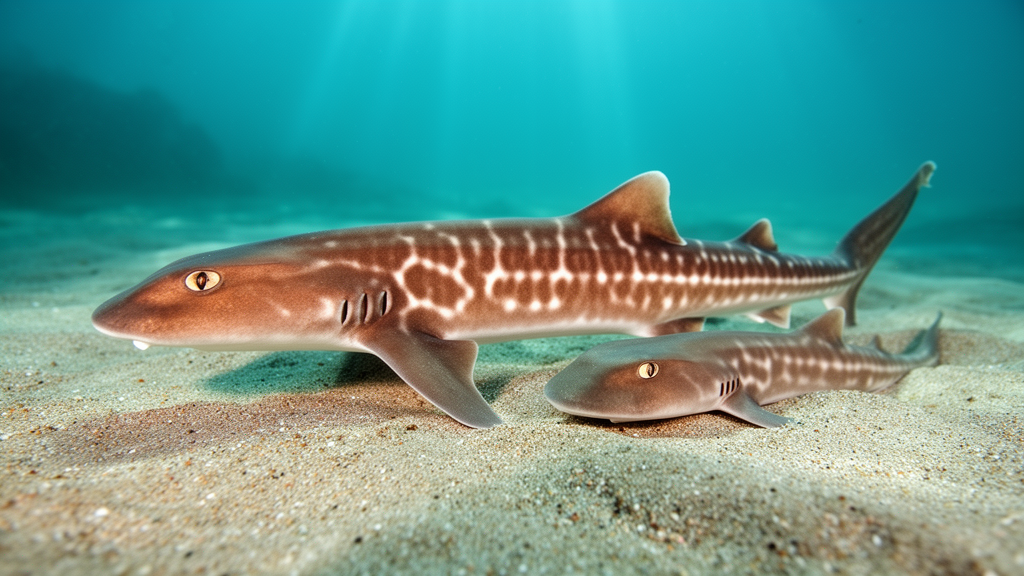
The chain catshark joins a growing list of elasmobranchs whose external anatomy betrays subtle but measurable differences between the sexes, and the new findings from the southern Gulf of Mexico add an unusually detailed layer to that picture. By combining traditional morphometrics with scanning electron microscopy of dermal denticles, the researchers were able to detect dimorphism at two very different scales: the gross proportions of the body and the microscopic architecture of the skin itself. This dual approach matters because external morphology alone can miss differences that are functionally significant, while denticle analysis captures variation in a tissue system that directly mediates contact between mating partners.
The statistical framework used in the study deserves some attention. Because many morphological traits in fish scale with body size, the authors expressed each of the sixty measurements as a percentage of total length before testing for differences between males and females. This standardization helps ensure that a longer pelvic fin in one sex is not simply a byproduct of that sex being larger overall. The Shapiro–Wilk test was applied to check whether the data met the assumptions of parametric statistics, and when they did not, the Mann–Whitney U test provided a non-parametric alternative that is robust to skewed distributions and small sample sizes. With only fifteen males and ten females, such caution is appropriate; small samples can produce misleading results if the underlying data are not normally distributed.
Twelve of the sixty measurements separated the sexes significantly, and the pattern of which traits differed is informative. Traits associated with the pelvic region and the distance between the pelvic fins and the anus showed some of the strongest contrasts, with males generally exhibiting greater values. In male sharks and rays, the pelvic fins are modified to support the claspers, the paired intromittent organs used to deliver sperm during copulation. A longer pelvic fin or a greater pelvic–anal distance can reflect the space needed to accommodate these structures. The finding that males had a greater pelvic–anal distance echoes earlier work on Scyliorhinus stellaris, in which males showed a similar expansion of the region between the pelvic fins and the cloaca. Such convergence across related species suggests that this particular dimension is a reliable marker of sexual differentiation within the catshark family.
Head and mouth dimensions also contributed to the dimorphic signal. Males tended to have a longer mouth, while females had a wider one. This kind of divergence in oral geometry has been documented in the small-spotted catshark, Scyliorhinus canicula, where mature males develop a longer, narrower mouth and longer teeth than females, especially during the breeding season. The functional explanation usually offered involves mating behavior: male sharks in many species bite and hold females during copulation, and changes in jaw structure or dentition can improve grip. Although the present study did not examine tooth morphology directly, the differences in mouth length and width between male and female chain catsharks are consistent with the hypothesis that feeding and mating pressures shape the craniofacial skeleton differently in each sex.
The dermal denticle data reveal a second, finer level of dimorphism. Dermal denticles, also called placoid scales, are tooth-like structures embedded in the skin, composed of dentine with an enameloid crown over a pulp cavity. They are homologous to teeth in the sense that both share the same developmental origin from neural crest-derived odontoblasts. In sharks, denticle density and shape vary across body regions in ways that reflect local hydrodynamic demands: denser, more streamlined denticles on the leading edges reduce drag, while different morphologies on the ventral surface may aid in protection or in maneuvering along the seafloor. The finding that denticle density differs between the sexes in all four sampled regions—dorsal, ventral, lateral, and anterior dorsal—suggests that sexual selection or reproductive mechanics have left a measurable imprint on the integument itself.
The ranges reported are striking. In the anterior dorsal region, females showed densities between 209 and 490 denticles per square millimeter, while males ranged from 254 to 534. In the dorsal region proper, females spanned 105 to 353 and males 112 to 530. These are not trivial differences; the upper bounds for males exceed the lower bounds by factors of two or more in some regions. The fact that the ranges overlap considerably means that density alone cannot be used to sex an individual specimen with certainty, but the statistical tests confirmed that the distributions differ significantly. Within a single sex, denticle length and width also varied by region, with the anterior dorsal and lateral regions showing significant internal variation in both dimensions. This regional heterogeneity implies that the skin is not a uniform armor but a mosaic of locally adapted microstructures.
Why would males and females differ in denticle coverage? One possibility relates to the mechanics of mating. During copulation, male sharks grip females with their teeth, and the skin of females—especially in regions that are bitten—may be under selection to resist abrasion or penetration. Thicker skin in mature females has been documented in several elasmobranch species as an adaptation to coercive mating. Denser denticles could serve a complementary protective function, making the integument harder to damage. Conversely, males might benefit from denticles that reduce drag during the rapid swimming bursts associated with courtship and sperm transfer. The anterior dorsal region, which showed some of the largest density differences between the sexes, sits along the midline of the back where hydrodynamic forces are substantial and where a grasping male might also make contact.
Another possibility involves growth allometry. Dermal denticles in sharks generally stop growing once they reach a fixed size, and new denticles are added to fill gaps as the animal grows. The rate of addition and the final density achieved can depend on hormonal state, which differs between mature males and females. Sex hormones influence skin structure in fishes broadly, and in elasmobranchs the dramatic changes that accompany maturity—clasper development in males, skin thickening in females—are likely coordinated with changes in the dermal skeleton. The fact that the study focused on adult specimens means the observed differences are the product of post-maturity development rather than juvenile variation.
The geographic context of the study adds value. The chain catshark is widely distributed in the western Atlantic, from Georges Bank to Texas, the Gulf of Mexico, the Caribbean, and parts of Central America, yet records in Mexican waters are sporadic and concentrated along the southern edge of the continental shelf. By sampling from coastal fisheries using bottom longlines, the researchers obtained specimens from a region where the species is infrequently documented, expanding the known morphological baseline for the population. This matters for conservation and fisheries management, because understanding local variation in body proportions and skin structure can help distinguish stocks and inform assessments of vulnerability.
The methods used to prepare denticle samples are worth noting for their rigor. Skin samples of at least one square centimeter were preserved in ninety-six percent ethanol, cleaned under a stereomicroscope with a fine brush, treated briefly with three percent hydrogen peroxide to remove organic residue, rinsed, dried, and mounted on slides for density counts. For scanning electron microscopy, samples were dried in a critical point desiccator to avoid the collapse of delicate structures that would occur with simple air drying, mounted on aluminum supports, and sputter-coated with a thin gold film to make the surfaces conductive. Images taken at forty times magnification were then measured using image analysis software, with randomly selected complete denticles chosen for quantification of crown length and width. This protocol minimizes bias in denticle selection and ensures that measurements reflect the true three-dimensional geometry of the crowns.
The description of denticle morphology followed the framework established by Muñoz-Chápuli, which considers the anterior and superior borders of the crown, the overall shape, the number of ridges and cusps, and the presence of microornaments. These features are taxonomically informative and can help distinguish species within the Scyliorhinidae. The chain catshark was already known to exhibit variation in denticle shape across the ventral, dorsal, fin margin, and cephalic regions, but the present study is the first to systematically compare these features between males and females. The confirmation that denticle dimensions differ by sex within the same body region suggests that future taxonomic or ecological studies should account for sex when describing denticle characteristics, or risk conflating sexual variation with species-level or regional differences.
Broader evolutionary context is relevant here. Sexual dimorphism in sharks does not follow Rensch’s Rule, the classical pattern in which the degree of dimorphism increases in species where males are larger and decreases where females are larger. Instead, female sharks are generally larger than males, a pattern attributed to reproductive advantages such as higher fecundity and greater capacity for embryonic development. The chain catshark fits this mold: the females in the study ranged from 437 to 556 millimeters in total length, essentially overlapping the male range of 434 to 557, but the dimorphism expressed in the study is not primarily about size. Rather, it is about shape—proportions of the pelvic region, mouth geometry, and the microstructure of the skin. This decoupling of dimorphism from body size is consistent with the idea that in sharks, sexual selection acts more on structures directly involved in mating than on overall body dimensions.
The oviparous reproductive mode of most catsharks, including the chain catshark, adds another dimension. Females lay egg cases that are anchored to the substrate, and the energetic cost of producing these cases may favor larger or more robust females. Males, by contrast, invest in structures for locating and securing mates. The morphological differences documented here—longer pelvic fins, greater pelvic–anal distance, and denser denticles in specific regions—can be interpreted as the anatomical expression of these divergent reproductive strategies. Future work could explore whether denticle density changes seasonally in association with mating periods, whether the differences documented in the southern Gulf of Mexico hold across the species’ range, and whether the denticle patterns observed here correlate with known mating behaviors such as biting and holding.
In sum, the study demonstrates that sexual dimorphism in the chain catshark operates at multiple anatomical levels simultaneously. Gross morphometry reveals differences in pelvic and cranial proportions that likely relate to clasper support and mating grip. Microscopic analysis of dermal denticles reveals differences in density and size that likely relate to protection, hydrodynamics, or both. Together, these findings provide a more complete picture of how sexual selection and reproductive mechanics shape the external anatomy of a small, benthic shark, and they establish a methodological template for future comparative studies across the Scyliorhinidae and beyond.
Subject of Research: …
Article Title: Sexual dimorphism in chain catshark, Scyliorhinus retifer ( Elasmobranchii , Carcharhiniformes , Scyliorhinidae ): Morphology and dermal denticles evidence
Article References: Juárez-Maldonado, M. J., & Del Moral-Flores, L. F. (2026). Sexual dimorphism in chain catshark, Scyliorhinus retifer (Elasmobranchii, Carcharhiniformes, Scyliorhinidae): Morphology and dermal denticles evidence. Acta Ichthyologica et Piscatoria, 56, 237-245. https://doi.org/10.3897/aiep.56.191711
Image Credits: AI Generated
Keywords: Sexual, dimorphism, chain, catshark, Scyliorhinus, retifer, Elasmobranchii, Carcharhiniformes, Scyliorhinidae, Morphology, dermal, denticles
Cite Scienmag News
Cassandra Pierce. (October 17, 2026). Chain Catshark Skin and Body Shape Reveal Hidden Sexual Dimorphism, Study Finds. Scienmag. https://scienmag.com/chain-catshark-skin-and-body-shape-reveal-hidden-sexual-dimorphism-study-finds/
Cassandra Pierce. "Chain Catshark Skin and Body Shape Reveal Hidden Sexual Dimorphism, Study Finds." Scienmag, 17 October 2026, https://scienmag.com/chain-catshark-skin-and-body-shape-reveal-hidden-sexual-dimorphism-study-finds/. Accessed 17 October 2026.
Cassandra Pierce. "Chain Catshark Skin and Body Shape Reveal Hidden Sexual Dimorphism, Study Finds." Scienmag. October 17, 2026. https://scienmag.com/chain-catshark-skin-and-body-shape-reveal-hidden-sexual-dimorphism-study-finds/


