


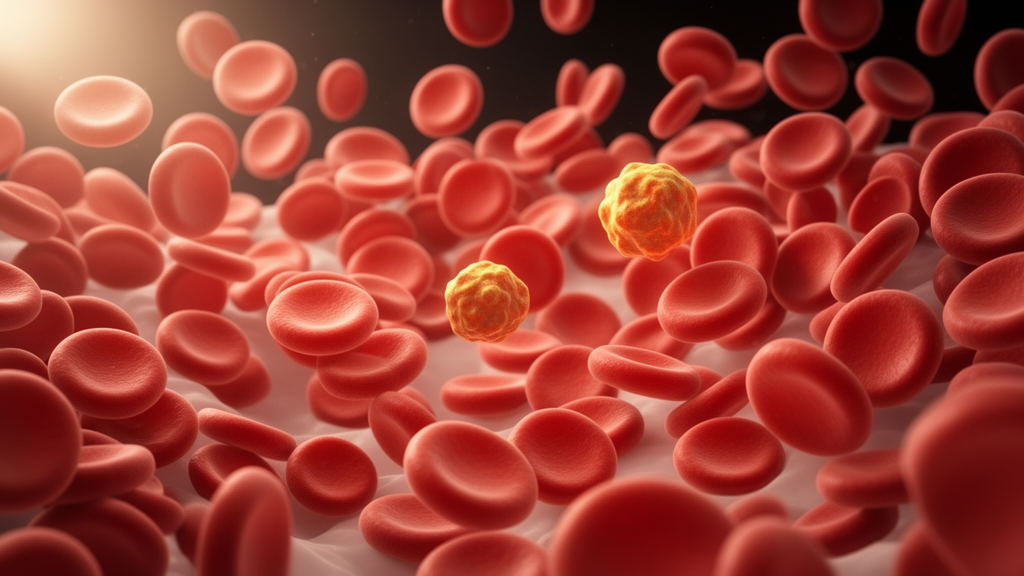
Deep inside the bone marrow of otherwise healthy people, a quiet genetic contest plays out over decades. Some blood stem cells acquire mutations that let them outgrow their neighbors, seeding expanding armies of slightly altered immune cells that circulate through the body. This phenomenon, known as clonal hematopoiesis of indeterminate potential, or CHIP, has already been linked to heart disease, liver disease, and blood cancers. Now a large genetic study suggests it may also tilt the odds toward several solid tumors, including cancers of the thyroid, lung, kidney, and brain.
The new research, published in Experimental Biology and Medicine, used a statistical technique called Mendelian randomization to ask whether CHIP is merely a bystander in cancer or an active contributor to tumor development. Drawing on genome-wide association data from more than 612,000 cancer cases across 18 tumor types, the team found that people genetically predisposed to CHIP showed increased risks of thyroid cancer, lung cancer, kidney cancer, brain cancer, basal cell carcinoma, and malignant melanoma. The associations held up after stringent statistical corrections and multiple sensitivity checks, offering some of the strongest evidence yet that CHIP is not just a correlate of cancer but potentially a causal player.
CHIP is defined by the expansion of blood stem cells carrying somatic mutations, most often in genes such as DNMT3A, TET2, and ASXL1, at a variant allele frequency above 2 percent, in the absence of any diagnosed blood disorder. It becomes steadily more common with age, appearing in a substantial fraction of people over 70. These mutated clones produce immune cells with altered surface markers and inflammatory behavior, and researchers have proposed that this chronic, low-grade inflammatory state could create fertile ground for malignant transformation in nearby or distant tissues.
Establishing causality between CHIP and cancer has been difficult. Observational studies are confounded by aging itself, by chemotherapy and radiation treatments that can induce CHIP-like mutations, and by the possibility that cancer or its therapy drives the clonal expansions rather than the reverse. Mendelian randomization sidesteps these problems by using naturally occurring genetic variants as proxies for the exposure of interest. Because alleles are randomly assigned at conception, they are largely immune to the confounding and reverse causation that plague conventional epidemiology, and they capture the lifelong effect of a trait rather than a snapshot in time.
The researchers built genetic instruments for CHIP from a large-scale genome-wide association study in European cohorts, selecting independent variants at genome-wide significance and validating them with F-statistics well above the threshold for weak-instrument bias. As a positive control, they confirmed that their CHIP instruments predicted lymphoid leukemia, the association most firmly established in prior clinical work. They then tested these instruments against summary statistics for 18 cancers drawn from the FinnGen consortium, the Million Veteran Program, the PLCO study, and large international consortia, using inverse-variance weighted models as the primary analysis and applying Bonferroni corrections across all tested pairs.
The results were striking in their selectivity. Of the 18 cancers examined, six showed robust associations with genetically predicted CHIP. Brain cancer showed the largest effect, with a pooled odds ratio of 1.78 for overall CHIP, meaning that a genetically predicted one-standard-deviation increase in CHIP liability was associated with roughly a 78 percent higher risk. Thyroid cancer, kidney cancer, lung cancer, basal cell carcinoma, and malignant melanoma all showed elevated odds as well, with DNMT3A-mutant CHIP, the most common subtype, consistently implicated. Notably, the study found no causal signal for breast, prostate, ovarian, colorectal, or several other common cancers, suggesting that CHIP’s influence is highly tissue-dependent rather than a blanket cancer risk.
The histological breakdown added further nuance. Within lung cancer, the association was concentrated in lung adenocarcinoma, with an odds ratio of 1.48, while squamous cell carcinoma and small cell lung carcinoma showed no significant link. In kidney cancer, the effect was driven primarily by clear cell renal cell carcinoma, and in thyroid cancer by papillary adenocarcinoma. This subtype specificity hints that the tumor microenvironment, immune composition, and tissue-specific inflammatory cues determine whether CHIP-mutant immune cells can promote or sustain malignancy in a given organ.
Mechanistically, the findings align with a growing body of work showing that CHIP-mutant myeloid cells can infiltrate solid tumors and reprogram the immune landscape. Recent studies have documented that primary tumors from patients with CHIP contain a higher proportion of myeloid cells, and animal models have demonstrated that TET2-mutant macrophages can either accelerate or, in some contexts, enhance antitumor immunity depending on the setting. The pathway enrichment analysis in the new study pointed to genes involved in DNA damage response, hematopoietic stem cell regulation, and telomere biology, suggesting that CHIP sits at the intersection of clonal selection, genomic instability, and inflammatory remodeling of the tumor niche.
The authors caution that their analysis has limits. The genetic instruments proxy CHIP liability rather than measuring the mutated cells directly, statistical power was limited for some rarer cancers and subtypes, and the study included only European-ancestry cohorts, which may limit generalizability. They also could not fully rule out horizontal pleiotropy, though sensitivity analyses excluding variants near the TERT and TP53 loci, leave-one-out analyses, and MR-Egger intercept tests all supported the robustness of the core findings. Reverse Mendelian randomization showed no evidence that cancer susceptibility drives CHIP, reinforcing the direction of the causal arrow.
If the findings are confirmed in prospective cohorts and across diverse populations, they could reshape how clinicians think about cancer screening in aging adults. CHIP is already detectable through routine blood DNA sequencing, and the researchers argue that timely screening for CHIP could identify people at elevated risk for specific cancers before disease manifests. As the population ages and CHIP becomes an increasingly recognized feature of human biology, the line between normal aging of the blood and a predisposition to malignancy may prove thinner than anyone expected.
Subject of Research: The causal relationship between clonal hematopoiesis of indeterminate potential and cancer risk
Article Title: Causal association between clonal hematopoiesis indeterminate potential and cancer: a Mendelian randomization study
Article References: Jin, J., Pu, Q., Wu, C., Lei, Y., Hu, Y., Yang, X., Huang, J., Wu, F., Xiao, L., & Yu, L. (2026). Causal association between clonal hematopoiesis indeterminate potential and cancer: a Mendelian randomization study. Experimental Biology and Medicine, 251, Article 10923. https://doi.org/10.3389/ebm.2026.10923
Image Credits: AI Generated
Keywords: clonal hematopoiesis, CHIP, Mendelian randomization, cancer risk, DNMT3A, TET2, thyroid cancer, lung cancer, kidney cancer, brain cancer, melanoma, tumor microenvironment
Cite Scienmag News
Juliet Wilcox. (October 16, 2026). Mutant Blood Cells May Quietly Raise the Risk of Six Cancers, Genetic Study Finds. Scienmag. https://scienmag.com/mutant-blood-cells-may-quietly-raise-the-risk-of-six-cancers-genetic-study-finds/
Juliet Wilcox. "Mutant Blood Cells May Quietly Raise the Risk of Six Cancers, Genetic Study Finds." Scienmag, 16 October 2026, https://scienmag.com/mutant-blood-cells-may-quietly-raise-the-risk-of-six-cancers-genetic-study-finds/. Accessed 16 October 2026.
Juliet Wilcox. "Mutant Blood Cells May Quietly Raise the Risk of Six Cancers, Genetic Study Finds." Scienmag. October 16, 2026. https://scienmag.com/mutant-blood-cells-may-quietly-raise-the-risk-of-six-cancers-genetic-study-finds/


