


Type 2 diabetes, formally known as non-insulin-dependent diabetes mellitus (NIDDM), is one of the most quietly dangerous epidemics of our time. More than 500 million adults worldwide were living with diabetes in 2021, roughly 10.5 percent of the adult population, and that figure is projected to climb to 12.2 percent by 2045. Over 90 percent of diagnosed cases are type 2, yet only about 45 percent of people with the disease have a confirmed diagnosis. The reason is grimly simple: the condition develops without symptoms in its early stages, so most people only discover it once the disease is well advanced and the window for the most effective intervention has narrowed.
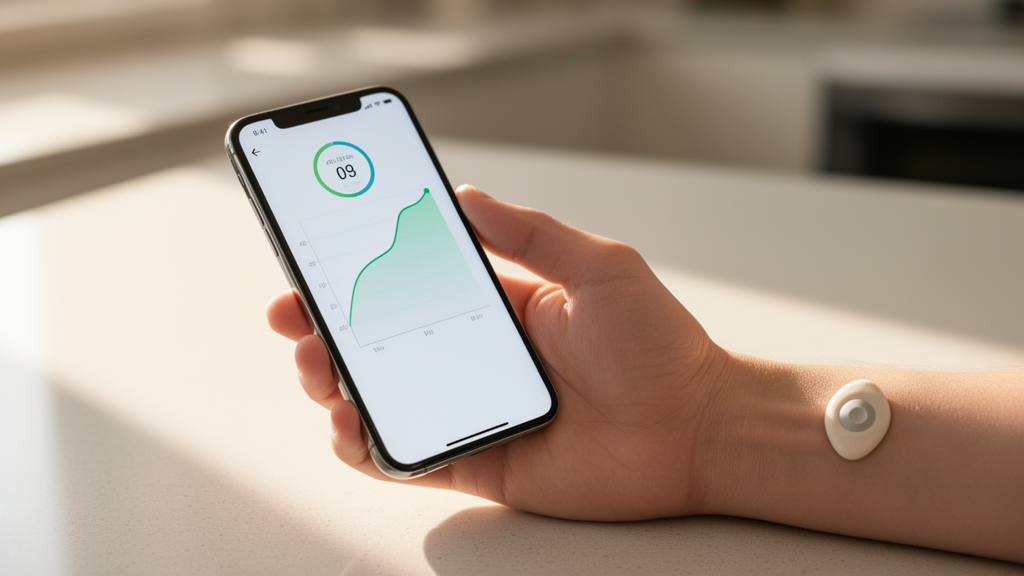
A new study published in Frontiers in Digital Health proposes a strikingly accessible answer. A research team spanning Westcliff University, SINTEF Digital, International Islamic University Chittagong, the University of Oslo and Southeast University has built GlucoSense, a computational framework that fuses smartphone-based human activity recognition with continuous blood glucose forecasting to flag early NIDDM risk. Instead of requiring a clinic visit, a blood draw or even a glucose sensor on the patient, the system relies on a smartphone accelerometer, a heart-rate wearable and self-reported meal logs. The goal is not diagnosis but early risk stratification, nudging people toward clinical consultation before symptoms ever appear.
The technical core of GlucoSense is a pair of graph neural networks built on the Graph Attention Network version 2 (GATv2) architecture. Unlike recurrent models such as LSTMs, which process physiological signals as flat sequences, GATv2 treats the data as a graph: each node represents a feature stream at a given moment, such as heart rate, acceleration magnitude or meal carbohydrate content, and edges connect nodes whose signals are statistically correlated. The attention mechanism then learns to weight the importance of each neighbour dynamically, conditioning relevance scores jointly on both the source and target node representations. This dynamic attention is the key upgrade over the original GAT, whose static scoring computes relevance independently of the querying node, and it allows the model to capture the tangled interdependencies between movement, cardiac activity, nutrition and glycemic behaviour that sequential architectures tend to miss.
The first module, called GATv2-GraphSensor, performs human activity recognition from triaxial smartphone accelerometer data. The team built a purpose-made dataset of 201,000 instances covering 23 diabetes-relevant activities, from walking and jogging to eating, drinking, sitting and resistance exercises like push-ups, collected across four phone orientations and both indoor and outdoor settings. Notably, the researchers deliberately sampled at just 1 Hz rather than the 50 Hz used in earlier studies, trading some signal detail for dramatically lower battery drain, which is essential for months-long continuous monitoring. The module reached 98.50 percent classification accuracy, with every activity class showing strong discriminability and misclassifications confined to biomechanically similar pairs such as drinking versus itching.
The second module is a standalone GATv2 model trained on the publicly available OhioT1DM dataset, which contains eight weeks of multimodal recordings from twelve people with type 1 diabetes, including continuous glucose monitor readings, insulin logs, meals, sleep, stress, exercise and heart rate. The model predicts blood glucose 30 minutes ahead and achieved a root mean squared error of 25.60 mg/dL, down from 31.82 mg/dL for an LSTM baseline, with 94.30 percent of predictions landing in the clinically safe Zone A of the Clarke Error Grid and none in the dangerous Zone E. The team benchmarked against LSTM, GRU, CNN-LSTM, transformer and original GAT baselines under an identical protocol with five independent seeded runs, and every improvement held up under paired significance testing with Holm-corrected p-values and 95 percent confidence intervals.
Training a glucose model on type 1 diabetes data and applying it to type 2 risk assessment is a bold move, and the authors address it head-on. The model never learns a disease label; it learns the general relationship between meals, activity, stress and the glycemic excursions that follow, and those couplings, such as contraction-stimulated muscle glucose uptake during exercise, are shared across metabolic phenotypes. Published transfer-learning studies have repeatedly shown glucose forecasters moving successfully between type 1 and type 2 cohorts. Crucially, GlucoSense does not interpret raw predicted values. Instead it derives three clinically grounded indicators: mean glucose concentration, time above hyperglycemic thresholds of 140 and 180 mg/dL, and the glycemic coefficient of variation, all defined identically for both diabetes types in international consensus guidelines.
To test the full pipeline, six volunteers wore a Fitbit Charge, carried a smartphone running a custom Android app at 1 Hz, and logged their meals for 90 consecutive days. The pre-trained activity model labelled their movements, and the combined activity, heart-rate and dietary data fed the glucose model to generate individual 90-day glycemic trajectories. Four participants showed profiles consistent with metabolic normality, with mean glucose between 95 and 108 mg/dL and coefficients of variation below 34 percent. Two participants, however, tripped multiple prediabetes criteria: one with a mean glucose of 113 mg/dL, 12.7 percent of time above 140 mg/dL and a variability of 37.5 percent, and another with a mean of 119 mg/dL, 18.3 percent time above threshold and 39.4 percent variability.
The most compelling validation came afterward. All six participants underwent formal HbA1c laboratory testing, the standard clinical measure of average blood glucose over two to three months. The results agreed completely with the system’s classifications: the four participants flagged as normal returned values between 5.0 and 5.5 percent, well below the 5.7 percent normoglycemic threshold, while the two flagged as at risk returned 5.9 and 6.2 percent, both squarely within the prediabetic band. The authors are careful to note that six paired observations constitute a feasibility check rather than a diagnostic accuracy estimate, but the perfect agreement is a necessary condition that a badly mis-specified model would be unlikely to satisfy.
The limitations are honestly laid out. The validation cohort was tiny and drawn from a single geographic setting, no reference CGM sensor was worn by the experimental subjects, meal logging was manual and prone to recall bias, and the risk thresholds are fixed consensus values rather than learned parameters. The two at-risk participants were not followed beyond the study window, so whether their glycemic profiles progress or stabilise remains unknown. The authors also acknowledge that all OhioT1DM donors were on insulin pump therapy, introducing exogenous insulin dynamics absent in the screened population, which may bias predictions toward conservative variability estimates.
Even so, the vision is compelling. Both GATv2 models are deliberately small, at roughly 168,000 and 247,000 parameters, tiny compared to the million-plus-parameter transformer baselines, making genuine on-phone deployment plausible. If future large-scale, multi-centre studies with demographically diverse cohorts, confirmed NIDDM participants and reference CGM instrumentation bear out these early results, diabetes screening could shift from the clinic to the pocket: a continuous, non-invasive, cost-effective early warning system running on hardware billions of people already carry, catching the silent metabolic drift of type 2 diabetes years before it announces itself.
Subject of Research: Smartphone-based early diabetes risk assessment using graph attention networks for activity recognition and glucose prediction
Article Title: GlucoSense: early diabetes risk assessment via fusion of human activity recognition and glucose prediction
Article References: Khan, M. F. I., Uddin, M. Z., Shamsul Alam, M., Baselizadeh, A., & Masum, A. K. M. (2026). GlucoSense: early diabetes risk assessment via fusion of human activity recognition and glucose prediction. Frontiers in Digital Health, 8, Article 1932366. https://doi.org/10.3389/fdgth.2026.1932366
Image Credits: AI Generated
DOI: 10.3389/fdgth.2026.1932366
Keywords: type 2 diabetes, GlucoSense, graph attention networks, human activity recognition, continuous glucose monitoring, smartphone sensors, GATv2, digital health, prediabetes screening, OhioT1DM, machine learning, HbA1c
Cite Scienmag News
Ophelia Keating. (October 16, 2026). Smartphone AI spots early diabetes risk by reading movement and glucose together. Scienmag. https://scienmag.com/smartphone-ai-spots-early-diabetes-risk-by-reading-movement-and-glucose-together/
Ophelia Keating. "Smartphone AI spots early diabetes risk by reading movement and glucose together." Scienmag, 16 October 2026, https://scienmag.com/smartphone-ai-spots-early-diabetes-risk-by-reading-movement-and-glucose-together/. Accessed 16 October 2026.
Ophelia Keating. "Smartphone AI spots early diabetes risk by reading movement and glucose together." Scienmag. October 16, 2026. https://scienmag.com/smartphone-ai-spots-early-diabetes-risk-by-reading-movement-and-glucose-together/


