


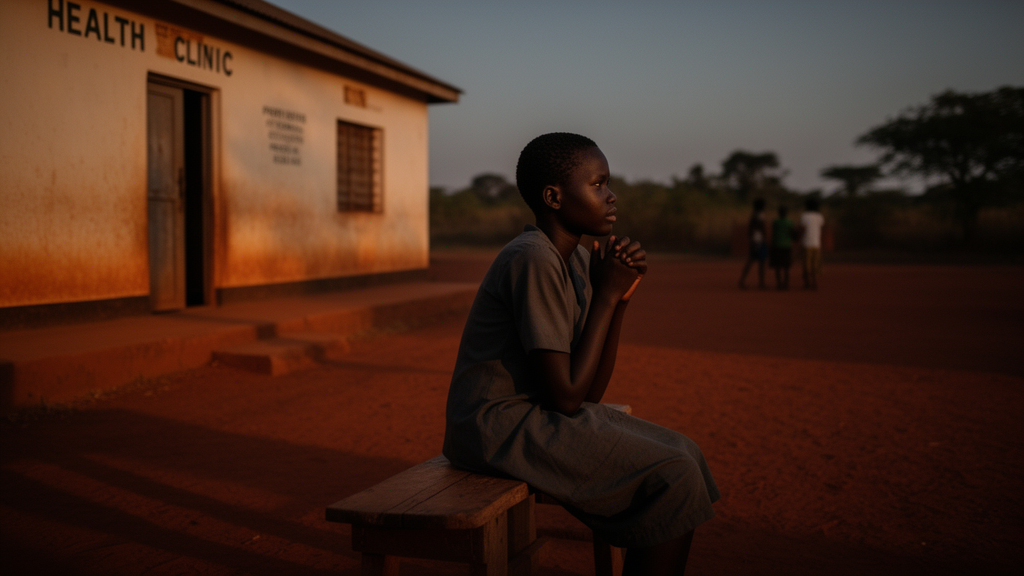
Every year, unsafe abortion claims a devastating toll on maternal health in sub-Saharan Africa, and Malawi sits squarely at the center of this crisis. A new qualitative study published in BMC Health Services Research offers an unusually candid look at why so many Malawian women arrive at hospitals too late, with septic complications that could have been prevented if they had sought help sooner. The research, led by Funny Kamanga and colleagues at the University of North Carolina Project Malawi, examines how healthcare providers and policy-level stakeholders interpret the silence that surrounds induced abortion performed outside the country’s tightly restricted legal framework.
Malawi’s law permits abortion only when the pregnancy threatens the mother’s life, one of the narrowest allowances in the region. Yet a significant number of induced abortions are performed outside this legal boundary, outside health facilities, and by untrained providers. Post-abortion care, or PAC, is formally available to all women regardless of whether the abortion was spontaneous or induced, legal or not. The paradox at the heart of the study is that a service designed to save lives is underused precisely because the women who need it most fear what will happen if they tell the truth about how their complications arose.
The team conducted 16 in-depth interviews with healthcare providers and policy-level stakeholders who serve patients requiring post-abortion care. Semi-structured interview guides shaped the conversations, and snowball sampling helped identify participants across the health system. Interviews were audio-recorded and transcribed, then coded in NVivo 12 using a deductive approach. Illustrative quotes were identified during analysis, allowing the researchers to trace how legal, social, religious, and provider-related dynamics converge on a single decision point: whether a woman discloses that her abortion was induced.
The analysis surfaced five interrelated factors that shape disclosure. First and foremost, the legal framework itself and the fear of prosecution loom over every interaction. Because Malawian law criminalizes abortion outside the life-of-the-mother exception, women presenting with complications worry that admitting an induced abortion could expose them to criminal liability. Providers described how this fear operates as a major barrier, delaying presentation until sepsis or hemorrhage forces the issue. The study concludes that the legal environment surrounding abortion in Malawi was perceived as the dominant obstacle to disclosure and, subsequently, to women seeking post-abortion care at all.
The second factor concerns providers’ own attitudes and perceptions, which the researchers found were often less favorable toward women presenting with septic or induced abortion. In practice, this means a woman who arrives with obvious signs of an attempted termination may encounter judgment rather than compassion, reinforcing her reluctance to be honest about what happened. The third factor is community-level stigma toward women known to have had an abortion. In tightly knit communities, the social cost of being labeled as someone who has terminated a pregnancy can be severe, extending to family relationships, marriage prospects, and standing within the community.
Religious belief constitutes the fourth factor, particularly within Christian health facilities where abortion was seen as sinful. Malawi’s health system includes facilities run by the Christian Health Association of Malawi, known as CHAM, and the study found that in these settings the moral framing of abortion as a sin can shape both the care environment and the willingness of women to disclose. The fifth factor is limited community awareness that post-abortion care services are even available. Many women simply do not know that PAC exists, that it is offered regardless of the abortion’s origin, and that seeking it does not require them to admit anything about how the pregnancy was lost.
What emerges from these findings is a picture of post-abortion care provision in Malawi shaped by an interplay of legal frameworks, health system capacity, and provider-patient dynamics. The researchers argue that addressing these issues will support timely disclosure of unsafe abortion. Timely disclosure, knowledge of PAC, and access to the service are described as key to minimizing complications related to abortion. While abortion remains restricted by Malawi’s legal framework, the study’s authors recommend that hospitals be made more patient-centred in their delivery of post-abortion care, so that the clinical encounter does not itself become another barrier.
The technical significance of this work lies in its dual perspective. By interviewing both frontline providers and policy-level stakeholders, the study captures how legal ambiguity travels down the health system. Policy stakeholders describe the constraints of a law that permits abortion only to save a life, while providers describe the daily consequences: women presenting late, withholding information, and receiving care for complications whose origin remains officially unspoken. The deductive coding approach in NVivo 12 allowed the team to organize these accounts into the five-factor framework, which now offers a structured template for other researchers examining disclosure dynamics in similarly restricted settings across sub-Saharan Africa.
The public health stakes are considerable. Maternal deaths due to unsafe abortion remain a major challenge in the region, and Malawi’s experience illustrates how a restrictive law does not eliminate abortion but pushes it underground, outside health facilities and into the hands of untrained providers. The consequences then surface in hospital wards as sepsis, hemorrhage, and death. Because PAC is available to all women regardless of the abortion’s status, the study suggests that the gap is not primarily one of service availability but of trust, awareness, and the fear that disclosure carries legal or social risk. Closing that gap, the authors argue, requires patient-centred care delivery even within the existing legal limits.
The study was funded by the University of North Carolina Project Malawi, with the protocol reviewed and approved by the Malawi National Health Sciences Research Committee and the University of North Carolina’s Institutional Review Board. Written informed consent was obtained from all participants, and the research was conducted in accordance with the ethical principles of the Declaration of Helsinki. As Malawi and its neighbors continue to debate abortion law reform, this research provides evidence that the silence surrounding unsafe abortion is not a single problem with a single solution. It is a web of legal fear, provider judgment, community stigma, religious moral framing, and simple lack of awareness, and untangling it will be essential if post-abortion care is to reach the women whose lives depend on it.
Subject of Research: Healthcare providers’ and policy-level stakeholders’ experiences on provision of post-abortion care and disclosure of abortion outside Malawi’s legal framework – a qualitative study
Article Title: Healthcare providers’ and policy-level stakeholders’ experiences on provision of post-abortion care and disclosure of abortion outside Malawi’s legal framework – a qualitative study
Article References: Kamanga, F., Michalak, M., Dunda, W., Thom, A., Chinula, L., Tsidya, M., Nakanga, C., Masiye, G., Bula, A. K., Hosseinipour, M. C., Hoffman, I., & Saidi, F. (2026). Healthcare providers’ and policy-level stakeholders’ experiences on provision of post-abortion care and disclosure of abortion outside Malawi’s legal framework – a qualitative study. BMC Health Services Research. https://doi.org/10.1186/s12913-026-15812-4
Image Credits: AI Generated
DOI: 10.1186/s12913-026-15812-4
Keywords: Healthcare, providers, policy-level, stakeholders, experiences, provision, post-abortion, care, disclosure, abortion, outside, Malawi
Cite Scienmag News
Ophelia Keating. (October 16, 2026). Fear of Prosecution Silences Women Seeking Abortion Care in Malawi. Scienmag. https://scienmag.com/fear-of-prosecution-silences-women-seeking-abortion-care-in-malawi/
Ophelia Keating. "Fear of Prosecution Silences Women Seeking Abortion Care in Malawi." Scienmag, 16 October 2026, https://scienmag.com/fear-of-prosecution-silences-women-seeking-abortion-care-in-malawi/. Accessed 16 October 2026.
Ophelia Keating. "Fear of Prosecution Silences Women Seeking Abortion Care in Malawi." Scienmag. October 16, 2026. https://scienmag.com/fear-of-prosecution-silences-women-seeking-abortion-care-in-malawi/


