


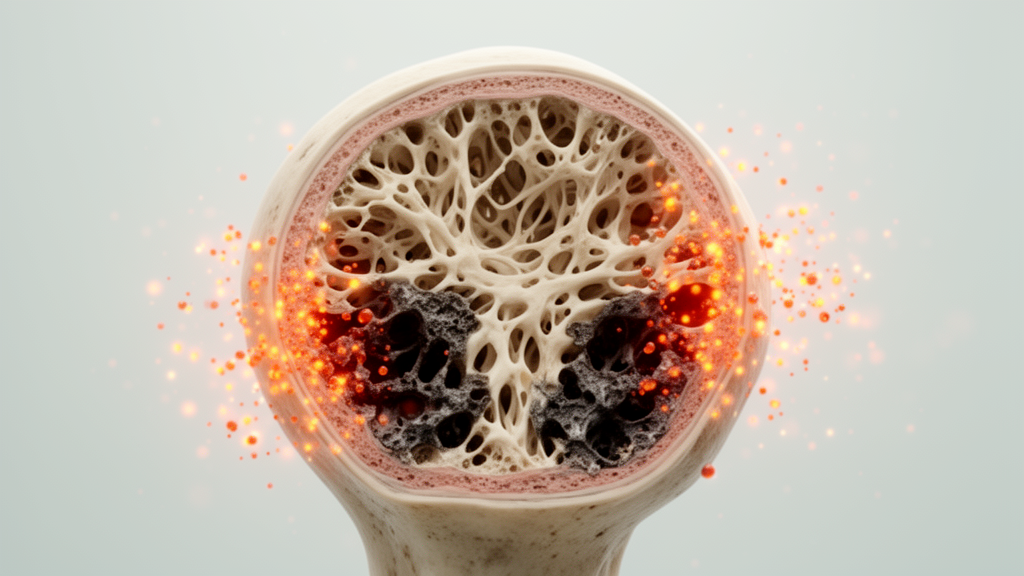
A comprehensive review published in Frontiers in Musculoskeletal Disorders argues that oxidative stress is not merely one among many pathological processes in steroid-induced necrosis of the femoral head (SINFH), but a central mechanism that connects and amplifies all the others. The analysis, led by Yuansheng Wu and Hongjiang Jiang of Wendeng Orthopedic Hospital of Shandong Province together with Ruixuan Ma of Shandong University of Traditional Chinese Medicine, systematically integrates evidence on how reactive oxygen species (ROS) drive bone metabolism disorders, vascular injury, apoptosis, inflammation, and lipid metabolism disturbances in this debilitating hip condition.
SINFH accounts for approximately 25 to 50 percent of all osteonecrosis of the femoral head cases, making it one of the most significant complications of long-term glucocorticoid therapy. The condition arises when abnormal bone metabolism, lipid metabolism imbalance, and blood microcirculation disorders in the femoral head lead to trabecular fracture, bone tissue necrosis and collapse, and ultimately hip dysfunction. Despite decades of research, the exact pathogenesis has remained unclear, with bone metabolism disorders, vascular endothelial injury, cell apoptosis, inflammation, and lipid metabolism disturbances considered the main pathological manifestations.
The review’s central conceptual contribution is the distinction between physiological and pathological roles of ROS, which the authors frame as an “oxidative window”—the optimal range of ROS required for normal cellular processes. At low to moderate concentrations, ROS function as essential second messengers generated primarily by NADPH oxidases (NOX enzymes) in response to growth factors and cytokines, regulating cell proliferation, survival, differentiation, migration, and metabolism. For example, BMP-2 activates NOX to induce physiological ROS production that serves as a signaling trigger for osteoblast differentiation, while ROS-mediated activation of ERK1/2 and p38 MAPK pathways is crucial for osteoblast proliferation. In contrast, supraphysiological ROS levels overwhelm cellular antioxidant defenses, causing mitochondrial DNA mutations, lipid peroxidation, protein carbonylation, and irreversible cell damage that triggers bone metabolism disorders, vascular endothelial injury, and apoptosis.
The transition from physiological signaling to pathological oxidative stress depends on the magnitude, duration, and subcellular location of ROS production. This concentration-dependent duality has profound therapeutic implications: the goal in SINFH should not be complete elimination of ROS, but rather restoration of redox homeostasis within the oxidative window. The authors support this with evidence that the antioxidant N-acetylcysteine inhibits mineralization of osteoblast-like MC3T3-E1 cells in a dose-dependent manner, suggesting that physiological levels of ROS are actually required for osteoblast mineralization.
On the bone formation side, the review highlights the complex and sometimes opposing roles of sirtuin family members in regulating oxidative stress and osteogenic differentiation. SIRT6 and SIRT3 function as protective factors: SIRT6 knockout mice showed decreased alkaline phosphatase expression and reduced osteogenic differentiation of bone marrow mesenchymal stem cells (BMSCs), while promoting SIRT6 expression reduced ROS accumulation and enhanced osteogenic activity. Resveratrol activates the AMPK/PGC-1α/SIRT3 pathway, inhibiting oxidative stress in BMSCs and enhancing Runx2 and osteocalcin expression. In contrast, SIRT2 exerts opposing effects—it induces oxidative stress and promotes BMSC apoptosis, and inhibiting SIRT2 expression alleviates both, slowing SINFH progression. This functional divergence suggests that therapeutic strategies should selectively target specific sirtuin isoforms rather than broadly modulating sirtuin activity.
On the bone resorption side, the review details how oxidative stress drives hyperactive osteoclasts. In necrotic areas of the human femoral head, antioxidant enzymes including catalase, γ-glutamylcysteine synthetase, and superoxide dismutase 1 are significantly downregulated, while osteoclast-related proteins such as cathepsin K and tartrate-resistant acid phosphatase are significantly upregulated. Under oxidative stress conditions, ROS leads to overactivation of RANKL and its receptor RANK, triggering the MAPKs signaling cascade and activating NFATC1, which increases osteoclast differentiation and enhances bone resorption. The Nrf2 transcription factor emerges as a key regulator that can inhibit excessive bone resorption caused by oxidative stress by modulating RANKL-RANK binding, with compounds like Tanshinone I from Danshen shown to increase antioxidant enzyme activity through Nrf2 activation.
The review also examines how oxidative stress accelerates apoptosis of bone cells through the Bcl-2/BAX pathway, with glucocorticoid-induced ROS increasing endoplasmic reticulum stress and mitochondrial DNA damage. Markers of DNA oxidative damage such as 8-hydroxy-2′-deoxyguanosine (8-OHdG) are positively correlated with bone cell apoptosis in SINFH patients, and antioxidants like diphenyleneiodonium and N-acetylcysteine can reduce 8-OHdG levels and reverse dexamethasone-mediated bone cell apoptosis. Vitamin E has been shown to reduce caspase-3 expression while upregulating Bcl-2, alleviating DNA oxidative damage in bone marrow hematopoietic cells.
Vascular injury represents another critical axis. Oxidative stress causes structural and functional impairments of vascular endothelial cells, increases the risk of thrombosis, and exacerbates ischemia and hypoxia in the femoral head. Li and colleagues found that two weeks after steroid injection, the perfusion frequency of small vessels in the femoral head of rats was significantly reduced, with extensive oxidative damage in bone marrow vessels; the antioxidant edaravone significantly reduced this damage and increased small vessel perfusion. Thymoquinone has been shown to reduce malondialdehyde levels and increase glutathione levels, alleviating oxidative stress-induced vascular endothelial injury, while hydrogen-rich saline increased GSH levels and microvascular density in an experimental rabbit model.
Perhaps the most novel aspect of the review is its treatment of the bidirectional relationship between lipid metabolism disturbances and oxidative stress. Glucocorticoids profoundly affect lipid metabolism by promoting adipogenic differentiation of BMSCs at the expense of osteogenic differentiation, resulting in intraosseous lipid accumulation, adipocyte hypertrophy, and increased marrow fat content that mechanically compresses sinusoids and impairs microcirculation. The accumulated lipids serve as substrates for lipid peroxidation, generating malondialdehyde and 4-hydroxynonenal—products that are not merely passive markers but active mediators that form covalent adducts with proteins, induce mitochondrial dysfunction promoting further ROS production, and activate inflammatory signaling pathways. Conversely, lipid accumulation in bone marrow adipocytes and osteoblasts induces endoplasmic reticulum stress and mitochondrial dysfunction, both potent sources of ROS, while oxidized low-density lipoproteins accumulated in bone tissue can activate NOX enzymes, amplifying ROS production. This creates a vicious cycle: glucocorticoid-induced lipid accumulation triggers oxidative stress, which promotes lipid peroxidation, which exacerbates oxidative damage and inflammation, leading to further tissue injury.
The review also maps the crosstalk among oxidative stress-mediated pathological processes, identifying self-amplifying loops that connect vascular injury, inflammation, apoptosis, and lipid metabolism. Vascular injury induced by oxidative stress leads to ischemia and hypoxia, which in turn exacerbates oxidative stress through mitochondrial electron transport chain dysfunction during reoxygenation, hypoxia-inducible factor-mediated NOX expression, and depletion of cellular antioxidant reserves. ROS activates NF-κB, a master transcription factor for pro-inflammatory cytokines including TNF-α, IL-1β, and IL-17, which not only promote osteoclast activation but also stimulate further ROS production from macrophages and other immune cells. Apoptotic cells release damage-associated molecular patterns that activate inflammatory responses and promote osteoclast differentiation, creating a situation where bone resorption exceeds formation and accelerating structural deterioration.
On the signaling pathway front, the review comparatively evaluates the Nrf2/Keap1, Wnt/β-catenin, Akt, and JNK/c-Jun pathways for their relative importance and therapeutic potential. The Nrf2/Keap1 pathway emerges as most promising for intervention due to its central role as the master regulator of the antioxidant response, the availability of pharmacological activators with established safety profiles, and its integration with other pathways. The Akt pathway ranks second given its unique position simultaneously regulating osteogenesis via Runx2, angiogenesis via HIF-1α/VEGF, apoptosis via Bad/Bcl-2, and oxidative stress via Nrf2/HO-1. Astragaloside IV, an extract from Astragalus, has been shown to inhibit cell apoptosis and oxidative stress through the Akt/Bad/Bcl-2 and Akt/Nrf2/HO-1 pathways, preventing glucocorticoid-induced SINFH. The JNK/c-Jun pathway, though clearly involved in oxidative stress-induced apoptosis, presents challenges for therapeutic targeting due to its context-dependent effects.
Despite promising preclinical results, the clinical translation of antioxidant therapy for SINFH faces multiple bottlenecks. Many potent antioxidants such as resveratrol and curcumin exhibit poor oral bioavailability and undergo rapid metabolism, limiting their therapeutic efficacy. Achieving therapeutic concentrations specifically within the femoral head remains challenging due to the site’s limited vascular access, though local delivery systems including hydrogels, 3D-printed scaffolds, and nanoparticles offer potential solutions requiring optimization. The optimal timing of antioxidant intervention—whether before, during, or after glucocorticoid administration—remains undefined, as pre-treatment might prevent initial oxidative damage but could interfere with the glucocorticoid’s therapeutic effects, while post-treatment might arrive too late after irreversible damage has occurred. Current clinical markers of oxidative stress, including malondialdehyde, superoxide dismutase, and glutathione, suffer from poor specificity influenced by diet and circadian rhythm, lack of tissue specificity, and diurnal variation, though emerging biomarkers such as oxidized LDL, F2-isoprostanes, and protein carbonyls offer improved specificity pending validation in SINFH cohorts.
Given the multifactorial nature of SINFH pathogenesis, the authors argue that antioxidant monotherapy may be insufficient, and rational combination strategies targeting multiple pathological nodes simultaneously warrant investigation. These include combining antioxidants with angiogenic factors to address both oxidative damage and vascular insufficiency, with anti-inflammatory agents to break the inflammation-ROS cycle, with bone anabolic drugs to promote bone formation while protecting against oxidative damage, and with lipid-lowering agents possessing antioxidant properties to target the lipid metabolism-oxidative stress axis. The review ultimately concludes that maintaining a dynamic balance between oxidation and antioxidation may be more important than completely suppressing redox reactions, positioning oxidative stress regulation as a promising new direction for the prevention and treatment of this increasingly recognized complication of steroid therapy.
Subject of Research: Oxidative stress mechanisms in steroid-induced necrosis of the femoral head
Article Title: Oxidative stress in steroid-induced necrosis of femoral head: a review revealing new insights into pathogenic mechanisms
Article References: Wu, Y., Ma, R., & Jiang, H. (2026). Oxidative stress in steroid-induced necrosis of femoral head: a review revealing new insights into pathogenic mechanisms. Frontiers in Musculoskeletal Disorders, 4, Article 1788598. https://doi.org/10.3389/fmscd.2026.1788598
Image Credits: AI Generated
DOI: 10.3389/fmscd.2026.1788598
Keywords: oxidative stress, steroid-induced necrosis of femoral head, reactive oxygen species, antioxidants, Nrf2 signaling, osteonecrosis, glucocorticoids, bone metabolism, apoptosis, vascular injury, lipid metabolism, inflammation
Cite Scienmag News
Daisy Hatcher. (October 16, 2026). Oxidative stress emerges as central driver of steroid-induced femoral head necrosis. Scienmag. https://scienmag.com/oxidative-stress-emerges-as-central-driver-of-steroid-induced-femoral-head-necrosis/
Daisy Hatcher. "Oxidative stress emerges as central driver of steroid-induced femoral head necrosis." Scienmag, 16 October 2026, https://scienmag.com/oxidative-stress-emerges-as-central-driver-of-steroid-induced-femoral-head-necrosis/. Accessed 16 October 2026.
Daisy Hatcher. "Oxidative stress emerges as central driver of steroid-induced femoral head necrosis." Scienmag. October 16, 2026. https://scienmag.com/oxidative-stress-emerges-as-central-driver-of-steroid-induced-femoral-head-necrosis/


