


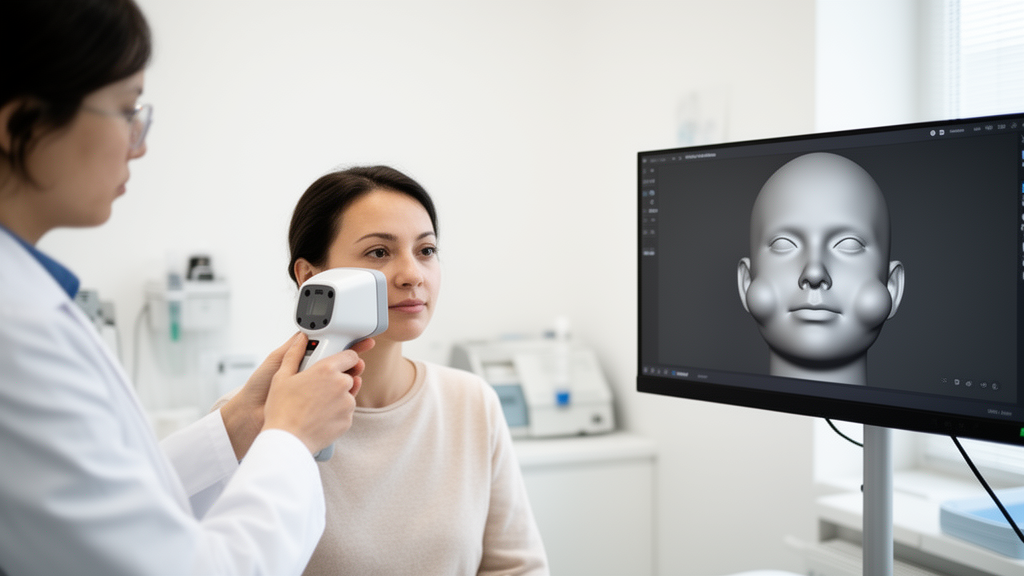
For people living with rare diseases, the road to a diagnosis is often measured in years. More than 10,000 distinct rare conditions have been described, far too many for any single clinician to recognize, and many of their symptoms overlap with far more common disorders. The result is the well-documented “diagnostic odyssey,” a prolonged journey that frequently stretches beyond four years from the first medical presentation. A team of researchers in Singapore and Australia now reports a step toward shortening that journey for one rare condition, using an unexpected instrument: a 3D camera pointed at the face.
The new study, published in Frontiers in Medical Technology, explored whether three-dimensional facial imaging could serve as a source of digital biomarkers in rare diseases, with a particular focus on hereditary angioedema, or HAE. HAE is a genetic disorder caused by a defect in the SERPING1 protein, which regulates inflammation and fluid balance in blood vessels. The result is intermittent swelling of soft tissues, most often around the eyes and mouth. In most cases the swelling is painful and disfiguring, but when it involves the airways it can become life-threatening within hours, demanding immediate medical care.
The problem, the researchers explain, is that HAE is frequently missed or diagnosed late, and even after a diagnosis is secured, there is no objective way to measure a flare-up. Treatment decisions rest on subjective patient reports and clinical impressions, which can delay therapy and heighten anxiety. The team, led by Saumya Jamuar of KK Women’s and Children’s Hospital in Singapore and Gareth Baynam of Perth Children’s Hospital in Australia, set out to determine whether the face itself could provide measurable, quantifiable evidence of disease activity.
The study, conducted over four years and eight months across three Singapore hospitals, had two complementary components. In the quantitative arm, 20 participants of Chinese genetic ancestry with rare diseases characterized by facial swelling or asymmetry were photographed with a Vectra M3 3D camera. The cohort included individuals with mucopolysaccharidosis, Noonan syndrome, incontinentia pigmenti, velocardiofacial syndrome, and achondroplasia, as well as five with HAE. Their facial scans were then processed with Cliniface, an artificial intelligence-powered software platform developed in Western Australia, which extracts facial landmarks and 58 distinct measurements from each image.
The analytical approach was deliberately rigorous. From the 58 base measurements, the team generated 108 separate measurement variables, each expressed as a z-score comparing the affected participant to a regressed growth curve derived from a demographically matched, disease-free reference population spanning ages zero to 70. Outliers beyond three standard deviations were removed before regression, and the resulting z-scores were tested for normality using Monte Carlo hypothesis testing. Two-tailed t-tests were then applied, and because so many variables were tested simultaneously, the team applied the Holm-Bonferroni correction to control the family-wise error rate, a conservative method that does not assume the measurements are statistically independent.
After this gauntlet of statistical filtering, a single measurement survived: the Outer Canthal, Nasal Angle, which retained a corrected p-value of 0.01, indicating a significant deviation from the ethnically matched norm. Ten other measurements, including several related to facial asymmetry, showed uncorrected p-values below 0.05 but did not survive the multiple-comparison adjustment. The researchers caution that the small sample size and the heterogeneity of the test cohort mean these findings require independent replication. Still, the result suggests that 3D facial imaging may be capable of detecting subtle, measurable differences in people who experience facial swelling even between overt episodes.
The qualitative arm of the study provided the more visually striking findings. Two adults with HAE were photographed serially over extended periods, including during acute flare-ups. The first participant, a man of Malay genetic ancestry, was imaged at seven time points over 687 days, including immediately after a facial oedema flare. Procrustes analysis of his scans revealed asymmetric periorbital swelling, with an increase of more than three millimeters around one eye following the flare. The swelling diminished over subsequent visits, and a later scan taken during a period when the participant had stopped taking his medication showed residual swelling that had not fully subsided, hinting that the technique might even detect subclinical exacerbations or treatment non-compliance.
The second participant, a woman of Indian genetic ancestry, was photographed twice, 261 days apart, with the first image captured immediately after an acute episode. Her scans showed asymmetric periorbital swelling, more pronounced on one side, along with asymmetric swelling of the cheeks and lower jaw. The consistency of these findings between two unrelated individuals, each showing swelling and asymmetry during flares, even on different sides of the face, led the team to propose periorbital swelling and asymmetry as a working hypothesis for a digital biomarker in HAE. Notably, they point out that purely landmark-based approaches that ignore symmetry could miss critical indicators of disease activity.
The researchers are careful to frame their conclusions as preliminary. The quantitative cohort contained only five individuals with HAE, the qualitative analysis was limited to two participants, and the reference growth curves did not account for sex differences. Singapore’s small population and the rarity of these conditions made a larger cohort impractical, but the team acknowledges that broader studies across different genetic ancestries, ages, and sexes will be essential before the approach can be validated for clinical use. They also note that while digital phenotyping’s diagnostic capabilities may be limited, its ability to identify digital biomarkers could still facilitate disease monitoring even when it cannot replace clinical diagnosis.
If validated, the implications extend well beyond HAE. Rare disease clinical trials are chronically hampered by small, fragmented patient populations, subjective outcome measures, and symptoms that fluctuate over time, contributing to higher failure rates than in trials for common conditions. An objective, non-invasive biomarker derived from a simple facial photograph could provide the precise, repeatable endpoints that such trials desperately need. The team hopes that ongoing data collection from participants of different ancestries and disease conditions will identify additional digital biomarkers, moving the field closer to a future where a face scan helps clinicians detect, monitor, and treat rare diseases with greater confidence and speed.
Subject of Research: Utility of 3D facial analysis as a biomarker in rare diseases exploration with hereditary angioedema
Article Title: Utility of 3D facial analysis as a biomarker in rare diseases exploration with hereditary angioedema
Article References: Utility of 3D facial analysis as a biomarker in rare diseases exploration with hereditary angioedema. (n.d.). https://doi.org/10.3389/fmedt.2026.1857918
Image Credits: AI Generated
DOI: 10.3389/fmedt.2026.1857918
Keywords: 3D facial imaging, digital biomarkers, hereditary angioedema, rare diseases, digital phenotyping, diagnostic odyssey, Cliniface, periorbital swelling, precision medicine, SERPING1, clinical trials, Singapore
Cite Scienmag News
Ophelia Keating. (October 16, 2026). 3D Facial Scans Could Turn Swelling Into an Objective Biomarker for a Rare Disease. Scienmag. https://scienmag.com/3d-facial-scans-could-turn-swelling-into-an-objective-biomarker-for-a-rare-disease/
Ophelia Keating. "3D Facial Scans Could Turn Swelling Into an Objective Biomarker for a Rare Disease." Scienmag, 16 October 2026, https://scienmag.com/3d-facial-scans-could-turn-swelling-into-an-objective-biomarker-for-a-rare-disease/. Accessed 16 October 2026.
Ophelia Keating. "3D Facial Scans Could Turn Swelling Into an Objective Biomarker for a Rare Disease." Scienmag. October 16, 2026. https://scienmag.com/3d-facial-scans-could-turn-swelling-into-an-objective-biomarker-for-a-rare-disease/


