


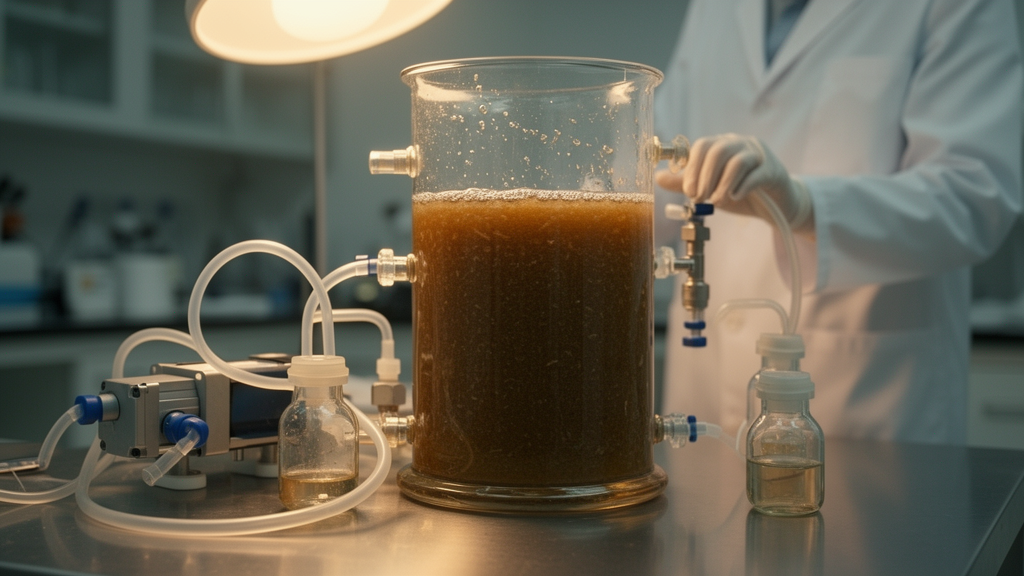
The human gut is home to the largest and most diverse microbial community in the body, a teeming ecosystem of bacteria, archaea, viruses, fungi and protozoa that regulates digestion, immunity and even brain function. As microbiota-targeted therapies surge in popularity, scientists increasingly need laboratory systems that can faithfully recreate this intestinal world in a dish. But a new review published in Frontiers in Microbiology argues that the field has been chasing the wrong goal: rather than building ever more sophisticated machines, researchers must first master the humble methodological decisions that determine whether a fake gut actually behaves like a real one.
The review, led by Simon De Jaegher of the University of Siena and The BioArte Ltd., together with colleagues in Italy and Malta, takes an unusual approach. Instead of cataloguing fermentation platforms, it examines the entire experimental workflow as an interconnected system, from model selection and inoculum preparation to culture media, environmental control and community stabilization. The authors contend that biological relevance is not an intrinsic property of any model type but a question-dependent property: a system may be perfectly suited to one experimental question while being useless for another.
At the simplest end of the spectrum sit batch fermentation systems, typically set up in well plates, test tubes or bioreactors. These closed environments are prized for rapid, cost-effective screening of acute microbial responses, such as how a dietary compound is metabolized or how bacteria adhere to a mucin-coated surface. But their biological relevance decays quickly. Without continuous nutrient supply or waste removal, incubation is usually limited to 24 to 48 hours before nutrient exhaustion and toxic metabolite accumulation disrupt the microbial balance. The result is ecological drift, a progressive culture-induced deviation from the original community that favours fast-growing, metabolically flexible taxa while disadvantaging oxygen-sensitive or nutritionally fastidious organisms.
Fed-batch systems offer an intermediate strategy, periodically supplying fresh medium to prolong microbial activity without implementing continuous flow. But the gold standard for long-term experiments is the continuous culture system, in which fresh medium is supplied while an equivalent volume of culture is removed, maintaining approximately constant conditions. A chemostat, a specific type of continuous culture, controls microbial growth through the dilution rate and the availability of a growth-limiting nutrient. Multistage platforms go further, connecting successive vessels whose pH, oxygen, temperature and transit time are individually configured to mimic different regions of the digestive tract. The Reading Model, developed in 1988, used three consecutive vessels to reproduce the proximal, transverse and distal colon, while the TNO gastro-intestinal model added four compartments simulating the stomach, duodenum, jejunum and ileum. The SHIME system, or Simulator of the Human Intestinal Microbial Ecosystem, pumps pancreatic and bile juices into specific vessels at precise intervals, representing the most advanced fermentation modeling to date.
Yet even the most sophisticated bioreactor is only as good as its starting material. The review devotes considerable attention to the microbial inoculum, the community introduced into the reactor to initiate fermentation. When human feces are used, approval from a research ethics committee is mandatory, and donors should not have received antibiotics for at least three months or prebiotics and probiotics for at least one month prior to collection. Sample handling is one of the greatest sources of experimental bias because it directly influences the survival of oxygen-sensitive microorganisms. Best practice calls for collection under sterile conditions, transport at 4 degrees Celsius, and processing in an anaerobic cabinet under an atmosphere of approximately 85 percent nitrogen, 10 percent carbon dioxide and 5 percent hydrogen.
The format of the inoculum also matters profoundly. Liquid fecal suspensions, typically homogenized with culture medium or phosphate-buffered saline at a ratio of 5 to 10 percent weight per volume, are prone to rapid compositional shifts and the elimination of less competitive bacteria. Immobilized inocula, in which microorganisms are entrapped in gel beads composed of gellan gum, xanthan gum and sodium citrate, tend to better preserve low-abundance and fastidious microorganisms over time. Inoculum density is equally critical: low ratios of 0.1 to 1 percent allow greater microbial expansion, while higher ratios above 10 percent are used when the biomass primarily provides enzymatic capacity rather than supporting extensive growth. Intermediate concentrations around 3 percent have been shown to support representative growth conditions of the human intestinal microbiota.
Culture media are another central determinant of biological relevance, yet the review highlights a striking lack of standardization. Of ten different media used for gut microbiota modeling, only seven compounds are found in more than half of them. Two distinct trophic approaches exist: oligotrophic media, inoculated with a high concentration of fecal slurry and supplemented with minimal nutrients, aim to reflect the gut under normal or calorie-restricted diets, while eutrophic media, inoculated with around 1 percent fecal slurry into a basal medium enriched with peptone, yeast extract and bile salts, simulate the nutrient-rich environment associated with high-fat and high-protein diets. Small variations in medium composition can profoundly alter community structure and metabolic output. Low-carbohydrate media significantly reduce microbial biodiversity and short-chain fatty acid production, whereas commercial Schaedler broth supplemented with 5 percent sheep blood helps preserve both high biodiversity and metabolic activity.
Once fermentation begins, maintaining environmental conditions that preserve microbial ecology becomes equally critical. Temperature is typically held at 37 degrees Celsius, pH within a near-neutral range of approximately 6.8 to 7.2 to reflect colonic conditions, and anaerobiosis is maintained using gas mixtures of nitrogen, carbon dioxide and hydrogen. pH is one of the most influential regulators of gut microbial ecology, directly affecting enzymatic activity, substrate utilization and interspecies competition. Substrate fermentation naturally lowers pH, which can boost butyrate production and promote butyrate-producing bacteria while inhibiting certain taxa such as Bacteroides species. For continuous fermenters, monitoring extends to hydraulic retention time and flow rate, enabling a more physiologically relevant simulation of colonic conditions. Community stability is typically evaluated over periods exceeding one week by combining 16S rRNA gene amplicon sequencing with metabolic activity measurements, using ecological distance metrics such as Bray-Curtis dissimilarity. The production of short-chain fatty acids serves as a rapid indicator of metabolic function, with acetate, propionate and butyrate typically found in the colon at an approximate molar ratio of 60:20:20.
The review also examines how validated models can be used to study microbiota modulation through dietary, probiotic and pharmacological interventions. Food samples are first subjected to a standardized simulation of upper gastrointestinal digestion using established protocols such as the INFOGEST method, with the non-digested solid residue and a defined proportion of the intestinal soluble fraction used as the fermentation substrate. Studies consistently demonstrate that microbial responses are highly dependent on baseline composition: following in vitro fermentation of rye, butyrate production was higher only in microbiota enriched in Prevotella and Subdoligranulum, whereas Bacteroides-dominated communities showed little increase. In the pharmacological realm, a high-throughput metaproteomics-based screening platform called RapidAIM found that 35 out of 39 non-antibiotic compounds, including berberine and ibuprofen, modulated the microbial proteome, metabolic function and biomass to varying degrees among different individual microbiotas. Some compounds selectively affected specific microbial taxa without impacting their relative abundance, suggesting that functional modulation can occur independently of compositional shifts.
Looking ahead, the authors argue that the principal requirement for generating biologically relevant and reproducible in vitro gut microbiota models is rigorous methodological standardization rather than increasing technological complexity alone. Emerging host-microbe co-culture systems, including organoids and gut-on-chip platforms that integrate oxygen gradients, microbial-epithelial co-culture and mechanical stimulation approximating intestinal peristalsis, are expected to expand physiological relevance and translational applicability. But the review cautions that increasing host complexity does not necessarily increase microbial ecological fidelity, and the appropriate balance between these dimensions depends on the biological question being addressed. Ultimately, future progress will depend not only on technological innovation but also on the establishment of consensus methodologies and reporting standards that enhance reproducibility and comparability across laboratories, bridging the gap between mechanistic microbiome research and personalized interventions for human health.
Subject of Research: in vitro gut microbiota models
Article Title: Building biologically relevant in vitro models of the human gut microbiota: methodological considerations, current challenges, and future perspectives
Article References: De Jaegher, S., Podrini, C., D’Aguanno, M., Santoro, F., & Biazzo, M. (2026). Building biologically relevant in vitro models of the human gut microbiota: methodological considerations, current challenges, and future perspectives. Frontiers in Microbiology, 17, Article 1949973. https://doi.org/10.3389/fmicb.2026.1949973
Image Credits: AI Generated
DOI: 10.3389/fmicb.2026.1949973
Keywords: gut microbiota, in vitro models, fermentation, chemostat, SHIME, inoculum, culture media, ecological drift, short-chain fatty acids, prebiotics, probiotics, gut-on-chip
Cite Scienmag News
Morgan Morrow. (October 16, 2026). Why the Gut Microbiota Refuses to Behave in a Jar: The Hidden Science of Building a Fake Gut. Scienmag. https://scienmag.com/why-the-gut-microbiota-refuses-to-behave-in-a-jar-the-hidden-science-of-building-a-fake-gut/
Morgan Morrow. "Why the Gut Microbiota Refuses to Behave in a Jar: The Hidden Science of Building a Fake Gut." Scienmag, 16 October 2026, https://scienmag.com/why-the-gut-microbiota-refuses-to-behave-in-a-jar-the-hidden-science-of-building-a-fake-gut/. Accessed 16 October 2026.
Morgan Morrow. "Why the Gut Microbiota Refuses to Behave in a Jar: The Hidden Science of Building a Fake Gut." Scienmag. October 16, 2026. https://scienmag.com/why-the-gut-microbiota-refuses-to-behave-in-a-jar-the-hidden-science-of-building-a-fake-gut/


