


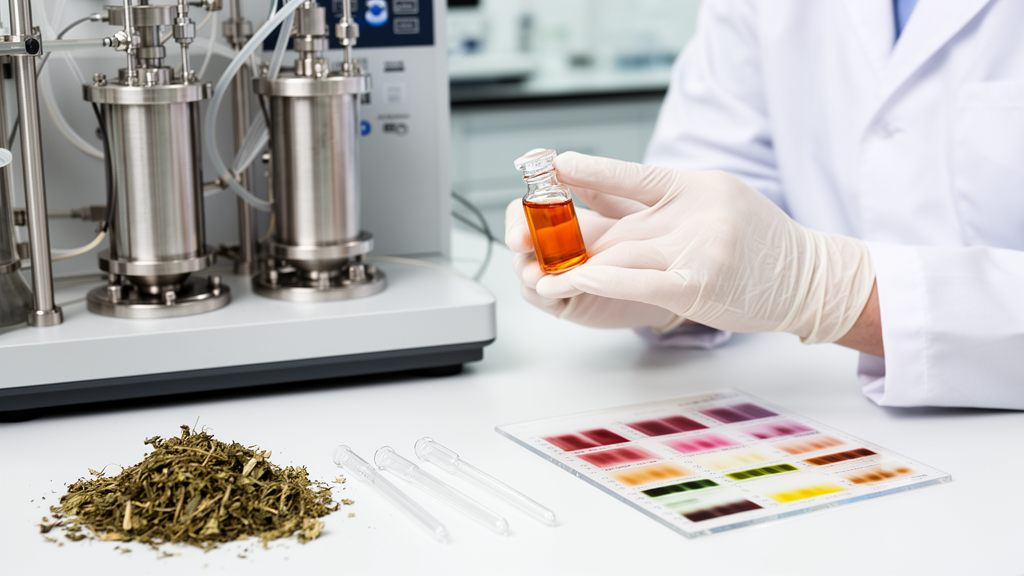
In a development that could reshape how the world verifies the contents of complex herbal medicines, researchers in China have built a comprehensive analytical system for a registered health food capsule combining three of traditional Chinese medicine’s most storied plants: Rhodiola rosea, Astragalus membranaceus, and Carthamus tinctorius. The work, published in Frontiers in Analytical Science, moves quality control of this formulation—known as the RAC capsule—beyond a single-marker standard and toward the kind of multi-component scrutiny normally reserved for pharmaceutical drugs.
The RAC capsule is not an obscure folk remedy. It was registered in China as a national health food in 2008 under approval number G20080473, and preclinical studies have confirmed that it effectively improves hypoxia tolerance and alleviates physical fatigue. Its three constituent herbs bring complementary biological activities: R. rosea is recognized for its adaptogenic properties and ability to enhance tolerance to hypoxia and stress; A. membranaceus exhibits immunomodulatory and anti-fatigue effects largely attributed to its polysaccharides and saponins; and C. tinctorius is valued for its blood-circulation-promoting activity, primarily mediated by water-soluble quinone pigments such as hydroxysafflor yellow A and anhydrosafflor yellow B.
What makes quality control of this capsule so challenging is its hybrid manufacturing process. R. rosea and A. membranaceus are first extracted with 75% ethanol at a solid-to-liquid ratio of 1:8 for 1.5 hours twice, recovering medium-polarity compounds such as salidroside, tyrosol, and astragalosides. The residual marc is then subjected to aqueous extraction to capture polar components including polysaccharides and glycosides. C. tinctorius, whose key pigments are heat-sensitive and highly polar, is processed without thermal extraction; the raw herb is milled into a fine powder passing an 80-mesh sieve and directly incorporated into the final blend. This combination of solvent-based extraction with raw herb powdering maximizes retention of diverse bioactive compounds but introduces considerable complexity in quality control.
Batch-to-batch variability in extraction yield, powder homogeneity, or raw material composition can significantly affect the content of marker compounds, potentially compromising product consistency and efficacy. The existing standard for RAC capsules quantified only salidroside, leaving the other major bioactive constituents unmeasured. To address this gap, the research team—led by Zhisen Wang of Shijiazhuang Zangnuo Pharmaceutical Co., Ltd. and Mengliang Zhu of the Chinese Academy of Sciences—established two complementary analytical methods: thin-layer chromatography for qualitative identification and high-performance liquid chromatography for precise multi-component quantification.
The five quantitative markers were selected for two reasons. First, salidroside, tyrosol, and rhodiolin are representative active constituents of R. rosea, while hydroxysafflor yellow A (HSYA) and anhydrosafflor yellow B (ASYB) are representative active constituents of C. tinctorius, and all five are associated with the anti-hypoxia and anti-fatigue mechanisms consistent with the preparation’s functional indications. Second, in preliminary studies, only these five components could be well-separated and detected by HPLC with no interference from negative samples—formulations prepared by omitting one herb at a time.
The TLC method achieved something notable: all three herbal components were successfully resolved on a single thin-layer plate using a unified developing system of chloroform and methanol in a 15:1 ratio. Distinct fluorescent spots corresponding to characteristic markers of all three herbs were clearly observed in the RAC capsule sample lanes under UV light at 365 nanometers, with Rf values falling within the ideal range of 0.4 to 0.6. Critically, the spot positions in the sample lanes matched those of the respective reference herbs, confirming the presence of R. rosea, A. membranaceus, and C. tinctorius in the final product. When analyzed alongside negative controls, no interfering or overlapping spots appeared at the same Rf regions, demonstrating excellent specificity.
The HPLC method was systematically optimized across column chemistries, mobile phase compositions, and gradient profiles before settling on a Zafex Supperfex JX-C18 column with a binary gradient of 0.1% aqueous phosphoric acid and acetonitrile. Phosphoric acid was chosen over volatile acids due to its superior peak-sharpening effect for phenolic and acidic constituents without compromising UV detection at 275 nanometers. The gradient program was carefully designed to accommodate the wide polarity range of target analytes, from relatively polar compounds such as salidroside and tyrosol eluting early to more hydrophobic flavonoids such as rhodiolin eluting later, across a 100-minute run.
Validation results were impressive. All five target compounds exhibited excellent linearity over their respective concentration ranges, with correlation coefficients ranging from 0.9991 to 0.9998. Theoretical plate numbers in the batch sample were extraordinarily high—79,962 for salidroside, 62,411 for tyrosol, 127,813 for HSYA, 331,474 for ASYB, and 522,888 for rhodiolin—with resolution values between 1.7 and 2.8. Method repeatability was determined by preparing and analyzing six independent sample solutions from a single batch, with RSD values for the measured contents of salidroside, tyrosol, HSYA, ASYB, and rhodiolin at 0.36%, 0.38%, 1.15%, 1.80%, and 1.79% respectively—all below 2.0%. Accuracy was assessed via recovery experiments using the standard addition method, with average recoveries ranging from 95.07% to 105.61% and RSD values between 0.53% and 0.83%.
When applied to six commercial batches of RAC capsules labeled 250101 through 250901, the method demonstrated excellent batch-to-batch consistency. Salidroside ranged from 3.31 to 3.34 mg/g, tyrosol from 3.22 to 3.25 mg/g, HSYA from 2.08 to 2.14 mg/g, ASYB from 1.04 to 1.22 mg/g, and rhodiolin from 0.70 to 0.72 mg/g. The low inter-batch variability, with RSD below 2.5% for all analytes, underscores the robustness of both the manufacturing process and the analytical method. The consistent levels of C. tinctorius-derived markers and R. rosea-derived markers confirm the uniformity of herbal composition across production lots.
The study’s significance extends beyond this single capsule. Registered health foods in China are subject to pharmaceutical-like regulatory standards requiring a national health food registration certificate valid for five years, and recent renewal guidelines mandate supplementary quality controls including TLC identification of constituent herbs. By enabling multi-component quality control beyond the current single-marker standard, this work provides a robust scientific foundation for the standardization and quality assurance of RAC capsules, facilitating their continued development as a reliable health product and establishing a practical framework for quality assessment of similar multi-herb formulations.
Subject of Research: Analytical Chemistry
Article Title: Quality evaluation of a traditional Chinese medicine compound preparation containing Rhodiola rosea, Astragalus membranaceus, and Carthamus tinctorius
Article References: Wang, Z., Guo, S., Chen, J., Wang, L., Zhang, H., Cui, X., Zhao, B., Ge, S., Li, S., Zhu, M., & Xing, P. (2026). Quality evaluation of a traditional Chinese medicine compound preparation containing Rhodiola rosea, Astragalus membranaceus, and Carthamus tinctorius. Frontiers in Analytical Science, 6, Article 1777096. https://doi.org/10.3389/frans.2026.1777096
Image Credits: AI Generated
DOI: 10.3389/frans.2026.1777096
Keywords: Rhodiola rosea, Astragalus membranaceus, Carthamus tinctorius, HPLC, TLC, Traditional Chinese Medicine, Quality Control, Herbal Standardization, Quality, evaluation, traditional, Chinese
Cite Scienmag News
Bethany Barker. (October 16, 2026). New TLC and HPLC Methods Bring Pharmaceutical-Grade Quality Control to a Traditional Chinese Herbal Capsule. Scienmag. https://scienmag.com/new-tlc-and-hplc-methods-bring-pharmaceutical-grade-quality-control-to-a-traditional-chinese-herbal-capsule/
Bethany Barker. "New TLC and HPLC Methods Bring Pharmaceutical-Grade Quality Control to a Traditional Chinese Herbal Capsule." Scienmag, 16 October 2026, https://scienmag.com/new-tlc-and-hplc-methods-bring-pharmaceutical-grade-quality-control-to-a-traditional-chinese-herbal-capsule/. Accessed 16 October 2026.
Bethany Barker. "New TLC and HPLC Methods Bring Pharmaceutical-Grade Quality Control to a Traditional Chinese Herbal Capsule." Scienmag. October 16, 2026. https://scienmag.com/new-tlc-and-hplc-methods-bring-pharmaceutical-grade-quality-control-to-a-traditional-chinese-herbal-capsule/


