


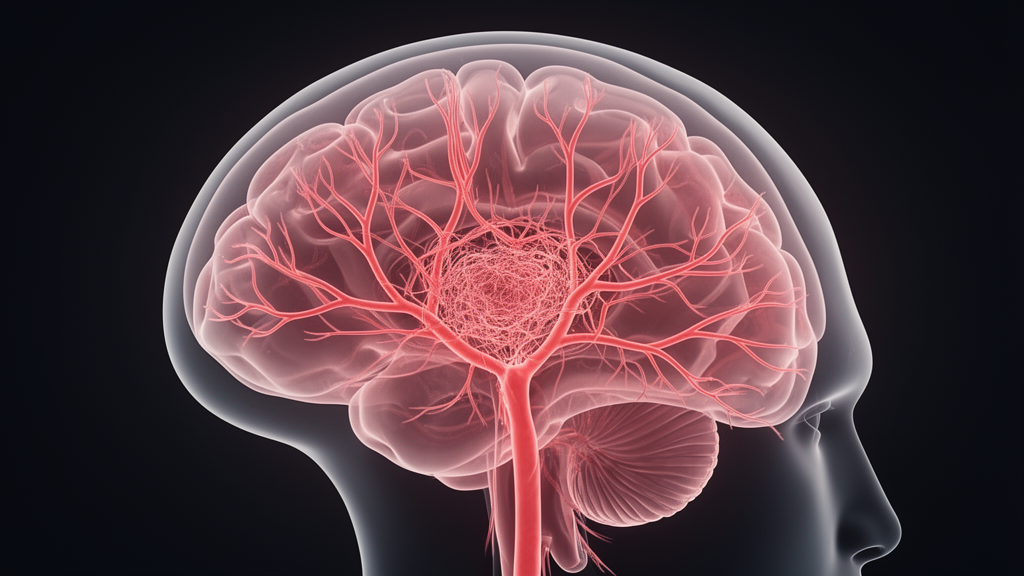
Moyamoya disease, the rare and striking condition in which the arteries at the base of the brain slowly narrow while a hazy network of tiny collateral vessels forms around them, may be far less unique than its name suggests. A new narrative review published in Frontiers in Stroke argues that the condition should be understood not as a discrete disease entity but as the most visible expression of a broader, location-defined disorder of the circle of Willis, the arterial ring that supplies blood to the brain. The proposal, put forward by Takahiro Ota of the Department of Neurosurgery at Tokyo Metropolitan Tama Medical Center, revives an older Japanese concept, steno-occlusive disease of the circle of Willis, and uses it to reconcile decades of conflicting evidence from genetics, developmental biology, and clinical observation.
The classical definition of moyamoya disease rests on two features: progressive stenosis and occlusion of the terminal portion of the internal carotid artery, where it enters the circle of Willis, and the appearance of abnormal basal collateral networks that resemble a puff of smoke on angiography, the meaning of the Japanese word moyamoya. When the same angiographic pattern occurs in patients with identifiable associated conditions, such as neurofibromatosis or prior radiation therapy, it is traditionally labeled moyamoya syndrome. Ota contends that this dichotomy, while clinically convenient, does not correspond to consistent differences in vascular pathology. Radiological patterns and disease progression are often indistinguishable between the two groups, and unilateral or secondary cases can evolve into bilateral phenotypes identical to idiopathic disease.
The historical analysis at the heart of the review is revealing. Before the term moyamoya was coined by Suzuki and Takaku in 1969, Japanese investigators described these patients under a broader anatomical heading, and early national consensus documents were titled Guidelines for the Diagnosis of Occlusive Disease of the Circle of Willis. In that original framing, steno-occlusive disease of the circle of Willis was a descriptive category encompassing heterogeneous non-atherosclerotic intracranial arteriopathies, without assuming a single underlying mechanism. Over time, the striking and reproducible moyamoya phenotype absorbed the broader concept, particularly in East Asian clinical practice, until the two became implicitly equated. Western classification systems took a different path, generally interpreting moyamoya-like collateral networks as nonspecific responses to chronic arterial occlusion. The result has been a phenotype-centered framework in Japan and an etiology-centered approach in Western practice, with little common ground between them.
To restore that common ground, the review proposes an operational definition of steno-occlusive disease of the circle of Willis with explicit anatomical boundaries: progressive steno-occlusive disease involving the supraclinoid or terminal internal carotid artery, the proximal anterior cerebral artery, the proximal middle cerebral artery, and the origin of the posterior communicating artery, while excluding isolated distal branch disease and primary basilar atherosclerosis. Within this territory, moyamoya vasculopathy is repositioned as the predominant but non-exclusive angiographic phenotype. The review also describes early or precollateral stages, in which focal stenosis of the terminal carotid artery occurs without established moyamoya vessels, and non-moyamoya or mixed patterns, in which circle-of-Wilis-centered stenosis fails to fulfill classical criteria. These categories describe vascular phenotypes rather than etiologic disease entities, and they may evolve or overlap over time.
A key insight of the framework is the temporal dissociation between arterial narrowing and collateral formation. The basal collaterals that give moyamoya its name have long been treated as disease-defining, but the review argues they are better understood as adaptive vascular responses to chronic arterial narrowing, appearing only after hemodynamic compensation becomes necessary. Early-stage cases presenting with isolated stenosis are difficult to classify under phenotype-based criteria, yet within the location-defined framework they can be interpreted as early disease, supporting serial imaging and longitudinal assessment over rigid categorical labeling. This perspective may reduce diagnostic uncertainty at initial presentation, when the angiographic picture is incomplete.
Genetic evidence provides some of the strongest support for this reconceptualization. Genome-wide association studies identified RNF213, particularly the p.R4810K variant, as the major susceptibility factor for moyamoya disease, with the association most pronounced in Japanese and Korean patients and less frequent in Chinese patients. The marked geographic distribution of p.R4810K supports a founder effect rather than a universally shared moyamoya-associated variant. In European-ancestry patients, p.R4810K is extremely rare or absent, yet sequencing studies have identified multiple heterogeneous rare RNF213 variants, including p.D4013N, p.R4062Q, and p.A4399T, that preferentially cluster within the C-terminal region encompassing the RING-finger domain, although the pathogenic significance of individual variants remains incompletely established. No single RNF213 variant, in other words, accounts for the shared vascular phenotype across populations.
Even more consequential is the question of penetrance. Many heterozygous carriers of RNF213 variants remain asymptomatic throughout life, indicating that the gene alone is insufficient to determine disease expression. Conversely, increasing genetic burden appears to influence severity: homozygous individuals tend to present with earlier onset, more severe steno-occlusive changes, broader vascular involvement, more rapid progression, posterior circulation involvement, and increased frequency of extracranial manifestations such as pulmonary artery stenosis. Recent evidence also suggests additional modifiers, with the HAPLN3 p.T34A variant proposed as a factor associated with increased penetrance among carriers of p.R4810K, supported by whole-exome sequencing and endothelial-cell experiments, though these findings remain preliminary. RNF213 variants have also been linked to non-moyamoya arteriopathies, including intracranial atherosclerotic disease and large-artery ischemic stroke, further undermining the idea of a disease-defining gene.
Functionally, RNF213 encodes a protein with ATPase and ubiquitin ligase activity implicated in angiogenesis, endothelial function, and vascular remodeling, with emerging roles in immune and inflammatory pathways including interferon signaling and host defense. This supports a model in which RNF213 acts as a context-dependent modifier that amplifies vascular vulnerability under inflammatory or environmental stress. But genetic factors alone cannot explain the most puzzling feature of the condition: its remarkably consistent localization to the terminal internal carotid artery and circle of Willis across diverse clinical contexts. To address this, the review turns to developmental biology, noting that mural cells such as vascular smooth muscle cells and pericytes arise from heterogeneous embryological origins, with cephalic neural crest cells contributing to the forebrain vasculature in a regionally restricted manner. The concept of vascular cephalic neurocristopathy has been proposed as a possible explanation for the preferential involvement of the terminal carotid region, although the review is careful to note that direct lineage mapping of human cerebral arteries remains limited and the hypothesis remains unproven.
The resulting multi-hit model integrates three dimensions: developmental and anatomical features that define the disease-prone territory, genetic factors such as RNF213 that influence susceptibility and phenotypic expression, and environmental or inflammatory processes that act as triggers of onset and progression. This formulation separates lesion localization from genetic determinants and offers a coherent explanation for anatomical specificity, phenotypic variability, and incomplete penetrance, though it remains hypothetical and requires validation through integrated genetic, developmental, and longitudinal studies. Clinically, the framework does not alter established treatment strategies at present. Surgical revascularization remains the principal treatment for symptomatic disease with impaired cerebral perfusion, and decisions should continue to rest on clinical presentation, progression, and objective hemodynamic evidence rather than on the new label. The potential value lies instead in the precollateral stage: stenosis centered on the circle of Willis without established moyamoya vessels should not automatically be dismissed as unrelated or nonspecific, and longitudinal imaging with hemodynamic assessment may help identify progression toward a classical phenotype, justifying closer surveillance without extending surgical indications beyond current evidence.
The review acknowledges its own limitations candidly. The proposed anatomical boundaries remain partially arbitrary, overlap with other intracranial arteriopathies may occur, and genetic associations are influenced by population structure and phenotypic heterogeneity. No biomarker is currently specific enough for diagnosis, and emerging candidates such as circulating inflammatory mediators, endothelial markers, microRNAs, and angiogenic factors remain clinically unestablished. No disease-modifying therapy or gene therapy targeting RNF213 variants is available, although patient-derived induced pluripotent stem cell and gene-editing platforms offer preclinical routes toward therapeutic targets. The framework is presented as an iterative model rather than a fixed taxonomy, one whose value lies in providing an anatomical basis for integrating emerging genetic, imaging, and biological insights. If future prospective studies confirm that the proposed phenotypes represent biologically meaningful subgroups, the field may move toward classification systems built not on a single angiographic pattern or a single gene, but on the shared territory where the disease begins.
Subject of Research: Reconceptualizing moyamoya vasculopathy within steno-occlusive disease of the circle of Willis
Article Title: Reframing moyamoya vasculopathy within steno-occlusive disease of the circle of Willis
Article References: Ota, T. (2026). Reframing moyamoya vasculopathy within steno-occlusive disease of the circle of Willis. Frontiers in Stroke, 5, Article 1890618. https://doi.org/10.3389/fstro.2026.1890618
Image Credits: AI Generated
DOI: 10.3389/fstro.2026.1890618
Keywords: moyamoya disease, circle of Willis, RNF213, stroke, intracranial arteriopathy, genetic susceptibility, neural crest, cerebral revascularization, vascular remodeling, moyamoya syndrome, steno-occlusive disease, neurovascular imaging
Cite Scienmag News
Cassandra Pierce. (October 16, 2026). Moyamoya disease may be one face of a broader brain artery disorder, review argues. Scienmag. https://scienmag.com/moyamoya-disease-may-be-one-face-of-a-broader-brain-artery-disorder-review-argues/
Cassandra Pierce. "Moyamoya disease may be one face of a broader brain artery disorder, review argues." Scienmag, 16 October 2026, https://scienmag.com/moyamoya-disease-may-be-one-face-of-a-broader-brain-artery-disorder-review-argues/. Accessed 16 October 2026.
Cassandra Pierce. "Moyamoya disease may be one face of a broader brain artery disorder, review argues." Scienmag. October 16, 2026. https://scienmag.com/moyamoya-disease-may-be-one-face-of-a-broader-brain-artery-disorder-review-argues/


