


…
The pursuit of practical carbon-neutral technologies has pushed researchers to explore catalysts that can transform carbon dioxide into liquid products with real commercial value, and formic acid sits near the top of that list because it is both a commodity chemical and a promising liquid hydrogen carrier. The work from Xubei Wang, Lei Gong, Haixia Chen, Zicheng Qin, Chuan Hu, Tao Wang, and Feng Hu at Nanjing University of Aeronautics and Astronautics, published in the Journal of Materials Science, addresses one of the most stubborn bottlenecks in this field: the competition between the carbon dioxide reduction reaction and the hydrogen evolution reaction, which together determine how much of the applied electrical energy ends up stored in the desired carbon-containing product rather than being wasted as hydrogen gas.
Copper-based catalysts occupy a special place in carbon dioxide electrochemistry because copper is the only metallic element known to drive the full cascade of proton and electron transfers needed to build multicarbon products, yet this same versatility makes copper notoriously difficult to steer toward a single product. On copper surfaces, carbon dioxide reduction can yield carbon monoxide, methane, ethylene, ethanol, acetate, and formate, with the distribution governed by subtle features of the surface geometry, oxidation state, and local chemical environment. The reference literature cited by the authors reflects this landscape, spanning stepped copper surfaces optimized for ethylene, copper antimony nanowire arrays tuned for carbon monoxide, copper clusters confined within covalent organic frameworks that favor methane, and copper oxide species whose role in the reduction mechanism continues to be debated. Within this crowded field, copper selenide offers a distinct electronic starting point, because the semiconducting character of the chalcogenide and the strong copper-selenium bonding modify the d-band electronic structure that governs how reaction intermediates bind to the surface.
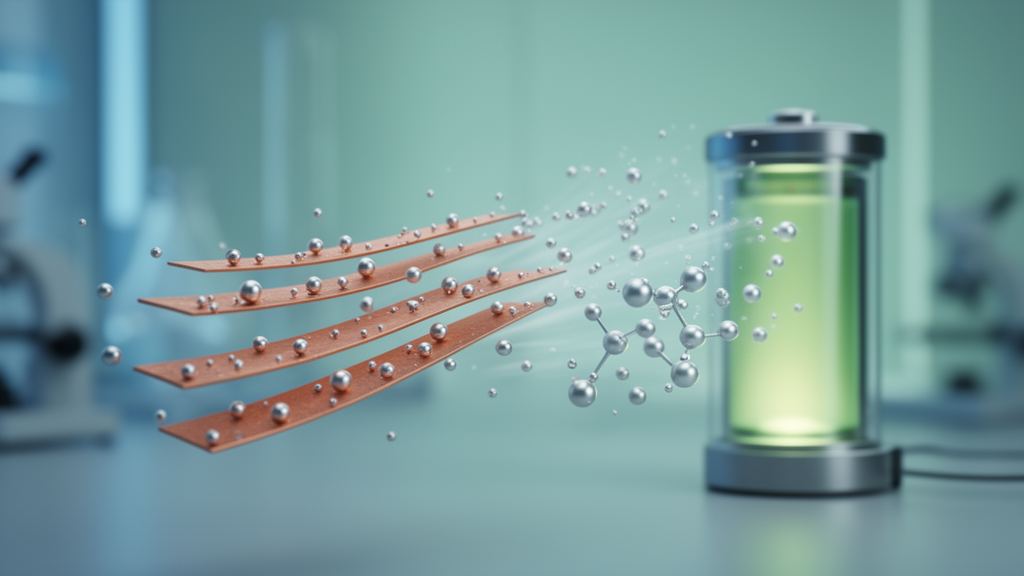
The central mechanistic insight of the new study concerns the direction of charge flow at the junction between palladium nanoparticles and the copper selenide support. When palladium particles are deposited onto the mesoporous copper selenide nanoribbons, electrons shift from copper atoms toward selenium atoms, a redistribution that alters the electronic landscape at the sites where carbon dioxide and its hydrogenated intermediates adsorb. This charge redistribution serves two purposes at once. First, it promotes the hydrogenation steps that convert carbon-containing intermediates toward formate, the pathway that terminates in formic acid. Second, it suppresses the competing hydrogen evolution reaction, which otherwise consumes protons and electrons that would otherwise be available for carbon dioxide conversion. The dual effect is significant because hydrogen evolution is the dominant parasitic process on many carbon dioxide reduction catalysts, particularly at the negative potentials needed to drive the reaction at useful rates.
The choice of palladium as the decorating metal is grounded in a substantial body of prior work. Palladium is unusual among metals in its ability to absorb hydrogen into its lattice, forming palladium hydride, and this hydride phase has been implicated in the hydrogenation chemistry that leads to formate on palladium-containing surfaces. Recent in situ transmission electron microscopy and diffraction studies, cited in the article’s bibliography, have shown that the interconversion between metallic palladium and palladium hydride under electrochemical conditions has a direct impact on carbon dioxide reduction performance, meaning that the active form of palladium in these catalysts is a dynamic, potential-dependent phase rather than a static decoration. The comparative differential electrochemical mass spectrometry studies of palladium, copper, and tin-based electrocatalysts further underscore that each of these metals follows distinct mechanistic routes to products, so combining them in a single heterostructure creates the possibility of merging favorable attributes from each component.
The mesoporous nanoribbon morphology of the copper selenide support deserves attention in its own right. Nanoribbons are one-dimensional structures with high aspect ratios, and when they are made mesoporous, meaning their internal pores fall in the two-to-fifty-nanometer range, they combine the directional electron transport of a nanowire with the high internal surface area of a porous framework. This architecture matters for gas-involved electrocatalysis because carbon dioxide must diffuse to active sites while the gaseous product or competing hydrogen must escape, and mesoporosity facilitates both transport processes. The cation-exchange synthesis route used to prepare copper selenide nanoribbons, previously demonstrated in the context of hydrogen sulfide sensing materials, provides a soft-chemistry pathway to these morphologies without requiring high-temperature processing that would coarsen the pore structure.
The performance metrics reported for the optimal copper selenide-palladium catalyst place it in a competitive position among recently reported formate-producing systems. A Faradaic efficiency of 61.85 percent for formic acid at minus 0.9 volts versus the reversible hydrogen electrode in a flow cell indicates that roughly three-fifths of the electrons passing through the cell are captured in the desired product, with the remainder split among hydrogen evolution and minor carbon-containing byproducts. The partial current density for formic acid production, reaching minus 129.78 milliamperes per square centimeter at minus 1.1 volts versus the reversible hydrogen electrode, is the more industrially relevant figure, because partial current density reflects the product of selectivity and total rate. A catalyst can show excellent selectivity at tiny currents, but only high partial current densities at moderate overpotentials translate into the volumetric productivity that a commercial electrolyzer would require.
The flow cell architecture used in the study is itself an important contextual element. Flow cells, in which the electrolyte is pumped through a cathode compartment separated from the anode by an ion-exchange membrane, and in which gaseous carbon dioxide is often fed directly to the back of a gas diffusion electrode, have become the standard testing platform for carbon dioxide reduction because they alleviate the mass transport limitations that cripple performance in simple H-cells. In an H-cell, the low solubility of carbon dioxide in aqueous electrolytes caps achievable current densities at levels far below industrial targets, whereas flow cells with gaseous carbon dioxide feeding can sustain ampere-level currents, as demonstrated in the bismuth-based formate electrosynthesis work cited by the authors. Testing the copper selenide-palladium catalyst under flow cell conditions therefore gives a more realistic picture of how it would behave in a scaled-up device.
Stability is the metric that most often separates laboratory demonstrations from deployable technology, and the roughly fifteen hours of continuous operation at a constant current density of minus 100 milliamperes per square centimeter reported for this catalyst represents a meaningful but still preliminary benchmark. For context, industrial electrolyzers of any kind are expected to operate for tens of thousands of hours, so a fifteen-hour test serves primarily to demonstrate that the catalyst does not immediately deactivate through palladium agglomeration, selenide dissolution, or carbonaceous poisoning. Copper selenide phases can undergo surface reconstruction under reducing potentials, with metallic copper potentially segregating to the surface, and the palladium hydride formation and decomposition cycles described in the in situ microscopy literature can also induce structural stress. Longer-term studies tracking the catalyst’s morphology and composition after extended operation would be needed to establish which of these degradation pathways, if any, limits the system.
The second application explored in the study, the lithium-carbon dioxide battery, connects the catalyst to a different but conceptually related corner of the carbon utilization landscape. In a lithium-carbon dioxide battery, carbon dioxide is reduced at the cathode during discharge, typically forming lithium carbonate together with carbon, and then the discharge products must be oxidized back to release carbon dioxide during charging. The large gap between discharge and charge voltages, known as overpotential, is the central efficiency problem in these batteries, and it stems from the sluggish kinetics of both directions of the lithium carbonate chemistry. Catalysts that can lower the energy barrier for decomposing lithium carbonate during charge are therefore the key to round-trip efficiency, and the authors’ choice to evaluate the same copper selenide-palladium material as a battery cathode tests whether the hydrogenation-regulation logic developed for electrolysis carries over to the battery context.
The cited work on porous palladium nanoparticles modified on copper foam, which enhanced the adsorption energy of the key lithium carbonate intermediate to enable lithium-carbon dioxide batteries with ultralow overpotential and resistance to operation at zero degrees Celsius, provides a direct precedent for palladium-copper combinations in this battery chemistry. Similarly, prior demonstrations of zinc cathodes generating fuel-gas carbon monoxide in lithium-carbon dioxide cells and of free-standing three-dimensional carbon catalysts show the breadth of cathode materials explored for this battery type. Against this background, the achievement of stable charge-discharge cycling for over 250 hours at a current density of 100 milliamperes per gram with the copper selenide-palladium cathode represents a substantial cycling lifetime, since many lithium-carbon dioxide battery reports fail within tens of hours due to accumulation of insulating discharge products and electrolyte decomposition.
The dual-use strategy embodied in this work, in which one catalyst material serves both an electrosynthesis role and an energy storage role, reflects a broader trend in the energy materials literature toward coupling carbon dioxide conversion with renewable energy storage. Electrolytic formic acid production is an intermittent-consumption technology that can absorb surplus renewable electricity, while lithium-carbon dioxide batteries are a storage technology that chemically fixes carbon dioxide during discharge. A material effective in both roles simplifies the materials supply chain and suggests shared mechanistic principles, namely the ability to adsorb and activate carbon dioxide and to manage carbonate or formate intermediates, across the two devices.
From a mechanistic standpoint, the finding that palladium decoration drives charge transfer from copper to selenium invites comparison with other electronic-structure engineering strategies in the copper carbon dioxide reduction literature, including the copper-titanium subsurface alloying that was shown to tune carbon-carbon coupling toward multicarbon liquid fuels, the amphiphilic cationic surfactants that reorganize interfacial water to favor reduction over hydrogen evolution, and the sulfur-anchored sodium cations that modified bismuth facets for ampere-level formate production. All of these approaches share the goal of reshaping the binding energies of the *OCHO intermediate, widely regarded as the key species on the path to formate, relative to the *H species that leads to hydrogen evolution. The charge redistribution reported here provides a chalcogenide-specific route to the same end, with the selenium sites presumably playing a role in stabilizing oxygen-bound intermediates while the palladium sites contribute hydrogenation capability.
The funding context of the study, through an open project fund for a joint laboratory of spatial intelligent perception and large model application and through the fundamental research funds for central universities, illustrates the institutional support structures behind this line of research in China, where carbon dioxide utilization has been identified as a strategic technology area. The authors’ data availability statement, offering data upon reasonable request, is consistent with standard practice in the materials chemistry community, though the full experimental details underlying the performance claims reside in the subscription-access article.
Looking forward, the copper selenide-palladium system raises several questions that follow naturally from the reported results. The precise role of the selenium anion in mediating the charge transfer and in stabilizing the formate pathway remains to be fully resolved, and isotopic labeling or in situ spectroscopy could clarify whether the palladium hydride phase directly participates in hydrogenating carbon-containing intermediates or acts primarily as an electronic modifier. The selectivity ceiling of just under 62 percent Faradaic efficiency leaves room for improvement, and strategies such as further tuning of palladium loading, controlling the palladium-copper selenide interface geometry, or modifying the electrolyte composition with ionic liquids or deep eutectic solvents, which have been shown to suppress hydrogen evolution, could push the selectivity higher. Extending the stability testing from hours to hundreds or thousands of hours, and coupling the flow cell results with techno-economic analysis of formic acid production costs, would be the logical next steps toward assessing whether this hydrogenation-regulation strategy can graduate from an experimental insight into a component of practical carbon utilization infrastructure.
Subject of Research: …
Article Title: Palladium-decorated mesoporous Cu2Se nanoribbons for enhanced electrocatalytic CO2 reduction to HCOOH and high-performance Li-CO2 batteries
Article References: Palladium-decorated mesoporous Cu2Se nanoribbons for enhanced electrocatalytic CO2 reduction to HCOOH and high-performance Li-CO2 batteries. (n.d.). https://doi.org/10.1007/s10853-026-13936-w
Image Credits: AI Generated
DOI: 10.1007/s10853-026-13936-w
Keywords: electrocatalysis, CO2 reduction, formic acid, palladium, copper selenide, nanoribbons, Li-CO2 battery, Faradaic efficiency, hydrogen evolution suppression, energy storage, mesoporous catalysts, renewable electricity
Cite Scienmag News
Denise Maddox. (October 16, 2026). Palladium-Dotted Copper Selenide Nanoribbons Turn CO2 Into Formic Acid and Power Batteries. Scienmag. https://scienmag.com/palladium-dotted-copper-selenide-nanoribbons-turn-co2-into-formic-acid-and-power-batteries/
Denise Maddox. "Palladium-Dotted Copper Selenide Nanoribbons Turn CO2 Into Formic Acid and Power Batteries." Scienmag, 16 October 2026, https://scienmag.com/palladium-dotted-copper-selenide-nanoribbons-turn-co2-into-formic-acid-and-power-batteries/. Accessed 16 October 2026.
Denise Maddox. "Palladium-Dotted Copper Selenide Nanoribbons Turn CO2 Into Formic Acid and Power Batteries." Scienmag. October 16, 2026. https://scienmag.com/palladium-dotted-copper-selenide-nanoribbons-turn-co2-into-formic-acid-and-power-batteries/


