


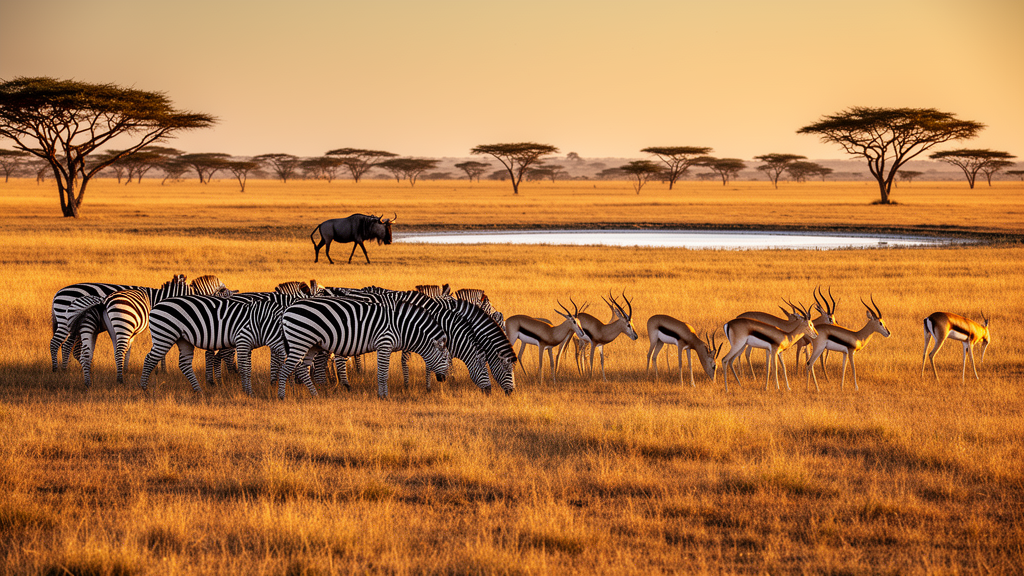
Ecologists have long tried to explain why some species share habitats while others vanish, and a new synthesis argues that the answer may lie in a deceptively simple currency: energy. In a perspective published in Individual-based Ecology, researchers propose a conceptual framework that links the energy budgets of individual animals to their movement decisions and, ultimately, to the mechanisms that allow species to coexist. The work unites three traditionally separate research streams—community ecology, movement ecology and ecophysiology—into a single mechanistic triangle, and it arrives at a moment when biodiversity is under unprecedented pressure from climate change, land-use transformation and shifting resource pulses.
The starting point of the framework is modern coexistence theory, which distinguishes two kinds of mechanisms that allow competing species to persist together. Equalizing mechanisms reduce fitness differences between species, slowing competitive exclusion, while stabilizing mechanisms increase competition within species relative to competition between them. Classic examples include resource partitioning among insects or prey switching by zooplankton. The authors argue that both kinds of mechanisms are often mediated by movement, and that movement itself is motivated and constrained by an animal’s energy state. Movement data alone, they note, frequently fails to predict coexistence patterns accurately without a mechanistic understanding of its causes and consequences.
Earlier theories have addressed pieces of this puzzle. The metabolic theory of ecology uses metabolic scaling laws to predict life-history traits, population growth rates and species interactions from body size and temperature, but it largely overlooks individual behaviour and plasticity. The pace-of-life syndromes hypothesis, and its extended version that incorporates behavioural traits such as movement, links physiological and life-history traits along a fast-slow continuum, yet these frameworks remain largely trait-based and emphasize species-level patterns over individual-level mechanisms. The new framework positions the energy budget—the total energy an animal acquires and allocates across maintenance, growth, reproduction and movement—as the central currency driving decisions about whether, how, when and where to move.
The mechanics of the framework begin at the level of the individual. As animals move through their habitats they acquire energy through foraging, while simultaneously expending energy on life processes, collectively termed field metabolic rate. The balance between intake and expenditure—positive, neutral or negative—determines whether reserves are built, maintained or depleted, and this internal state in turn shapes movement decisions. Movement itself is energetically costly, depending on mode, intensity, duration and environmental conditions, so movement both responds to and reshapes an animal’s energy landscape. Individuals may suppress activity under acute energy stress or reduce it through genetically encoded seasonal routines when food is predictably scarce.
Empirical examples illustrate how energetics can underpin coexistence. In bees, larger bumblebees with higher energy demands visit only flowers offering a high energy intake-to-cost ratio, while smaller honeybees are less selective, reducing direct competition between the species. In common blackbirds, migrants and residents allocate energy differently but maintain similar total expenditures, an equalizing mechanism that balances fitness outcomes. Among northern pikes, individuals with different behavioural types coexist by adopting distinct foraging strategies: opportunistic foragers incur higher movement costs but compensate with increased foraging success, leading to equal survival across types.
Stabilizing mechanisms can also be read energetically. As population density rises, energy balance declines through costs of fighting conspecifics, physiological stress and increased infection rates, reducing individual fitness and slowing population growth—a form of negative density dependence. Ontogenetic niche shifts offer another path: when a dominant competitor’s energy demands vary across life stages, direct interspecific competition is reduced, as observed in coexisting Trinidadian guppies and killifish. In the Yukon, snowshoe hares and squirrels cope with cold through contrasting adaptations—hares adjust metabolically by varying heart rate while squirrels rely on behavioural avoidance of low temperatures—producing temporal niche partitioning that mediates shared predation and supports coexistence in seasonally variable environments.
The movement side of the triangle spans all scales, from daily foraging to long-distance migration and dispersal. Dispersal connects to coexistence through the colonization–competition trade-off, migration can induce competition among migrants and between migrants and residents, and foraging movements mediate competition for spatio-temporally heterogeneous resources. Movement also produces mobile link effects: hares disperse seeds through endozoochory in agricultural landscapes, salmon transport nutrients uphill during spawning runs, and the whale pump moves nutrients from deep waters to the surface, enhancing productivity and shaping food web dynamics.
Energetic triggers of movement are strikingly concrete. In Sierra Nevada bighorn sheep, individuals with lower body fat reserves are more likely to migrate across greater elevational distances to reach richer forage, accepting increased predation exposure to reduce starvation risk. Griffon vultures show a flexible, hump-shaped response to hunger, increasing movement at moderate food deprivation but reducing it as starvation risk grows—a strategic shift from maximizing intake to minimizing expenditure. Golden-mantled ground squirrels double their body mass and triple their fat stores before hibernation, so that movement in this case facilitates future energy conservation. Juvenile coho salmon migrate daily between cold, food-rich waters and warmer areas to optimize digestion and growth, then time their seaward migration to when body size, abiotic factors and food availability align.
How animals move is equally shaped by energetics. Walking and running have a lower cost per unit time, while flying and swimming are more efficient per unit distance, but costs rise steeply with speed in swimming and flying while running costs increase more linearly. Starlings switch between walking and flying, weighing locomotion costs against foraging efficiency to maximize net energy gain. Some polar bears in the Southern Beaufort Sea have shifted from sea ice to land in response to ice loss, swimming more and expending more energy but gaining access to higher-quality foraging areas. In the Australian desert, banded stilts undertake rapid continent-wide movements to track ephemeral wetland resource pulses critical for breeding, illustrating the risks and costs of fully nomadic strategies.
From this integrated framework the authors derive testable predictions for a changing world. One holds that under resource scarcity, individuals that flexibly switch between intensive foraging and energy-saving modes will persist longer than inflexible ones, reshaping competitive interactions and community composition. Another predicts that in environments with fluctuating energy availability, species with higher energy demands or lower tolerance to deficits will abandon depleted patches more rapidly, driving shifts in community composition—an extension of the classic R* rule into dynamic, heterogeneous systems. A third predicts that interference competition among sympatric species will intensify as their metabolic niches increasingly overlap, since similar energy investment and movement traits raise encounter frequency and escalate stress, displacement and injury.
Testing these predictions will require methodological integration. Controlled experiments, including treadmill studies with environmental complexity and mesocosms varying resource regimes, can quantify energy costs of movement and fitness outcomes. Field-based multi-sensor technologies recording accelerometry, heart rate and temperature allow estimation of field metabolic rates, increasingly scalable through tagging innovations and combinable with remote sensing to construct energy landscapes. Machine learning can infer energy expenditure from movement patterns in high-dimensional ecological datasets. Mechanistic simulation models then bridge scales from individual energetics to community dynamics, exploring causal pathways and forecasting responses to novel scenarios such as climate-driven resource shifts or species introductions, though their predictive power depends on high-quality empirical data for parameterization.
The stakes are considerable. Global change is reshaping energy landscapes—droughts, heatwaves, resource pulses and invasions alter not just resource availability but the energetic costs of acquiring it. Energetic mismatches may accelerate species turnover by filtering out individuals that cannot meet metabolic demands, and interaction networks may reorganize as movement patterns change, producing novel spatial and temporal overlaps. These transitions may not be gradual: thresholds may be crossed when energetic constraints are breached, triggering abrupt shifts in movement, competition or coexistence outcomes. By embedding energy fluxes and movement strategies within coexistence theory, the framework offers a mechanistic and predictive ecology of biodiversity—one in which it is not just how much energy is available, but how and when animals decide to pursue it, that determines who persists in fluctuating environments.
Subject of Research: Mechanistic links between animal energetics, movement behaviour and species coexistence in community ecology
Article Title: From metabolism to coexistence: Understanding animal movement and community dynamics through energy
Article References: Szangolies, L., Jeltsch, F., Halsey, L. G., & Gallagher, C. A. (2025). From metabolism to coexistence: Understanding animal movement and community dynamics through energy. Individual-based Ecology, 1, Article e151741. https://doi.org/10.3897/ibe.1.151741
Image Credits: AI Generated
DOI: 10.3897/ibe.1.151741
Keywords: animal movement, energetics, species coexistence, community ecology, movement ecology, ecophysiology, energy budget, metabolic theory, biodiversity, coexistence mechanisms, global change, individual-based ecology
Cite Scienmag News
Margaret Porter. (October 16, 2026). Energy budgets drive animal movement and decide which species coexist. Scienmag. https://scienmag.com/energy-budgets-drive-animal-movement-and-decide-which-species-coexist/
Margaret Porter. "Energy budgets drive animal movement and decide which species coexist." Scienmag, 16 October 2026, https://scienmag.com/energy-budgets-drive-animal-movement-and-decide-which-species-coexist/. Accessed 16 October 2026.
Margaret Porter. "Energy budgets drive animal movement and decide which species coexist." Scienmag. October 16, 2026. https://scienmag.com/energy-budgets-drive-animal-movement-and-decide-which-species-coexist/


