


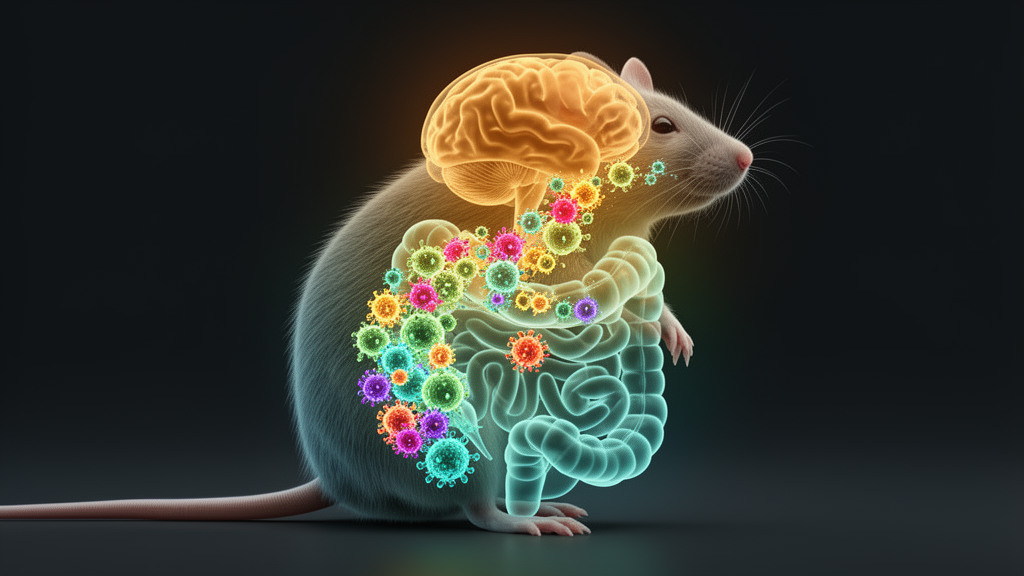
A week after a major stroke, the bodies of laboratory rats tell two stories at once. Deep inside the cecum, the microbial community that normally governs digestion has been fundamentally reorganized, with beneficial Bifidobacterium retreating while potentially harmful bacteria surge. Meanwhile, in the hippocampus — the seahorse-shaped memory center on the same side of the brain as the infarct — the chemical landscape has shifted toward a strikingly lipid-dominated profile, accompanied by the molecular fingerprints of inflammation. Those are the central findings of an exploratory multi-omics study published in BMC Neuroscience, in which researchers from Hunan, China, simultaneously profiled gut microbes and brain metabolites in the same animals to map how cerebral ischemia ripples outward and inward across the body.
The team, led by Xin Fu and Jian Yi of the First Affiliated Hospital of Hunan University of Traditional Chinese Medicine together with corresponding author Baiyan Liu, used a well-established animal model of ischemic stroke: permanent middle cerebral artery occlusion, or MCAO, in male Sprague-Dawley rats. By permanently blocking the artery that supplies a large portion of the brain, the model mimics a severe, untreated ischemic stroke. Seven days later — what researchers call the early subacute phase, when the initial wave of cell death has given way to sustained inflammation and tissue remodeling — the investigators collected paired samples of cecal contents and the ipsilateral hippocampus from each rat, allowing them to compare microbial and metabolic data from the same individuals rather than averaging across separate groups.
To interrogate the gut side of the equation, the researchers performed 16S rRNA gene sequencing, a technique that reads a signature region of bacterial DNA to identify which microbes are present and in what proportions. On the brain side, they turned to untargeted metabolomics using ultra-performance liquid chromatography coupled with tandem mass spectrometry, a method that captures hundreds of small molecules simultaneously without presupposing which ones matter. Eight animals per group supplied both datasets. In parallel subsets of animals, the team verified the stroke itself through laser speckle contrast imaging of cerebral perfusion and triphenyltetrazolium chloride staining of infarcted tissue, then assessed neuronal injury, inflammatory markers, astrocytic reactivity, and inflammasome-associated proteins through histology, immunohistochemistry, immunofluorescence, and enzyme-linked immunosorbent assays.
The microbial results were unambiguous. Permanent MCAO reduced both the richness and the diversity of cecal bacteria, and the overall composition shifted into a clearly distinct state. The relative abundances of Escherichia-Shigella, Erysipelotrichaceae_UCG-003, and Parabacteroides rose, while Bifidobacterium — a genus widely regarded as beneficial and often depleted in disease states — declined. This pattern echoes the dysbiosis frequently documented in human stroke patients, in which pro-inflammatory and opportunistic taxa expand while protective, short-chain-fatty-acid-producing communities contract. The cecum, as the site of the most fermentative microbial activity in the rodent gut, offers a particularly sensitive readout of this systemic disruption.
The hippocampal metabolomics revealed what the authors characterize as a lipid-centered metabolic phenotype. Among the signals that increased were molecules putatively annotated as lysophosphatidylcholines — breakdown products of membrane phospholipids that often flag oxidative or enzymatic membrane damage — along with L-palmitoylcarnitine and butyrylcarnitine, acylcarnitines that report on impaired mitochondrial fatty acid transport, and taurohyocholate, a bile acid-related compound. A signal annotated as homocarnosine, a dipeptide concentrated in brain tissue with links to GABAergic neurotransmission, decreased. The prominence of lysophosphatidylcholines and acylcarnitines suggests that a week after ischemia, the ipsilateral hippocampus is coping with compromised membrane integrity and stressed energy metabolism, even though the hippocampus itself lies largely outside the core infarct territory.
The most methodologically interesting step came next. Because each rat contributed both a microbial profile and a metabolic profile, the team could perform pooled cross-omic Spearman correlation analysis, asking whether changes in specific bacterial genera tracked with changes in specific hippocampal metabolites across animals. Several significant genus-metabolite associations emerged. Crucially, one association — between the expanded bacterial group Erysipelotrichaceae_UCG-003 and the bile-acid-related signal taurohyocholate — remained statistically significant even after the analysis adjusted for group membership, meaning it was not simply an artifact of the two groups differing wholesale. The authors are careful, however, to state that these paired associations provide hypotheses for subsequent mechanistic investigation but do not establish a causal gut-brain relationship.
The independent validation subsets added a third layer of evidence. The MCAO rats showed reduced cerebral perfusion and clear cerebral infarction, along with hippocampal neuronal injury. Immunostaining revealed increased TNF-α immunoreactivity and increased GFAP immunoreactivity — the latter indicating reactive astrogliosis, the swelling and activation of astrocytes that marks inflammatory responses in brain tissue. eNOS immunoreactivity, which reflects the endothelial nitric oxide synthase involved in vascular tone and repair, was reduced. Most strikingly, the hippocampal tissue contained elevated levels of a coordinated inflammasome cascade: NLRP3, caspase-1, gasdermin D (GSDMD), interleukin-1β, and interleukin-18. The NLRP3 inflammasome is a multiprotein danger sensor that, when activated, triggers caspase-1 to cleave pro-inflammatory cytokines and GSDMD to open the door to pyroptotic cell death — a violent, inflammatory form of programmed cell death increasingly implicated in secondary injury after stroke.
To connect these rodent findings with the human condition, the team examined a public gene expression dataset, GSE22255, containing samples from ischemic stroke patients. Their analysis showed higher expression of LBP, NLRP3, and IL1B in peripheral blood mononuclear cells collected at least six months after stroke. This long-lasting elevation of inflammasome-related gene expression in circulating immune cells provides contextual evidence that the inflammatory signature observed in the rat hippocampus at one week may correspond to a chronic, systemic inflammatory state in humans — one that could, in principle, interact with gut microbial products circulating through the bloodstream.
The study’s strength lies in its paired design and its refusal to overreach. By collecting cecal and hippocampal samples from the same animals, the researchers eliminated a major source of noise that plagues many microbiome studies, and by explicitly stating that correlation does not imply causation, they set a clear boundary around what the data can support. The convergence of three independent lines of evidence — microbial remodeling, a lipid-centric hippocampal metabolite shift, and coordinated inflammasome activation in separate animal subsets — builds a coherent, if preliminary, picture of the gut-brain axis under ischemic stress. A future causal test might involve transferring microbiota from stroke rats to germ-free animals, blocking the NLRP3 pathway pharmacologically, or supplementing with Bifidobacterium to see whether any of these interventions alter hippocampal metabolite profiles or neurological outcomes.
For the wider field, the work adds a regionally specific dimension to a growing literature. Much of what is known about post-stroke gut-brain communication concerns global inflammation or the intestinal barrier; here, the focus narrows to the ipsilateral hippocampus, a structure central to memory that is frequently damaged in human stroke survivors and strongly linked to post-stroke cognitive impairment. The identification of specific candidate molecular bridges — taurohyocholate as a bile-acid-related signal associated with a specific bacterial family, lysophosphatidylcholines as markers of membrane injury, and the NLRP3-caspase-1-GSDMD axis as an inflammatory executor — gives researchers concrete targets. The study, supported by the National Natural Science Foundation of China and Hunan provincial funding bodies and conducted under institutional animal ethics approval, remains exploratory: eight animals per group, a single time point, a single sex, and a rodent model that cannot fully capture human stroke heterogeneity. But as a hypothesis-generating map of how a blocked artery in the brain rewrites the chemistry of the gut and the hippocampus within seven days, it marks a careful and technically sophisticated step forward.
Subject of Research: Gut microbiota and hippocampal metabolic and inflammatory changes after ischemic stroke in rats
Article Title: Cecal microbiota and ipsilateral hippocampal metabolic differences at day 7 after permanent middle cerebral artery occlusion in rats: an exploratory multi-omics study
Article References: Cecal microbiota and ipsilateral hippocampal metabolic differences at day 7 after permanent middle cerebral artery occlusion in rats: an exploratory multi-omics study. (n.d.). https://doi.org/10.1186/s12868-026-01059-6
Image Credits: AI Generated
DOI: 10.1186/s12868-026-01059-6
Keywords: stroke, gut microbiota, hippocampus, metabolomics, 16S rRNA sequencing, NLRP3 inflammasome, lipid metabolism, cerebral ischemia, MCAO rat model, gut-brain axis, neuroinflammation, Bifidobacterium
Cite Scienmag News
Cassandra Pierce. (October 15, 2026). Stroke Reshapes Gut Microbes and Brain Chemistry in Rats, Multi-Omics Study Finds. Scienmag. https://scienmag.com/stroke-reshapes-gut-microbes-and-brain-chemistry-in-rats-multi-omics-study-finds/
Cassandra Pierce. "Stroke Reshapes Gut Microbes and Brain Chemistry in Rats, Multi-Omics Study Finds." Scienmag, 15 October 2026, https://scienmag.com/stroke-reshapes-gut-microbes-and-brain-chemistry-in-rats-multi-omics-study-finds/. Accessed 15 October 2026.
Cassandra Pierce. "Stroke Reshapes Gut Microbes and Brain Chemistry in Rats, Multi-Omics Study Finds." Scienmag. October 15, 2026. https://scienmag.com/stroke-reshapes-gut-microbes-and-brain-chemistry-in-rats-multi-omics-study-finds/


