


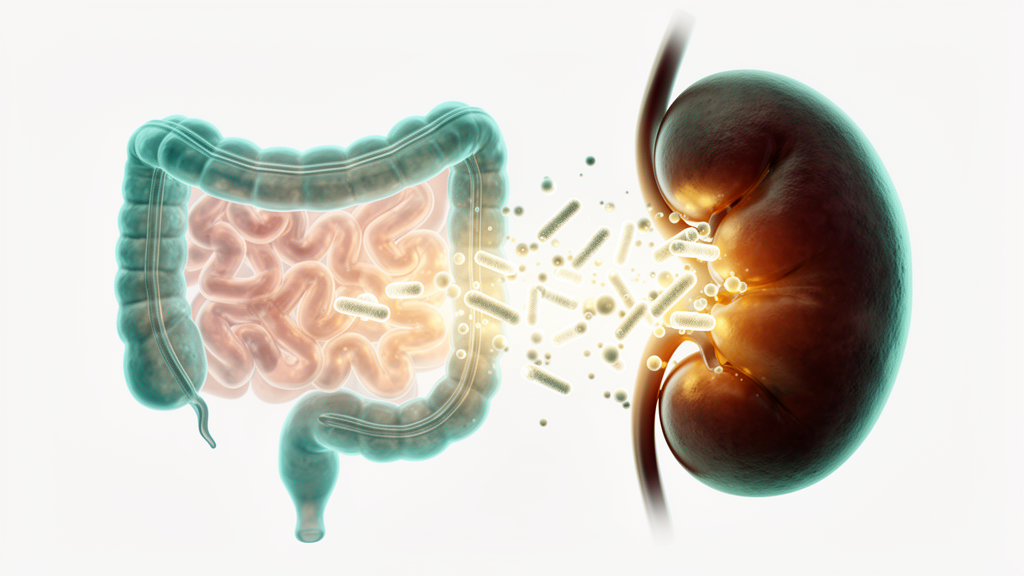
Two conditions that could hardly seem more different—painful kidney stones and autism spectrum disorder—may share a surprisingly common microbial thread, according to a new review published in Frontiers in Microbiomes. The analysis, authored by Girish B. Mahajan of HiMedia Laboratories in Mumbai, synthesizes clinical, epidemiological, and mechanistic evidence to argue that both urolithiasis and autism involve a depletion of the same community of butyrate-producing gut bacteria, even though the downstream consequences in each disease unfold through entirely distinct biological pathways. The finding reframes diet not merely as a risk factor but as a lever that can, in principle, reshape the microbial ecology underlying both disorders.
The scale of the problems is considerable. Kidney stone disease affects roughly 12 percent of the global population over a lifetime, and more than half of sufferers form new stones within five years. Autism spectrum disorder, now estimated to affect about one in 36 children in the United States, is accompanied by gastrointestinal complaints—constipation, diarrhea, abdominal pain, and bloating—in up to 70 percent of affected individuals, and those gut symptoms correlate with greater behavioral severity and reduced quality of life. Mahajan’s central premise is that both conditions converge on metabolic dysregulation, impaired epithelial barrier function, immune dysregulation, and altered microbial metabolite profiles, all of which are modifiable through dietary and behavioral intervention.
The shared microbial signature centers on short-chain fatty acids, particularly butyrate, the principal energy source for colonic epithelial cells and a molecule with systemic anti-inflammatory reach. In healthy guts, bacteria such as Faecalibacterium prausnitzii, Roseburia species, and Blautia species churn out butyrate through the butyryl-CoA CoA-transferase pathway. In both stone-formers and many individuals with autism—especially those with gastrointestinal symptoms—these taxa are consistently depleted. The review is careful to distinguish shared upstream features from disease-specific mechanisms: oxalate handling and urinary microbiome perturbations belong to kidney stones, while serotonergic, GABAergic, and neuroimmune pathways belong to autism. The diseases are not being equated; rather, a single microbial deficiency appears to feed into two very different clinical outcomes.
In the kidney stone story, the long-standing celebrity microbe is Oxalobacter formigenes, a strict anaerobe that enzymatically degrades intestinal oxalate via oxalyl-CoA decarboxylase and formyl-CoA transferase. Epidemiological studies link O. formigenes colonization to lower urinary oxalate excretion and reduced recurrence risk, and colonization-negative individuals excrete significantly more oxalate in 24-hour urine collections. But the review argues that a simplistic ‘protective species’ model is inadequate. Sequencing studies show that stone-formers harbor broader dysbiosis: reduced overall diversity, a shifted Firmicutes-to-Bacteroidetes ratio, and depletion of SCFA-producing genera including Faecalibacterium, Roseburia, and Butyrivibrio—changes that hold independent of O. formigenes status.
The mechanistic detail is where the review becomes technically striking. Intestinal oxalate flux is governed by the SLC26 family of anion exchangers, particularly SLC26A3, which absorbs oxalate, and SLC26A6, which secretes it. In a controlled animal model, individual short-chain fatty acids exerted opposing effects: butyrate downregulated the oxalate-absorbing transporter SLC26A3, while acetate and propionate upregulated the oxalate-secreting transporter SLC26A6. Net effect—less oxalate reaching the kidney, less renal calcium oxalate deposition. Butyrate also reinforces tight junctions through histone deacetylase inhibition and suppression of the NF-κB pathway, limiting the paracellular leakage of oxalate that characterizes dysbiotic gut lining. A cross-feeding network involving Anaerobutyricum hallii and Anaerostipes hadrus, which convert lactate and acetate from other fermenters into butyrate, adds functional redundancy to this protective ecosystem.
Dietary and lifestyle levers thread through all of this. The DASH diet—rich in fruits, vegetables, and whole grains, and restricted in sodium and animal protein—reduces urinary calcium-oxalate supersaturation and has been associated with lower stone incidence in large prospective cohorts, plausibly through microbiome-mediated as well as direct mechanisms. Fermentable fibers such as arabinoxylan and inulin can support Roseburia and other butyrate producers, though responses vary by fiber type and individual microbiome. Plant polyphenols add another layer: ellagitannins from pomegranate, berries, and walnuts are converted by colonic microbes into urolithins A and B, which show anti-inflammatory and epithelial-protective properties in preclinical models. Fermented foods contribute live oxalate-metabolizing lactic acid bacteria, and probiotic trials using Lactobacillus acidophilus and Bifidobacterium animalis have produced modest but statistically significant reductions in 24-hour urinary oxalate—though effect sizes and durability remain inconsistent. Physical activity, meanwhile, independently enriches microbial diversity, while sedentary behavior, obesity, and metabolic syndrome potentiate uric acid stone formation partly through microbe-mediated purine catabolism.
Crucially, the review insists that stone type matters. Calcium oxalate stones, accounting for roughly 75 to 80 percent of cases, carry the richest microbiome evidence base. Uric acid stones operate through a different axis, in which depletion of Akkermansia muciniphila and Christensenellaceae—taxa inversely correlated with BMI and insulin resistance—reinforces the metabolic syndrome phenotype driving low urinary pH and hyperuricosuria. Struvite stones are infection-driven, caused directly by urease-producing uropathogens such as Proteus mirabilis and Klebsiella pneumoniae, with the gut implicated only speculatively through barrier dysfunction and impaired colonization resistance. Cystine stones, being monogenic, have no established gut microbiome involvement at all. Most published cohort studies fail to stratify by stone type, a methodological gap the author describes as imperative to close.
On the autism side, the reproducible microbial signals include reduced butyrate producers, reduced Bifidobacterium and Akkermansia, elevated Desulfovibrio species that generate pro-inflammatory hydrogen sulfide, and enrichment of Clostridia cluster members producing p-cresol, a uremic toxin associated with behavioral deterioration. Mechanistically, butyrate crosses the blood–brain barrier via monocarboxylate transporters, modulates microglial activation, and suppresses neuroinflammation through HDAC inhibition, so butyrate deficiency may feed the low-grade neuroinflammatory milieu documented in post-mortem and neuroimaging studies. The review also highlights the tryptophan–serotonin axis: roughly 90 to 95 percent of systemic serotonin is synthesized in gut enterochromaffin cells under microbial regulatory influence, and microbial GABA synthesis by Lactobacillus and Bifidobacterium species may bear on excitatory–inhibitory balance. Impaired intestinal barrier function, marked by elevated fecal zonulin and reduced claudin-1 and occludin expression, permits microbial lipopolysaccharide translocation that activates TLR4 on microglia. Interventions remain mixed: the popular gluten-free, casein-free diet lacks robust controlled support and may even reduce fiber diversity, while probiotic meta-analyses report modest improvements in gastrointestinal and some behavioral outcomes against placebo response rates of 20 to 35 percent. Fecal microbiota transplantation, catalyzed by an open-label study showing durable microbiome shifts and behavioral gains at two-year follow-up, is not ready for clinical adoption but offers a powerful causal research tool.
The review closes with a sober appraisal of what stands between promising associations and decision-grade evidence: heterogeneous sequencing pipelines, underpowered samples, missing antibiotic covariates, absent paired gut–urine sampling, and too few longitudinal trials beyond six months. The proposed agenda—standardized multi-omics, quarterly stool, urine, and plasma collection, fiber-subtype-sensitive dietary assessment, germ-free animal and organoid causality studies, and open data standards for federated meta-analysis—reads as a roadmap for turning two fragmented literatures into a unified, mechanistically anchored science of microbiome-directed nutrition. If it succeeds, the payoff could be individualized dietary and behavioral strategies for conditions that currently have few microbiome-informed options, all built on the realization that the same missing butyrate factories in the gut can echo, in wildly different ways, in both the kidney and the brain.
Subject of Research: Gut microbiome modulation by diet and lifestyle in kidney stone disease and autism spectrum disorder
Article Title: Gut microbiome modulation by diet and lifestyle in kidney stone disease and autism spectrum disorder: emerging mechanisms and translational prospects
Article References: Mahajan, G. B. (2026). Gut microbiome modulation by diet and lifestyle in kidney stone disease and autism spectrum disorder: emerging mechanisms and translational prospects. Frontiers in Microbiomes, 5, Article 1901989. https://doi.org/10.3389/frmbi.2026.1901989
Image Credits: AI Generated
DOI: 10.3389/frmbi.2026.1901989
Keywords: gut microbiome, kidney stones, urolithiasis, autism spectrum disorder, butyrate, short-chain fatty acids, Oxalobacter formigenes, dietary fiber, probiotics, polyphenols, gut-brain axis, DASH diet
Cite Scienmag News
Morgan Morrow. (October 15, 2026). One Gut Clue Links Kidney Stones and Autism: Missing Bacteria May Hold the Key. Scienmag. https://scienmag.com/one-gut-clue-links-kidney-stones-and-autism-missing-bacteria-may-hold-the-key/
Morgan Morrow. "One Gut Clue Links Kidney Stones and Autism: Missing Bacteria May Hold the Key." Scienmag, 15 October 2026, https://scienmag.com/one-gut-clue-links-kidney-stones-and-autism-missing-bacteria-may-hold-the-key/. Accessed 15 October 2026.
Morgan Morrow. "One Gut Clue Links Kidney Stones and Autism: Missing Bacteria May Hold the Key." Scienmag. October 15, 2026. https://scienmag.com/one-gut-clue-links-kidney-stones-and-autism-missing-bacteria-may-hold-the-key/


