


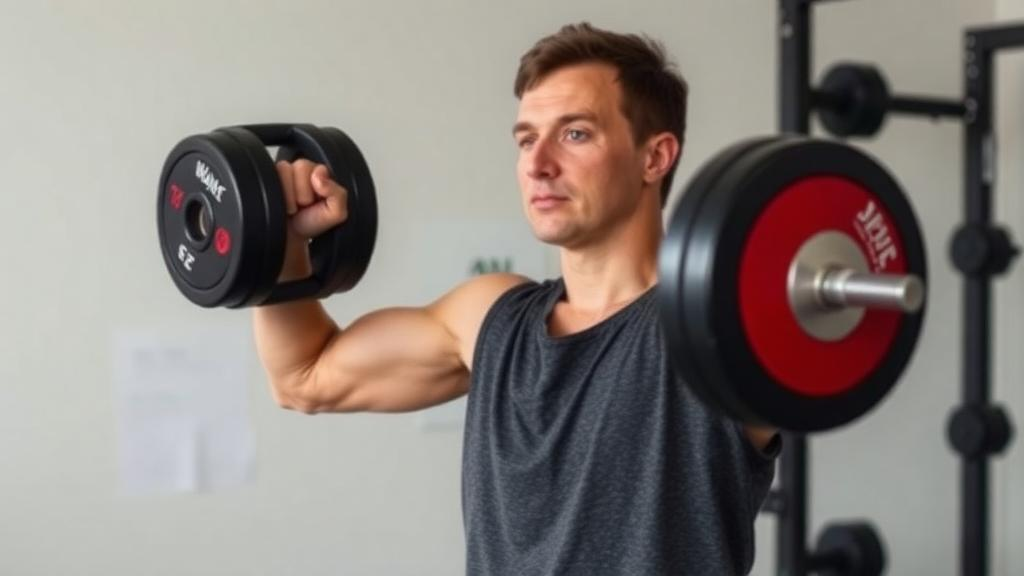
Major depressive disorder affects roughly 280 million people worldwide, and for a large share of them, the standard arsenal of antidepressant drugs and psychotherapy does not deliver adequate relief. A substantial proportion of patients develop treatment-resistant depression even after appropriate first-line attempts, leaving clinicians searching for complementary strategies that are safe, accessible, and affordable. Exercise has steadily climbed the evidence ladder as one such option, with meta-analyses reporting moderate antidepressant effects for aerobic training, yoga, and resistance training. Now a Brazilian-led research team has designed one of the most rigorous tests yet of a surprisingly under-studied question: when it comes to lifting weights to treat depression, does the amount of lifting matter?
The MoveMind randomized controlled trial, described in a protocol paper published in Frontiers in Physiology by researchers at São Paulo State University (UNESP) and collaborators including experts from King’s College London, Deakin University, and the University of British Columbia, will enroll 150 adults aged 18 to 59 with a confirmed diagnosis of major depressive disorder. Participants will be randomized in equal numbers into three groups: a high-volume resistance training group performing four sets of 10 to 12 repetitions at their repetition maximum, a low-volume group performing just two sets at the same intensity, and a non-exercise control group placed on a waiting list. Both training groups will exercise three non-consecutive days per week for eight weeks, targeting all the major muscle groups through eleven exercises ranging from leg presses to bench presses and rows.
The scientific logic behind the comparison is more nuanced than simply asking whether more exercise is better. Total training volume, calculated as the sum of repetitions performed multiplied by the load lifted, is a key driver of muscle hypertrophy and of the acute metabolic stress a session produces. Higher volumes flood the working muscles with greater accumulations of metabolites such as lactate, inorganic phosphate, and hydrogen ions. Intriguingly, lactate itself has been linked to brain-derived neurotrophic factor, or BDNF, a protein proposed as a crucial mediator of exercise-induced neuroplasticity. Researchers led by Fabrício Eduardo Rossi hypothesize that high-volume training may therefore exert its antidepressant effects primarily through neurobiological pathways, by elevating BDNF and insulin-like growth factor 1, boosting the anti-inflammatory cytokine IL-10, and reducing pro-inflammatory markers including TNF-α, IL-6, IL-1β, C-reactive protein, cortisol, and insulin.
Low-volume training, by contrast, may work through an entirely different route: the mind rather than the molecules. Sessions that take less time and impose less perceived burden are expected to strengthen exercise self-efficacy and intrinsic motivation, the psychological factors that most strongly predict whether people keep showing up to the gym. This distinction matters enormously for depression specifically, because the disorder itself erodes motivation and energy, and higher baseline symptom severity has been linked to higher dropout rates from exercise interventions. Meta-analytic data report dropout rates around 17 percent in exercise trials for depression, and dropout in turn threatens both the effectiveness of treatment and the validity of research findings. If two sets can deliver the mood benefits of four sets while being easier to sustain, the clinical implications could be transformative for exercise prescription in psychiatry.
The trial’s measurement plan reflects this dual mechanistic hypothesis. The primary outcome, depressive symptom severity, will be assessed by a blinded psychiatrist using the Montgomery–Åsberg Depression Rating Scale, a ten-item clinical interview scored from 0 to 60, at baseline, immediately after the eight-week intervention, and again at a three-month follow-up. Treatment response will be defined as at least a 50 percent improvement from baseline, with remission thresholds set between 8 and 14 points on the scale. Secondary outcomes capture the hypothesized mechanisms: blood samples collected fasting at rest, always between 6:30 and 7:00 a.m. to control for circadian rhythms and timed to menstrual cycle phase, will be analyzed by enzyme-linked immunosorbent assay for the full panel of inflammatory and metabolic biomarkers. Psychological measures will include validated Portuguese-language instruments for self-efficacy, affective responses during exercise, and motivation, with the Feeling Scale administered both before warm-up and immediately after each session, and even on non-training days.
Methodological rigor extends throughout the protocol. Participants undergo a two-week familiarization phase during which load prediction procedures estimate their 10 to 12 repetition maximum for each exercise, ensuring that training intensity is standardized between groups so that volume remains the only experimental variable. Randomization is conducted in a 1:1:1 ratio by a researcher with no participant contact, using sequentially numbered opaque sealed envelopes for allocation concealment, and participants are pair-matched on initial depressive symptoms and biological sex. Although participants and trainers cannot be blinded to assignment, the psychiatrists, assessors, and laboratory analysts remain strictly blinded. Training sessions are supervised with a 1:1 participant-to-instructor ratio, perceived exertion is monitored on the OMNI-Resistance Exercise Scale with a target range of 6 to 8 out of 10, and loads are progressed whenever a participant can exceed twelve repetitions with good technique. All statistical analyses, including the primary intention-to-treat linear mixed-effects models, will be performed by a statistician blinded to group allocation.
The trial also reaches beyond mood and biomarkers into lifestyle territory that intersects with depression biology. Tertiary outcomes include dietary intake and ultra-processed food consumption assessed through 24-hour dietary recalls analyzed with the QuestNova system, body composition measured by dual-energy X-ray absorptiometry, muscular strength estimated through a velocity-based protocol using a linear transducer in the hexagonal bar squat, and sleep quality measured by the Pittsburgh Sleep Quality Index. These additions acknowledge that depression travels with unfavorable dietary patterns, weight gain, and disturbed sleep, all of which feed the low-grade inflammation and metabolic dysfunction increasingly implicated in the disorder’s pathophysiology. Medication use will be carefully tracked and converted to fluoxetine-equivalent doses, and menstrual cycle phase, diet quality, illness duration, and number of depressive episodes will all be included as covariates in adjusted models.
Perhaps the most ambitious component is the mediation analysis. Using structural equation modeling and latent growth curve mediation frameworks, the researchers will test whether changes in biomarkers or psychological variables statistically explain the reductions in depressive symptoms within each training group. Subgroup analyses will compare responders and non-responders, and exploratory analyses will probe whether men and women, or younger and older participants, respond differently to the two volumes. The sample size, set conservatively at 50 participants per group after accounting for expected attrition, was powered on the basis of an earlier trial in older adults that found large antidepressant effects for both high- and low-intensity weight training compared with usual care. Notably, that trial examined intensity rather than volume, and its effect sizes far exceed those in more recent meta-analyses, which cluster around standardized mean differences of 0.49 to 0.66, underscoring why a carefully powered, directly comparative modern trial is needed.
The team is candid about limitations: participants and supervisors cannot be blinded, the control group is a passive waiting list rather than an attention-matched active condition, no biological sampling will occur at follow-up, and the eight-week intervention plus three-month follow-up cannot speak to long-term sustainability. Yet the strengths are considerable, including the gold-standard randomized design, the mechanistic depth, the extensive covariate control, and the direct head-to-head comparison of training volumes that no prior study has performed in this population. The trial is registered in the Brazilian Registry of Clinical Trials under identifier RBR-9tn4ncp, conducted under the Declaration of Helsinki with ethics approval from UNESP, and follows the SPIRIT 2025 reporting checklist for trial protocols.
If the MoveMind investigators’ hypotheses hold, the payoff would be a more personalized and practical form of exercise prescription for depression: longer, more metabolically demanding workouts for patients most likely to benefit from neurobiological adaptation, and shorter, less daunting sessions for those whose success hinges on confidence and adherence. In a condition where the disease itself sabotages the very behaviors that treat it, identifying the minimal effective dose of resistance training could remove one of the largest barriers between millions of patients and a therapy that costs nothing but effort. The results, expected after the eight-week interventions and follow-up assessments conclude, may finally tell psychiatrists not just whether to prescribe the barbell, but precisely how much weight, and how many sets, the prescription should carry.
Subject of Research: Effects of resistance training volume on depressive symptoms and underlying mechanisms in major depressive disorder
Article Title: Resistance training volume for major depressive disorder: the MoveMind randomized controlled trial protocol
Article References: Resistance training volume for major depressive disorder: the MoveMind randomized controlled trial protocol. (n.d.). https://doi.org/10.3389/fphys.2026.1943543
Image Credits: AI Generated
DOI: 10.3389/fphys.2026.1943543
Keywords: major depressive disorder, resistance training, training volume, BDNF, inflammation, randomized controlled trial, exercise adherence, self-efficacy, mental health, exercise prescription, biomarkers, neuroplasticity
Cite Scienmag News
Glenn Wilkins. (October 15, 2026). Lifting Weights to Lift Mood: New Trial Tests How Much Training Depression Really Needs. Scienmag. https://scienmag.com/lifting-weights-to-lift-mood-new-trial-tests-how-much-training-depression-really-needs/
Glenn Wilkins. "Lifting Weights to Lift Mood: New Trial Tests How Much Training Depression Really Needs." Scienmag, 15 October 2026, https://scienmag.com/lifting-weights-to-lift-mood-new-trial-tests-how-much-training-depression-really-needs/. Accessed 15 October 2026.
Glenn Wilkins. "Lifting Weights to Lift Mood: New Trial Tests How Much Training Depression Really Needs." Scienmag. October 15, 2026. https://scienmag.com/lifting-weights-to-lift-mood-new-trial-tests-how-much-training-depression-really-needs/


