


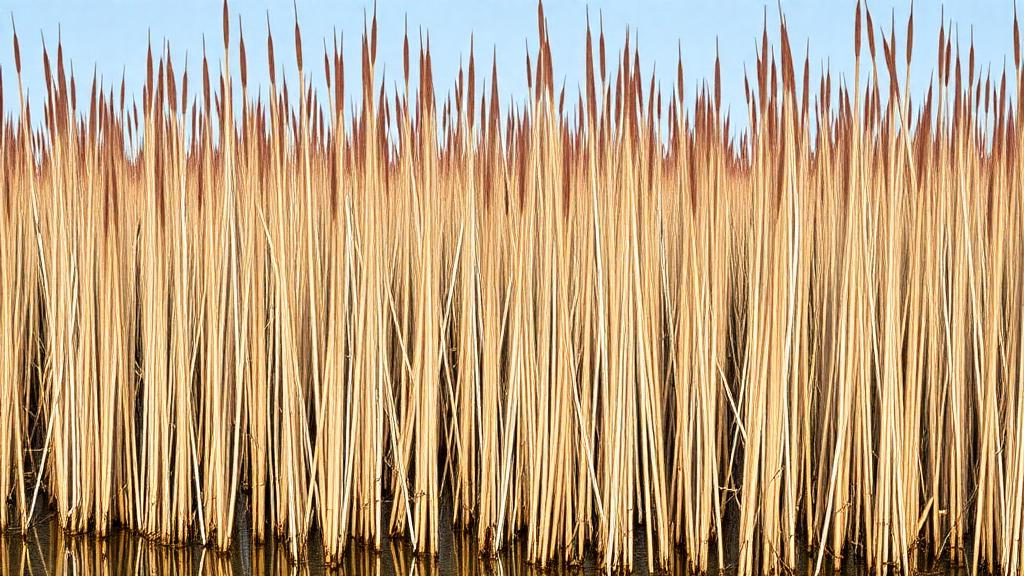
Deep in the fluvio-marine sector of the Danube Delta Biosphere Reserve, one of Europe’s largest and youngest wetlands is quietly performing a double service for the planet. A new study published in the Scientific Annals of the Danube Delta Institute has quantified, for the first time in such fine detail, how much carbon the delta’s vast reedbeds lock away, and how effectively those same reeds absorb hazardous heavy metals from water and sediment. The findings carry implications far beyond Romania’s coastline, because they illuminate how a single plant species, the common reed Phragmites australis, can function simultaneously as a climate ally and a natural water purification system.
The research team, working across the eastern, fluvio-marine portion of the reserve, combined field sampling, laboratory combustion analysis, and geographic information system mapping to build a comprehensive carbon budget for the delta’s harvestable reed stands. The Danube Delta itself is a dynamic alluvial plain, shaped by riverine sediment deposition, coastal currents, tides, and wave action, with elevations varying by roughly 16 meters across its three main branches: Sfântu Gheorghe, Sulina, and Chilia. The fluvio-marine sector, east of the Jibrieni-Letea-Ceamurlia-Caraorman-Crasnicol-Perisor ridge, is dominated by marine sands rather than alluvial deposits, and includes the ecologically significant Razim–Sinoie lake complex, a former bay of the Black Sea transformed into a chain of blocked lagoons.
Because substrate type profoundly influences how much carbon a wetland can store, the researchers classified the delta’s reedbeds into five categories: reed on gleyic soils (S-F), reed on peaty or peaty gleyic soils (S-Ft), compact reed on organic hemic soils (S-Ps), reed on psamosoils or sandy soils (S-N), and reed on salinized organic soils (S-Pa). Each category differs in reed density, stem height, stem diameter, and aboveground biomass. The S-Pa stands, for example, achieve a remarkable average of 135 stems per square meter, with total biomass reaching 2.3 kilograms of dry substance per square meter, of which reed stems represent 65 percent. By contrast, reeds on gleyic soils average just 57 stems per square meter and 1.66 kilograms of dry substance per square meter.
Carbon content in the plant tissue itself was determined by the Dumas method, a dry combustion technique in which dried and powdered samples are burned and their carbon measured as a percentage of dry weight. Soil organic carbon was assessed through the classic Walkley–Black wet oxidation procedure alongside dry combustion, at multiple depths. Rhizome biomass, an often-overlooked underground reservoir, was estimated using soil coring and established biomass equations. The analysis revealed that the mean carbon content of Phragmites australis biomass in the delta is approximately 43 percent, meaning that nearly half of every dry kilogram of reed is sequestered atmospheric carbon dioxide.
The headline numbers are striking. Reedbeds growing on salinized organic soils (S-Pa) proved the most powerful carbon storehouses, holding 8.595 tonnes of carbon per hectare, supported by a mean dry biomass of 19.790 tonnes per hectare. Reed on psamo-soils followed with 6.668 tonnes of carbon per hectare, and compact reed on hemic organic soils stored 5.902 tonnes per hectare. At the other end of the spectrum, reedbeds on gleyic soils (S-F) stored only 0.463 tonnes of carbon per hectare, from a mere 1.067 tonnes of dry biomass per hectare. Across the entire harvestable reed area of roughly 29,478 hectares in the fluvio-marine delta, the total stored carbon reached 23.084 tonnes per hectare equivalents, drawn from a total standing biomass of 53,151 tonnes of dry matter.
The spatial dominance of certain reed types matters for conservation planning. GIS analysis showed that compact reed on hemic organic soils (S-Ps) covers 40 percent of the studied reed area, followed closely by reed on salinized organic soils (S-Pa) at 29 percent and reed on psamosoils (S-N) at 23 percent. Reed on gleyic soils occupies the smallest share. This distribution means that the bulk of the delta’s harvestable reed resource sits on substrates with moderate to high carbon storage potential, reinforcing the delta’s status as a substantial regional carbon sink. The results align closely with comparable measurements from the Macquarie Marshes in Australia’s Murray–Darling Basin, where 2.760 kilograms per square meter of dry reed biomass was found to store an estimated 1.190 kilograms of carbon per square meter, underscoring that high reed carbon storage is a global phenomenon rather than a local curiosity.
Yet the study is careful not to present reedbeds as unambiguous climate heroes. Wetlands worldwide, though covering only 2 to 6 percent of the global land surface, hold between 12 and 20 percent of all terrestrial carbon, and they are also the largest natural source of methane to the atmosphere, contributing roughly 20 percent of annual global emissions. In flooded reedbeds, anaerobic soil conditions slow the decomposition of organic matter, which favors carbon accumulation but also feeds methane-producing microbes in the sediment. Some plant carbon may therefore be offset by methane release, a balance that varies with flood regime, temperature, and substrate composition. The authors note that disturbing or degrading organic-rich histosols risks releasing stored carbon back into the atmosphere as carbon dioxide and methane, making sustainable management of these peaty soils a priority.
The second half of the investigation turned to pollution, tracking four heavy metals—chromium, nickel, lead, and zinc—over a five-year monitoring period from 2019 to 2023 in the Roșu–Puiu lacustrine complex. Sediment quality was assessed under the European Water Framework Directive, using the fraction smaller than 63 micrometers to determine ecological status, with concentrations measured by inductively coupled plasma mass spectrometry. The verdict was reassuring: annual mean concentrations never approached regulatory limits. Lead fluctuated between 3.996 and 6.571 milligrams per kilogram, far below the maximum permissible 85. Nickel peaked at 18.204 milligrams per kilogram in 2020 against a threshold of 35, zinc ranged from 8.308 to 24.853 milligrams per kilogram against a limit of 150, and chromium remained well under its 100 milligram per kilogram standard. Crucially, all four metals showed a declining trend across the monitoring window.
The reeds themselves proved to be active participants in this cleanup. As rooted, stationary macrophytes under continuous exposure to contamination, Phragmites australis plants absorb metal ions through both roots and rhizomes, sequestering pollutants within their tissues. Each year, accumulating rhizomes and roots build a thickening layer of decomposing, peat-forming organic matter that effectively traps hazardous compounds in the substrate. In vegetation samples, chromium ranged from 3.318 to 8.552 milligrams per kilogram, comfortably below the toxicity threshold of 63 milligrams per kilogram above which macrophyte growth declines. Lead peaked at 6.018 milligrams per kilogram, nickel at 8.816, and zinc at 12.214. Zinc consistently showed the highest concentrations of the four metals, which the authors attribute to its role as an essential micronutrient, distinguishing physiological uptake from the less regulated accumulation seen for non-essential metals like nickel and lead. The strong correlation between declining metal levels in vegetation and in bottom sediment suggests the reeds draw most elements from the sediment itself, with occasional resuspension during floods and from boat wakes explaining minor year-to-year fluctuations.
The study’s conclusions point toward concrete management actions. Restoring drained agricultural land within the delta could boost its carbon storage, and the researchers recommend avoiding annual whole-area reed harvesting—historically intensive between 1960 and 1980—in favor of a two-year cycle to protect soil carbon balances, in line with sustainability criteria of the European Renewable Energy Directive. Reed-covered areas are vital for peat formation and the preservation of organic soils, and the vegetation and sediments of the studied region now serve as verified reservoirs for both carbon and contaminants. With the delta’s vegetation expected to shift under human pressure and a changing climate, the authors argue that quantifying these natural services is the essential first step toward safeguarding them. Future work will extend the carbon and contaminant accounting into the western, fluvial half of the reserve, completing the picture of one of Europe’s most valuable and understudied wetland ecosystems.
Subject of Research: Carbon sequestration and heavy metal storage in Phragmites australis reedbeds of the Danube Delta Biosphere Reserve
Article Title: Assessment of carbon sequestration and hazardous chemical storage in reed habitats of the Danube Delta Biosphere Reserve’s fluvio-marine sector
Article References: Suliman, I., Tudor, I.-M., Covaliov, S., Doroftei, M., Livanov, O., Ibram, O., Burada, A., Despina, C., Seceleanu-Odor, D., Gheorghe, P.-B., Matei, N., Trifanov, C., Mierlă, M., Balaican, D., Simionov, M., & Tudor, M. (2025). Assessment of carbon sequestration and hazardous chemical storage in reed habitats of the Danube Delta Biosphere Reserve’s fluvio-marine sector. Scientific Annals of the Danube Delta Institute, 30, 123-139. https://doi.org/10.3897/saddi.30.159714
Image Credits: AI Generated
Keywords: Danube Delta, Phragmites australis, carbon sequestration, wetlands, heavy metals, histosols, methane emissions, GIS mapping, water quality, peatland, climate change, bioremediation
Cite Scienmag News
Sloane Callahan. (October 15, 2026). Danube Delta Reeds Emerge as Powerful Carbon Sinks and Pollution Traps, Five-Year Study Reveals. Scienmag. https://scienmag.com/danube-delta-reeds-emerge-as-powerful-carbon-sinks-and-pollution-traps-five-year-study-reveals/
Sloane Callahan. "Danube Delta Reeds Emerge as Powerful Carbon Sinks and Pollution Traps, Five-Year Study Reveals." Scienmag, 15 October 2026, https://scienmag.com/danube-delta-reeds-emerge-as-powerful-carbon-sinks-and-pollution-traps-five-year-study-reveals/. Accessed 15 October 2026.
Sloane Callahan. "Danube Delta Reeds Emerge as Powerful Carbon Sinks and Pollution Traps, Five-Year Study Reveals." Scienmag. October 15, 2026. https://scienmag.com/danube-delta-reeds-emerge-as-powerful-carbon-sinks-and-pollution-traps-five-year-study-reveals/


