


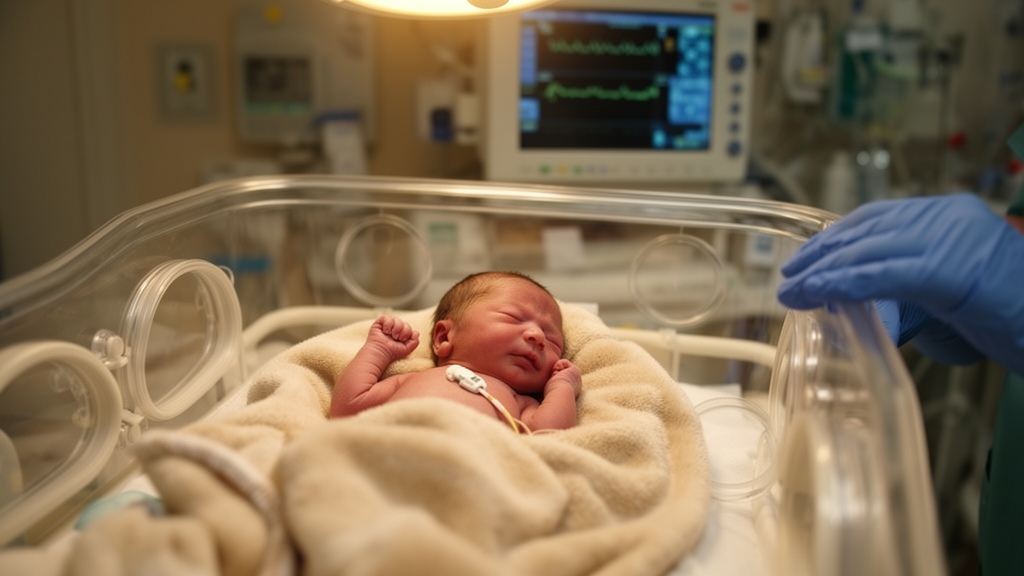
Babies born before 28 weeks of gestation—known as extremely low gestational age neonates, or ELGANs—survive against odds that would have seemed impossible a generation ago. Yet the medicine that keeps them alive is, in many respects, practiced in an evidentiary vacuum. A new review published in Pediatric Research argues that the most vulnerable patients in medicine are also among the most under-researched, and it proposes a solution that is already transforming other fields: the systematic use of real-world data, the vast streams of information generated every day in the neonatal intensive care unit but rarely harnessed for rigorous science.
The scale of the problem is stark. According to the review, led by Ryan Kilpatrick and Jonathan Davis of Tufts University School of Medicine together with Rachel Greenberg of Duke University, Danielle Boyce of Johns Hopkins University, and Kanwaljit Singh of the Critical Path Institute, most medications administered in the neonatal intensive care unit lack adequate safety, efficacy, and dosing data. Newborns have been described as one of the last therapeutic orphans: drugs are routinely used off-label, at doses extrapolated from older children or adults, in patients whose developing kidneys, livers, and brains handle medications in profoundly different ways. No major therapeutic advance has improved preterm survival since the introduction of surfactant therapy in the early 1990s.
Why has this population been left behind? The review points to a convergence of ethical and practical barriers that make traditional randomized clinical trials extraordinarily difficult in ELGANs. Parents are asked to consent to research for a child they have just met, often in the midst of a medical crisis, and studies of enrollment decision-making show how heavy that burden is. The population is small relative to adult disease areas, fragmented across hundreds of intensive care units, and heterogeneous in ways that demand enormous sample sizes to detect meaningful effects. Regulatory incentives have historically done little to encourage investment in neonatal drug development, and pediatric trials more broadly suffer from high rates of early discontinuation and incomplete reporting.
And yet, paradoxically, ELGANs generate more clinical data than almost any other patient group. A single stay in the neonatal intensive care unit can stretch for months, during which continuous physiologic monitors stream heart rate, oxygen saturation, and respiratory measurements second by second. Laboratory values are drawn daily or more often. Every medication is recorded with dose, route, and timing, adjusted to a body weight measured on a daily or twice-daily schedule. Imaging studies, ventilation settings, nutrition records, and neurodevelopmental assessments accumulate in the electronic health record. The review’s authors argue that this extraordinary density and granularity makes ELGANs ideal candidates for real-world data research—if the infrastructure exists to use it.
Real-world data, in the language of regulators, refers to information relating to patient health collected outside the confines of conventional randomized trials: electronic health records, claims databases, registries, and device data. When such data are analyzed with rigorous methods, they become real-world evidence, and agencies including the United States Food and Drug Administration and the European Medicines Agency have published frameworks describing how such evidence can support regulatory decision-making. The FDA’s 2024 guidance on assessing electronic health records and claims data, and the EMA’s real-world evidence framework for regulator-led studies, signal a regulatory environment far more receptive to these approaches than a decade ago.
The technical challenge, however, is formidable. The review examines the current landscape of common data models—standardized structures such as the OMOP model developed by the Observational Health Data Sciences and Informatics collaboration, and interoperability standards like HL7’s FHIR—that allow different institutions to pool and compare their data. These models were not designed with neonatal complexity in mind. They lack native support for linking mothers and infants, a critical requirement when maternal exposures, medications, and pregnancy complications shape neonatal outcomes. They struggle with continuous physiologic waveforms, with weight-based medication dosing that changes daily, and with the long-term neurodevelopmental follow-up that defines success in this population. Extensions are emerging, including perinatal adaptations of OMOP and standardized representations of ventilation data, but the review concludes that neonates remain poorly served by existing infrastructure.
To address this, the authors propose a minimum neonatal-specific variable set: a core collection of data elements that every neonatal network should capture in a standardized way. This includes gestational age and birth weight, maternal and delivery characteristics, medication exposures with precise dosing, respiratory support parameters, laboratory values, diagnoses such as bronchopulmonary dysplasia defined using evidence-based criteria, adverse events graded with neonatal-specific severity scales, and neurodevelopmental outcomes extending well beyond discharge. Defining bronchopulmonary dysplasia, the chronic lung disease of prematurity, illustrates the difficulty: multiple competing definitions exist, and without harmonization, one center’s outcome cannot be meaningfully compared with another’s. Data quality assessment frameworks, the authors note, must be applied at every step, because a model is only as trustworthy as the messy clinical reality it encodes.
The regulatory applications of well-structured real-world data are where the review’s vision becomes most consequential. External controls—comparison groups drawn from existing patient data rather than randomized within the trial—could allow new therapies to be tested in ELGANs without withholding promising treatment from a control group, an approach the FDA has formally addressed in guidance for externally controlled trials. Target trial emulation, a framework developed by epidemiologist Miguel Hernán and colleagues, allows researchers to design an observational analysis that mimics a hypothetical randomized trial, specifying eligibility, treatment strategies, and follow-up in advance to avoid the biases that plague naive analyses of registry data; emulation studies across 32 clinical trials have shown that such designs can reproduce randomized results when executed carefully. Pharmacovigilance—the ongoing surveillance of drug safety—could operate continuously across networks rather than waiting for rare events to surface in small trials. Natural history studies, mapping how diseases progress without intervention, remain foundational for a population in which the course of illness is still incompletely described.
The review is equally clear that technology alone will not deliver this transformation. Building real-world data infrastructure for ELGANs requires coordinated investment from a broad coalition of stakeholders. Neonatologists and bedside caregivers must ensure that the data entered into electronic health records are accurate and complete, often under time pressure at the cot side. Informaticians must design models and vocabularies that respect neonatal physiology, extending frameworks such as the GA4GH Phenopacket schema for computable clinical representation. Regulators must continue to clarify when real-world evidence is acceptable, and industry must see a viable path to neonatal drug development. Families, the authors emphasize, belong at the table as well: international priority-setting partnerships led by parents of the most premature infants have already identified research questions that matter most to those who live with the consequences.
The stakes extend beyond individual units. Wide practice variation across neonatal intensive care units is well documented, and outcomes for very preterm infants differ substantially across health systems even after adjustment for case mix. That variation is often treated as a problem of quality; the review reframes it as an opportunity, because differences in practice, captured in standardized data, become natural experiments that can reveal which strategies genuinely improve survival without severe morbidity. Cohorts such as the European EPICE study have shown that greater use of evidence-based practices is associated with better outcomes, but identifying those practices requires the kind of harmonized, granular data infrastructure the authors describe. If the vision is realized, the data exhaust of intensive care—currently a byproduct of survival—could become the engine of the first genuine therapeutic progress for extremely preterm infants in more than three decades.
Subject of Research: Use of neonatal real-world data to generate clinical evidence for extremely preterm infants
Article Title: Enabling evidence generation for extremely preterm neonates: the use of neonatal real-world data
Article References: Kilpatrick, R., Greenberg, R. G., Boyce, D., Singh, K., & Davis, J. (2026). Enabling evidence generation for extremely preterm neonates: the use of neonatal real-world data. Pediatric Research. https://doi.org/10.1038/s41390-026-05561-9
Image Credits: AI Generated
DOI: 10.1038/s41390-026-05561-9
Keywords: real-world data, extremely preterm neonates, neonatal intensive care, ELGAN, clinical trials, electronic health records, OMOP common data model, external controls, target trial emulation, pharmacovigilance, drug dosing, neurodevelopmental outcomes
Cite Scienmag News
Harold Sullivan. (October 15, 2026). Real-World Data Could Finally Crack the Evidence Gap for the Tiniest Babies. Scienmag. https://scienmag.com/real-world-data-could-finally-crack-the-evidence-gap-for-the-tiniest-babies/
Harold Sullivan. "Real-World Data Could Finally Crack the Evidence Gap for the Tiniest Babies." Scienmag, 15 October 2026, https://scienmag.com/real-world-data-could-finally-crack-the-evidence-gap-for-the-tiniest-babies/. Accessed 15 October 2026.
Harold Sullivan. "Real-World Data Could Finally Crack the Evidence Gap for the Tiniest Babies." Scienmag. October 15, 2026. https://scienmag.com/real-world-data-could-finally-crack-the-evidence-gap-for-the-tiniest-babies/


