


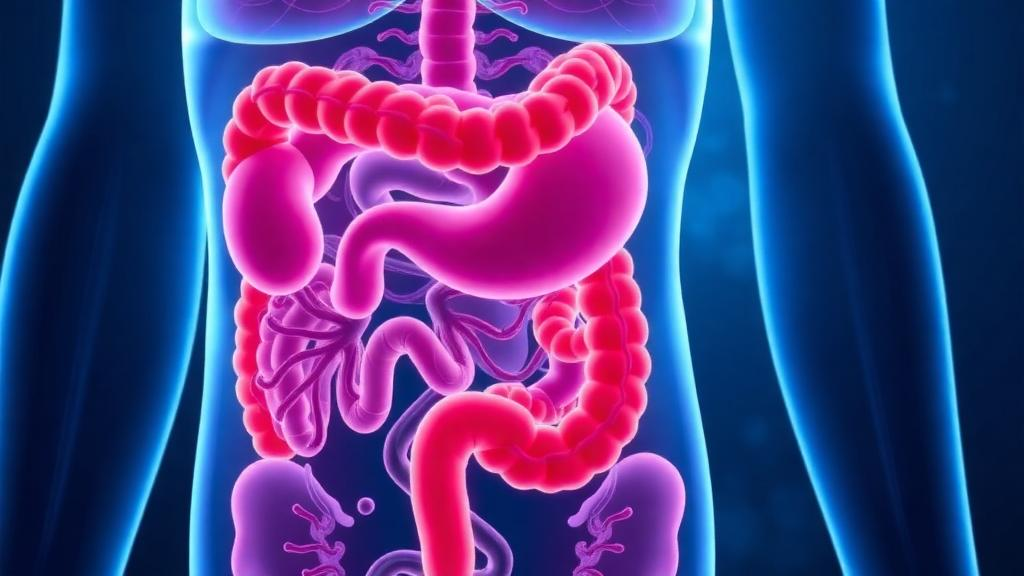
A single transporter protein tucked into the membranes of our intestinal and epithelial cells is quietly shaping some of the most stubborn diseases of the digestive system, from inflammatory bowel disease to pancreatic cancer. A new review published in Molecular Biology Reports by Qianxi Xia and colleagues at Union Hospital, Tongji Medical College, Huazhong University of Science and Technology, pulls together two decades of scattered evidence on SLC6A14, a solute carrier better known in the transport literature as ATB0,+. The authors argue that this unusually promiscuous amino acid importer is not merely a housekeeping nutrient gateway, but a context-dependent contributor to intestinal inflammation, fluid secretion defects in cystic fibrosis, and the metabolic appetites of gastrointestinal tumors. Their synthesis arrives at a moment when drug developers are increasingly eyeing solute carriers, a class of proteins long considered technically difficult to drug, as actionable therapeutic targets.
SLC6A14 belongs to the SLC6 family, a group of sodium- and chloride-dependent transporters that also includes the well-known serotonin and dopamine transporters targeted by antidepressants. What sets SLC6A14 apart is its extraordinary breadth of substrate specificity. First cloned and functionally characterized by Sloan and Mager in 1999, the protein moves a wide spectrum of neutral and cationic amino acids across the plasma membrane, coupling each transport cycle to the inward flow of sodium and chloride ions. Later work established that it also transports beta-alanine and even carnitine, expanding its functional repertoire beyond standard protein building blocks. Because it concentrates substrates against steep gradients, SLC6A14 can accumulate amino acids inside cells to remarkably high levels, a property that has made it attractive both physiologically and pharmacologically.
Structural insights have come indirectly, largely through crystal structures of bacterial and human relatives in the neurotransmitter-sodium-symporter family, which revealed the alternating-access mechanism by which these proteins shuttle substrates across the membrane. Recent biochemical work has refined the picture for SLC6A14 itself. Studies of its pre-steady-state kinetics documented a rapid turnover rate and swift substrate translocation, and a 2025 analysis showed that the charge of the transported substrate determines the sodium-coupling stoichiometry of the transporter. Equally important is the question of how the protein reaches the cell surface in the first place. Research over the past several years has traced a trafficking route in which SLC6A14 exits the endoplasmic reticulum through a specific interaction with SEC24C, a component of the COPII coat complex, and depends on the heat shock protein HSP90 for proper delivery to the plasma membrane. In cancer cells, phosphorylation of SEC24C by the AKT kinase controls this trafficking, linking transporter surface abundance directly to growth-factor signaling.
The clearest disease signals, however, emerge in the gut. Genome-wide association studies and expression analyses have repeatedly flagged SLC6A14 in inflammatory bowel disease. Early transcriptional profiling of ulcerative colitis patients identified the gene among a handful of mucosal transcripts that distinguish inflamed tissue, and more recent integrative bioinformatics studies using weighted gene co-expression network analysis and machine learning have proposed SLC6A14 as a candidate diagnostic biomarker for ulcerative colitis. Mechanistic studies in cell and animal models have begun to explain how an amino acid transporter could fuel inflammation. In 2022, researchers reported that SLC6A14 facilitates epithelial cell ferroptosis, an iron-dependent form of cell death, via a C/EBPbeta-PAK6 signaling axis in ulcerative colitis. The following year, a separate team showed that the transporter promotes disease progression by facilitating NLRP3 inflammasome-mediated pyroptosis, another inflammatory cell death pathway. In models of colitis induced by dextran sulfate sodium and TNBS, altered SLC6A14 expression has been tied to intestinal epithelial injury.
Therapeutic angles are also taking shape in this inflammatory context. A 2025 study found that baicalin, a flavonoid compound, inhibited cell apoptosis, inflammation, and ferroptosis in ulcerative colitis by influencing Sp1-mediated transcription of SLC6A14. In Crohn’s disease, alpha-methyl-tryptophan, a tryptophan derivative long used as a transport inhibitor, was reported to suppress SLC6A14 expression and exhibit immunomodulatory effects. These findings suggest that damping the transporter’s activity, either directly or at the level of gene expression, may quiet the metabolic and inflammatory cascades that drive chronic intestinal injury, though the authors of the review caution that SLC6A14’s role appears to be context-dependent rather than uniformly protective or harmful.
Cystic fibrosis adds a different dimension. People with cystic fibrosis carry mutations in the CFTR chloride channel, and the severity of their gastrointestinal symptoms, including the often life-threatening neonatal condition meconium ileus, varies enormously between patients even with similar CFTR mutations. Modifier genes are thought to explain much of this variability. In 2012, a large genetic study of meconium ileus susceptibility identified multiple apical membrane constituents, SLC6A14 among them, as associated with the condition. Subsequent work confirmed that the transporter modifies the primary cystic fibrosis defect in fluid secretion, and a 2026 study traced this modifier effect to distinct regulatory elements controlling SLC6A14 expression. The mechanism likely hinges on the transporter’s influence on intestinal fluid handling, since SLC6A14 sits in the same apical membrane neighborhood as CFTR and the cGMP-dependent protein kinase II pathway that governs electrolyte and water secretion in the gut.
Perhaps the most striking story, and the one with the most direct translational momentum, involves digestive system cancers. SLC6A14 was first linked to colorectal cancer in 2005, when researchers documented upregulation of the transporter in human colorectal tumors and metastases. Later studies showed that the Wnt signaling pathway, a central driver of colon tumorigenesis, targets SLC6A14 and that the transporter functions as a tumor promoter in the colon. Aberrant SLC6A14 expression has been shown to enhance the JAK2/STAT3 signaling pathway, driving proliferation and metastasis in colorectal cancer, while blockade of the transporter suppressed tumor growth in preclinical models. In gastric cancer, depleting SLC6A14 was reported to induce amino acid starvation that curbed epithelial-mesenchymal transition and metastasis by perturbing the PI3K/AKT/mTORC1 pathway, one of the central nutrient-sensing circuits in cells.
Pancreatic ductal adenocarcinoma, one of the deadliest human malignancies, has become a particular focus. Transcriptomic and immunohistochemical profiling established that SLC6A14 is expressed in pancreatic tumors, and a 2016 pharmacological study identified the transporter as an effective drug target for pancreatic cancer. Genetic evidence followed: deletion of Slc6a14 in the KPC mouse model of spontaneous pancreatic cancer reduced tumor growth and metastatic spread and improved survival. Recent work has elaborated the metabolic logic behind these observations. In 2025, researchers reported that SLC6A14-mediated glutamine uptake promotes activation of a SYTL4-CXCL8 signaling axis that drives gemcitabine resistance and immune evasion in pancreatic cancer. A 2026 study in Gut showed that SLC6A14-mediated carnitine uptake from PPARgamma-positive cancer-associated fibroblasts promotes pancreatic cancer recurrence, illustrating how the transporter connects tumor cells to their metabolic microenvironment. Combined approaches that target SLC6A14 alongside autophagy and macropinocytosis, the scavenging pathways that pancreatic tumors rely on, are now being explored to enhance therapeutic efficacy.
What makes SLC6A14 especially interesting as a drug target is that it can be exploited in more than one direction. Blocking the transporter starves tumors of the amino acids they need to sustain rapid proliferation, while co-opting it offers a delivery route. Because the transporter accepts a broad range of substrates, chemotherapeutic agents and nanoparticles have been conjugated to carnitine or amino acid-like ligands to hitch a ride into cancer cells. Studies have demonstrated dual targeting of OCTN2 and ATB0,+ with l-carnitine-conjugated nanoparticles to deliver drugs for colon cancer, ATB0,+-targeted liposomes that enter cells through endocytosis for pancreatic cancer therapy, and nanoparticles designed to reset the amino acid metabolism of cancer cells for enhanced anticancer effects. The transporter’s high concentrating capacity means that even moderate surface expression can support substantial intracellular drug accumulation, a pharmacological advantage that few transporters offer.
The review by Xia and colleagues also situates SLC6A14 within a broader metabolic landscape. Earlier genetic studies had associated the gene with obesity, and mouse work has linked SLC6A14 deficiency to obesity, fatty liver, and metabolic syndrome under high-fat diet conditions, hinting at roles in systemic energy homeostasis that extend beyond the digestive tract. Tryptophan metabolism, increasingly appreciated as a bridge between gut physiology and brain signaling, adds another layer, since SLC6A14 transports tryptophan and its derivatives. The authors acknowledge that many open questions remain, including how the transporter’s expression is regulated in different disease states, how its genetic variation modifies clinical outcomes, and whether selective inhibitors can achieve therapeutic windows without disrupting normal amino acid nutrition. But the convergence of genetic associations, mechanistic pathways, animal models, and early delivery technologies makes a consistent case: a transporter once studied mainly for its unusual substrate range is now a credible candidate for biomarker development and targeted intervention across inflammatory bowel disease, cystic fibrosis, and gastrointestinal cancers alike.
Subject of Research: Role of the amino acid transporter SLC6A14 in inflammatory bowel disease, cystic fibrosis, and digestive system cancers
Article Title: Emerging roles of SLC6A14 in digestive system diseases: from amino acid transport to therapeutic targeting
Article References: Xia, Q., Sun, J., Yu, Q., Li, J., Zhou, B., & Zhu, L. (2026). Emerging roles of SLC6A14 in digestive system diseases: from amino acid transport to therapeutic targeting. Molecular Biology Reports, 53(1), Article 1613. https://doi.org/10.1007/s11033-026-12731-9
Image Credits: AI Generated
DOI: 10.1007/s11033-026-12731-9
Keywords: SLC6A14, amino acid transport, solute carrier, inflammatory bowel disease, ulcerative colitis, Crohn's disease, cystic fibrosis, colorectal cancer, gastric cancer, pancreatic cancer, mTOR signaling, drug delivery
Cite Scienmag News
Nathaniel Bowman. (October 14, 2026). The Amino Acid Gateway SLC6A14 Emerges as a Player in Gut Disease and Cancer. Scienmag. https://scienmag.com/the-amino-acid-gateway-slc6a14-emerges-as-a-player-in-gut-disease-and-cancer/
Nathaniel Bowman. "The Amino Acid Gateway SLC6A14 Emerges as a Player in Gut Disease and Cancer." Scienmag, 14 October 2026, https://scienmag.com/the-amino-acid-gateway-slc6a14-emerges-as-a-player-in-gut-disease-and-cancer/. Accessed 14 October 2026.
Nathaniel Bowman. "The Amino Acid Gateway SLC6A14 Emerges as a Player in Gut Disease and Cancer." Scienmag. October 14, 2026. https://scienmag.com/the-amino-acid-gateway-slc6a14-emerges-as-a-player-in-gut-disease-and-cancer/


