


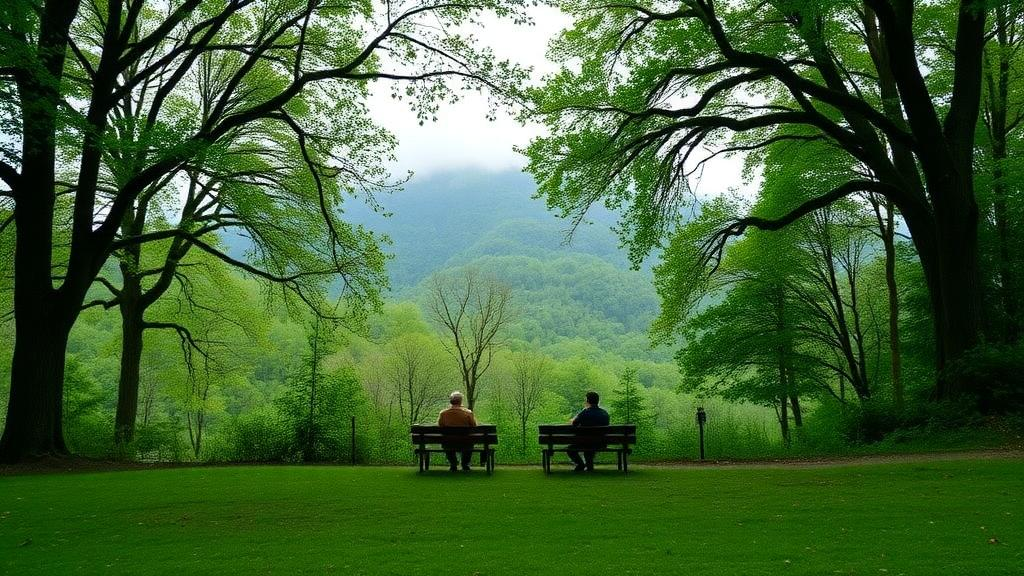
Loneliness has quietly become one of the defining public health challenges of our time. Roughly one in three Americans reports feeling lonely on a regular basis, and worldwide the World Health Organization estimates that about one in six people experiences the same persistent sense of disconnection. The scale of the problem has led public health officials, including the U.S. Surgeon General, to formally describe it as an epidemic of loneliness. Against that backdrop, a new global study offers what may be the most concrete evidence yet that an unlikely remedy can help: clinicians literally prescribing time in nature. The research, led by scientists at the University of Colorado Boulder in collaboration with an international consortium, found that nature-based social prescribing, in which health systems connect lonely people to group activities such as gardening, hiking, or birdwatching, can significantly and durably reduce loneliness, with effects that strengthen rather than fade over time.
The findings emerge from the RECETAS project, short for Re-imagining Environments for Connection and Engagement, a major European Union-funded initiative launched in 2021 with a 5.6 million dollar grant. Under the leadership of Jill Litt, professor of environmental health at CU Boulder and a researcher with the Barcelona Institute for Global Health, the project has tested a social prescribing model called Friends in Nature in 1,200 adults across six cities spanning Europe, Latin America, and Australia. Randomized controlled trials have been conducted in Barcelona, Spain; Prague, Czech Republic; and Helsinki, Finland, while quasi-experimental studies have taken place in Marseille, France; Cuenca, Ecuador; and Melbourne, Australia. According to Litt, the field has long been driven more by enthusiasm than by data. There has been a lot of passion about nature-based prescriptions, she noted, but not a lot of evidence. That evidence gap is now beginning to close.
The newest results, drawn from a randomized controlled trial of 320 lonely adults in Barcelona and published in the October issue of The Lancet Regional Health, represent a rigorous test of the approach. The trial was observer-blinded, meaning that assessors measuring outcomes were unaware of which participants had received which intervention, a design feature that strengthens confidence in the findings. Participants were recruited from twelve low-income neighborhoods in the city, a population chosen precisely because vulnerable urban adults face elevated risks of social isolation yet often lack access to structured, affordable opportunities for connection. The study’s method of research was a randomized controlled clinical trial, the gold standard for determining whether an intervention actually causes the benefit it claims, rather than merely being associated with it.
The design of the Barcelona trial was straightforward but carefully constructed. Half of the participants were placed in small groups of eight to ten people that met for two hours each week over nine weeks. Accompanied by two trained facilitators, these groups engaged in activities such as gardening, birdwatching, and nature-based art programs in green spaces near their neighborhoods. The other half of the participants were given a menu of the same free, easily accessible nature-based activities but were left to do them on their own, without the group structure. This two-arm comparison allowed the researchers to separate two distinct ingredients of the intervention: the benefit of spending time in natural settings, and the added benefit of sharing that time with others in a facilitated group.
Both strategies worked. On average, participants showed an 11 percent reduction in loneliness scores at three months, a 12 percent reduction at six months, and a 17 percent reduction at one year. The pattern of results is notable because the benefits did not diminish once the formal programs ended. Instead, the reduction in loneliness deepened over the course of the year, suggesting that participants carried the connections and habits formed during the nine-week programs into their everyday lives. For those participants who began the study with lower emotional wellbeing, the group intervention proved more effective than the solo option, an important finding for identifying which patients are most likely to benefit from the facilitated, socially embedded version of the prescription.
Understanding why the intervention works requires understanding what loneliness actually is. As Litt explains, loneliness is not simply a matter of physical isolation. It is a subjective disconnect between one’s expectations of their social relationships and one’s reality. A person can be surrounded by others and still feel profoundly alone, and many people who live by themselves do not feel lonely at all. This subjective quality makes loneliness difficult to detect in clinical settings. People are often reluctant to admit they are lonely, may not recognize the feeling in themselves, and instead attribute the physical discomfort they experience to something else. Litt has heard people describe it like a knot in their stomach, like something is just not right, and she notes that you could be in a room full of people and still feel lonely.
The stakes of untreated loneliness are considerable. Studies show that chronic loneliness increases the risk of cardiovascular disease, dementia, stroke, depression, and anxiety. It also burdens the healthcare system in visible ways: people suffering from loneliness tend to visit their doctors more frequently, and they are more likely to turn up at emergency departments with vague complaints on Friday afternoons, a phenomenon that has been dubbed Friday afternoon syndrome. Litt argues that once clinicians really begin to drill down to the root causes of these visits, they often discover that loneliness is a major underlying factor, and that the solutions may lie outside the traditional medical system entirely. This is precisely the logic of social prescribing, a model that treats connection, activity, and environment as legitimate components of care rather than as luxuries beyond a physician’s remit.
Nature itself appears to do distinctive therapeutic work within the model. Litt suggests that the vivid sounds, smells, and sights of natural settings act as an additional facilitator, augmenting the benefits that come from structured social contact. Even time spent in nature alone can alleviate loneliness, according to the research, hinting that natural environments may prepare people emotionally for connection even when no one else is present. Louise Chawla, an environmental psychologist and professor emerita at CU Boulder who recently coauthored a paper with Litt on the role nature can play in fostering social connections, describes time outdoors as a kind of reservoir of calm that people can return to later in life during stressful times. In her view, nature is not just restorative while you are in a place, but also when you go back to it in memory, a psychological resource that persists well beyond the visit itself.
The model is already moving from research into practice. Public health agencies in Spain have begun to recognize the Friends in Nature model as a best practice for addressing the loneliness epidemic, a significant endorsement for an intervention that has only recently accumulated trial evidence. Litt is now working to bring similar trials to the United States, with the long-term ambition that insurers might one day cover things like a membership in a community garden or a birdwatching club, the way they cover medications or therapy sessions. The appeal of the approach lies partly in its efficiency: as Litt points out, cities already have nature in them, and governments have already invested in green infrastructure. What has been missing is a mechanism to bridge those resources with health systems, offering person-centered care that leverages the power of nature for healing and wellbeing. With randomized controlled trials now showing that the impacts are real and that they last, that mechanism no longer looks like a hopeful idea. It looks like a prescription waiting to be written.
Subject of Research: Nature-based social prescribing as a randomized controlled intervention to reduce loneliness in vulnerable urban adults
Article Title: Prescriptions for nature shown to ease loneliness
Article References: Prescriptions for nature shown to ease loneliness. (n.d.). Original publication
Image Credits: AI Generated
DOI: Not provided
Keywords: loneliness, social prescribing, nature-based interventions, public health, RECETAS project, randomized controlled trial, mental health, green spaces, University of Colorado Boulder, Barcelona, Lancet Regional Health, community health
Cite Scienmag News
Kristina Jarvis. (October 14, 2026). Doctors Prescribe Nature to Treat the Growing Loneliness Epidemic. Scienmag. https://scienmag.com/doctors-prescribe-nature-to-treat-the-growing-loneliness-epidemic/
Kristina Jarvis. "Doctors Prescribe Nature to Treat the Growing Loneliness Epidemic." Scienmag, 14 October 2026, https://scienmag.com/doctors-prescribe-nature-to-treat-the-growing-loneliness-epidemic/. Accessed 14 October 2026.
Kristina Jarvis. "Doctors Prescribe Nature to Treat the Growing Loneliness Epidemic." Scienmag. October 14, 2026. https://scienmag.com/doctors-prescribe-nature-to-treat-the-growing-loneliness-epidemic/


