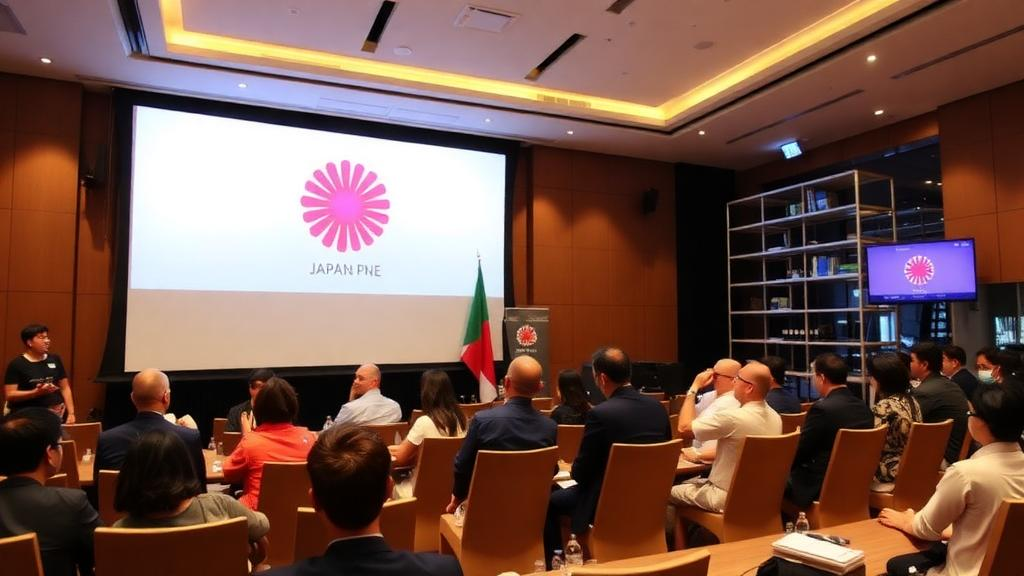
Tokyo is preparing to host one of the most consequential gatherings in Asia-Pacific science diplomacy. On December 7 and 8, 2026, the Japan Science and Technology Agency (JST), working in partnership with the Agency for Science, Technology and Research (A*STAR) of Singapore, will convene the first ASEAN-NEXUS Symposium and the first ASEAN-NEXUS Networking Forum at Bellesalle Shinjuku Minamiguchi in the Japanese capital. The two-day event, announced by JST in October 2026, is designed to do three things at once: present the concrete results of a rapidly growing portfolio of Japan-ASEAN joint research, deepen the personal and institutional networks that make cross-border science possible, and open the door to entirely new collaborations that no single country could attempt alone.
The meeting arrives at a moment when regional scientific cooperation has moved from aspiration to measurable output. Since its inception, Networked Exchange, United Strength for Stronger Partnerships between Japan and ASEAN — the program known by its short name NEXUS — has supported more than 50 international joint research projects spanning a wide range of scientific and engineering fields. Alongside these funded projects, the framework has enabled two-way exchanges involving approximately 1,000 young researchers from ASEAN countries and Japan through the Young Talents Exchange and Capacity Development Program, abbreviated as Y-tec. Those numbers describe an infrastructure of trust: hundreds of laboratories on both sides now share methods, samples, students, and data as a matter of routine rather than exception.
The symposium itself occupies the first day in full. On December 7, from 10:00 a.m. to 6:30 p.m. Japan Standard Time (UTC+9), participants will gather both on-site and online in a hybrid format, with the streaming link to be provided to registered attendees in advance. The program is structured around a showcase of NEXUS achievements, giving project teams a platform to present their progress and research outcomes to an audience of peers, funders, and prospective collaborators. Organizers have also built in deliberate space for the exchange of ideas across research fields — a nod to the reality that many of the region’s toughest problems, from energy systems to emerging infectious diseases, do not respect the boundaries between disciplines.
One of the most distinctive elements of the first day is the scheduled participation of Japanese Nobel laureates, who will offer insights drawn from their experience with international collaboration. For early-career scientists in the room, the sessions provide a rare opportunity to hear how world-class research careers are actually built across borders — through long-standing partnerships, shared infrastructure, and the patient work of aligning institutions with very different funding systems, administrative cultures, and scientific traditions. The organizers have framed these contributions as a centerpiece of the symposium’s effort to inspire the next generation of jointly conducted research projects.
The second morning belongs to connection-making. The ASEAN-NEXUS Networking Forum runs on December 8 from 10:00 a.m. to 12:30 p.m. and is restricted to on-site attendance only. According to the announcement, the forum will build directly on the discussions of the preceding day, moving the agenda from presentation to partnership: deepening researcher-to-researcher connections and exploring new opportunities for collaboration. The venue for both events is Bellesalle Shinjuku Minamiguchi, located on floors 3 and 4 of the Sumitomo Fudosan Shinjuku South Exit Building at 5-31-11 Sendagaya in Shibuya-ku, Tokyo, a location chosen for its accessibility from Shinjuku’s major transit hubs.
Attendance is open to all, and admission is free of charge, reflecting the organizers’ stated aim of broadening participation beyond the established NEXUS community. English is the official language of the event, and no interpretation services will be provided, so participants are expected to engage comfortably in English-language scientific discussion. Advance registration is mandatory: interested researchers, students, policymakers, and industry representatives must complete a registration form hosted by JST no later than 5:00 p.m. JST on Friday, November 6, 2026. The dual-track format — a public hybrid symposium followed by an in-person networking session — mirrors a pattern increasingly favored by funders worldwide, in which open dissemination on day one is paired with targeted partnership-building on day two.
Understanding why this meeting matters requires understanding what NEXUS actually is. The framework describes itself as a flexible and multi-layered cooperative structure, one that leverages the long history of science and technology cooperation between Japan and the member states of ASEAN. Its creation was timed to the occasion of the 50th anniversary of friendship and cooperation between Japan and ASEAN, a milestone that both sides used to elevate bilateral science ties into something more systematic. The stated goal is ambitious: to strengthen the cooperative research relationship between Japan and ASEAN so that the two regions act as partners in co-creating innovations in science and technology, rather than operating as donor and recipient or as separate scientific spheres with occasional transactions.
That flexibility is visible in how the program is structured. Rather than a single grant scheme, NEXUS operates through three distinct approaches — detailed on JST’s official program website — that together cover the life cycle of international collaboration, from early-stage networking to sustained joint projects and from junior-researcher mobility to institutional capacity building. The Y-tec program, with its roughly 1,000 participating young researchers moving in both directions between Japan and Southeast Asia, is the clearest expression of this philosophy: the organizers are treating human capital as seriously as research output, on the premise that today’s exchange participants are tomorrow’s principal investigators on jointly funded projects.
The institutional weight behind the event underscores its significance. JST is Japan’s national research and development agency, a central implementing body for the country’s science, technology, and innovation policy. Its portfolio includes support for fundamental research and startups, development of national R&D strategies, fostering of the next generation of scientific talent, dissemination of research information, and management of the Japan University Fund. The agency frames its mission in terms of the unprecedented global challenges now confronting the world — climate change, energy crises, and emerging infectious diseases among them — and positions itself as charting a course toward a secure future by empowering science through a multifaceted approach. A*STAR, its Singaporean partner, is Singapore’s lead public research agency and a natural anchor for ASEAN-side coordination, given the city-state’s role as a regional hub for biomedical and engineering research.
For researchers in ASEAN member states and Japan alike, the December meeting represents a practical opportunity as much as a ceremonial one. The symposium and forum are explicitly intended to strengthen research networks and facilitate meaningful exchanges that transcend disciplinary and research-area boundaries — language that signals a welcome for proposals that cut across fields, from materials science to public health. With more than 50 completed or ongoing projects to report, roughly a thousand young alumni of the exchange program, Nobel-level perspectives on collaborative science, and an open registration policy, the first ASEAN-NEXUS Symposium and Networking Forum is positioned as both a progress report and an invitation: an accounting of what Japan-ASEAN partnership has already built, and a working session on what it should build next. Registration information and the full program details are available through the Japan Science and Technology Agency.
Subject of Research: International science and technology collaboration between Japan and ASEAN under the NEXUS framework
Article Title: The 1st ASEAN-NEXUS Symposium and Networking Forum (December 7-8)
Article References: The 1st ASEAN-NEXUS Symposium and Networking Forum (December 7-8). (n.d.). Original publication
Image Credits: AI Generated
DOI: Not provided
Keywords: ASEAN-NEXUS, JST, A*STAR, Japan-ASEAN cooperation, international joint research, Tokyo symposium, networking forum, Y-tec program, young researchers, science diplomacy, research partnerships, innovation
Cite Scienmag News
Denise Maddox. (October 14, 2026). Japan and ASEAN Researchers to Gather in Tokyo for First ASEAN-NEXUS Symposium. Scienmag. https://scienmag.com/japan-and-asean-researchers-to-gather-in-tokyo-for-first-asean-nexus-symposium/
Denise Maddox. "Japan and ASEAN Researchers to Gather in Tokyo for First ASEAN-NEXUS Symposium." Scienmag, 14 October 2026, https://scienmag.com/japan-and-asean-researchers-to-gather-in-tokyo-for-first-asean-nexus-symposium/. Accessed 14 October 2026.
Denise Maddox. "Japan and ASEAN Researchers to Gather in Tokyo for First ASEAN-NEXUS Symposium." Scienmag. October 14, 2026. https://scienmag.com/japan-and-asean-researchers-to-gather-in-tokyo-for-first-asean-nexus-symposium/