


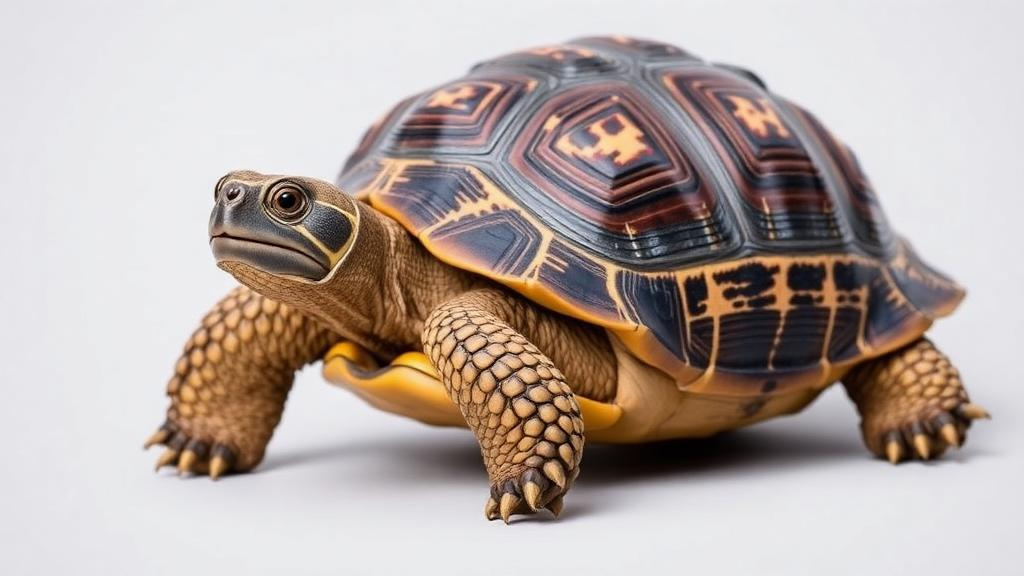
On the lush grounds of Plantation House, the official residence of the governor of St Helena, a British Overseas Territory in the South Atlantic Ocean, lives a reptile who has outlived every human who cared for him, every government under which he has lived, and nearly every animal of his kind ever recorded. Jonathan, an Aldabra giant tortoise (Aldabrachelys gigantea), is estimated to be 194 years old, making him the oldest living giant tortoise and the oldest known land animal on Earth. Thought to have hatched around 1832, he was already a contemporary of Charles Darwin and Queen Victoria, and he arrived on St Helena from the Seychelles 144 years ago, fully grown, as a gift to the governor. Now, for the first time, scientists have peered into his genome and epigenome to ask a question that has fascinated biologists for generations: what does it take, at the molecular level, to live for nearly two centuries?
A study published today in the journal Science Advances, led by researchers at the longevity research non-profit Kallel in the United States, with collaborators including Dr Justin Gerlach of Peterhouse at the University of Cambridge, reports the first epigenomic investigation of a giant tortoise. The team identified 287 unique gene variants in Jonathan that appear to blunt the usual effects of ageing. These variants are not scattered randomly across his genome; they cluster around biological processes that gerontologists regard as the pillars of longevity: the repair of DNA damage, the control of inflammation, the regulation of insulin signalling, and the suppression of cancer. Together, they suggest that Jonathan’s extraordinary lifespan is not simply a matter of good fortune, but of an inherited molecular toolkit that keeps his cells functioning with remarkable fidelity.
The most striking finding concerns not the sequence of Jonathan’s genes, but the switches that govern them. The epigenome, the collection of chemical marks that turn genes on and off without altering the underlying DNA, is known to drift and degrade with age in most animals. These changes, which include shifts in DNA methylation patterns and other regulatory modifications, are widely considered a central driver of the ageing process, contributing to the gradual breakdown of tissue function that characterises older bodies. Yet when the researchers compared Jonathan’s epigenome with those of younger giant tortoises of the same species, they found that the switches controlling his DNA repair and metabolism genes were strikingly similar to those of his younger relatives. In effect, the regulatory architecture of his most critical maintenance genes has barely changed over almost two centuries of life.
“We found that the gene regulators involved in energy production and DNA repair have remained incredibly stable in Jonathan over almost two centuries,” said Dr Justin Gerlach, who has studied the ecology and conservation of giant tortoises for several decades but had never before examined their exceptional longevity. His observation points to a possibility that excites ageing researchers: that some long-lived species do not merely slow the passage of molecular time, but actively preserve the youthful regulation of the genes most essential to survival. If DNA repair pathways and metabolic control circuits remain properly calibrated in extreme old age, the cascade of damage that normally accumulates in ageing tissues may be held in check far longer than in short-lived animals.
The significance of the 287 protective variants becomes clearer when set against what is known about the biology of ageing. DNA damage accumulates throughout life from radiation, metabolic by-products and ordinary cellular wear, and unrepaired lesions drive mutations, cellular dysfunction and the activation of inflammatory pathways. Insulin and insulin-like signalling, meanwhile, is one of the most conserved regulators of lifespan across the animal kingdom, with reduced signalling consistently associated with extended longevity in laboratory models. Chronic low-grade inflammation, sometimes called inflammageing, underlies many of the diseases of old age, and cancer remains a persistent threat to any long-lived large animal, since more cells and more cell divisions create more opportunities for malignant transformation. Gene variants that reinforce DNA repair, temper insulin signalling, damp inflammation and suppress tumours would therefore be expected to act in concert, and that is precisely the pattern the study describes.
“Nature has already solved the puzzle of aging in remarkable ways, and Jonathan’s genome provides a blueprint for cellular resilience,” said Stephen Clark MD, PhD, founder of Kallel and senior author of the study. He added: “Our goal is to take these evolutionary insights and immediately translate them into practical, affordable treatments for everyday people. Aging is the greatest risk factor for nearly every chronic disease we face, and through the generosity of philanthropic partners, we can democratise access to longevity medicine.” The statement reflects a growing ambition within the longevity research field: to treat ageing itself, rather than its individual diseases, as the primary medical target, and to use the genomes of exceptionally long-lived species as guides for intervention in humans.
That ambition will require careful work. Identifying protective variants in a tortoise is a very different matter from reproducing their effects in human cells, let alone in patients. Gene variants that evolved over tens of millions of years in a slow-growing, cold-blooded reptile cannot simply be transplanted into a mammalian genome. But the epigenomic stability documented in Jonathan offers a more immediately tractable line of inquiry. Epigenetic marks are chemically modifiable, and a rapidly expanding toolkit of epigenetic therapies already exists. If researchers can determine precisely which regulatory marks keep Jonathan’s DNA repair and energy-production genes functioning as they did in his youth, they may be able to design interventions that restore similar regulation in ageing human tissues. The study, the first of its kind in any giant tortoise, provides the reference map from which such work can begin.
Jonathan himself remains very much a working animal rather than a museum specimen. He has spent nearly all of his 194 years in the grounds of Plantation House, grazing, resting and, famously, continuing to seek out mates well into extreme old age. Gerlach described the experience of working with him in unusually warm terms: “There are few creatures that could tell us more about ageing than the giant tortoises of the Galapagos and Seychelles islands. Working with a really old giant tortoise is such a privilege: you get a sense of the tortoise being your collaborator, not your study subject.” The remark captures something important about the study’s approach. Rather than treating Jonathan as an inert biological sample, the researchers framed the work as a collaboration with an animal whose body has already run the experiment that longevity science is trying to understand.
The giant tortoises of the Galapagos and Seychelles islands are, as the researchers note, the extraordinary last survivors of animals that once dominated the ecology of many of the world’s islands. Before human arrival, these slow-moving herbivores shaped vegetation, dispersed seeds and engineered landscapes across archipelagos from the Indian Ocean to the Pacific. Hunting, habitat destruction and introduced predators drove most island tortoise populations to extinction, and the survivors, including the Aldabra giant tortoise, now survive only in small, carefully protected populations. Jonathan’s longevity is thus not only a scientific curiosity but a reminder of what has been lost: lineages that may have carried similar longevity adaptations, extinguished before anyone could study them.
For now, Jonathan continues his slow rounds on St Helena, unaware that his blood and tissue samples have become some of the most closely examined biological material in the study of ageing. The study, published under the title reporting epigenetic insights into extreme longevity in the world’s oldest terrestrial animal, documents an experimental investigation of a single, irreplaceable individual, and its findings will need to be extended to other giant tortoises and related species to establish how general these mechanisms are. But the central message is already clear. Extreme lifespan is not an accident of circumstance; it is written in gene variants that protect the integrity of DNA, calm inflammation, restrain growth signals and defeat cancer, and it is maintained by an epigenome that refuses to drift out of calibration even after 194 years. In the shell of one very old tortoise, researchers have found a blueprint for cellular resilience that evolution spent millions of years perfecting, and that medicine is now eager to read.
Subject of Research: Epigenetic and genomic determinants of extreme longevity in the world's oldest land animal, an Aldabra giant tortoise
Article Title: Genetic analysis of the world's oldest land animal reveals secret of living 194 years
Article References: Genetic analysis of the world's oldest land animal reveals secret of living 194 years. (n.d.). Original publication
Image Credits: AI Generated
DOI: Not provided
Keywords: Jonathan the tortoise, Aldabra giant tortoise, longevity, epigenome, DNA repair, ageing, gene variants, insulin signalling, cancer suppression, inflammation, St Helena, Science Advances
Cite Scienmag News
Juliet Wilcox. (October 12, 2026). Jonathan the Tortoise: 287 Gene Variants and a Stable Epigenome Explain His 194-Year Life. Scienmag. https://scienmag.com/jonathan-the-tortoise-287-gene-variants-and-a-stable-epigenome-explain-his-194-year-life/
Juliet Wilcox. "Jonathan the Tortoise: 287 Gene Variants and a Stable Epigenome Explain His 194-Year Life." Scienmag, 12 October 2026, https://scienmag.com/jonathan-the-tortoise-287-gene-variants-and-a-stable-epigenome-explain-his-194-year-life/. Accessed 12 October 2026.
Juliet Wilcox. "Jonathan the Tortoise: 287 Gene Variants and a Stable Epigenome Explain His 194-Year Life." Scienmag. October 12, 2026. https://scienmag.com/jonathan-the-tortoise-287-gene-variants-and-a-stable-epigenome-explain-his-194-year-life/


