


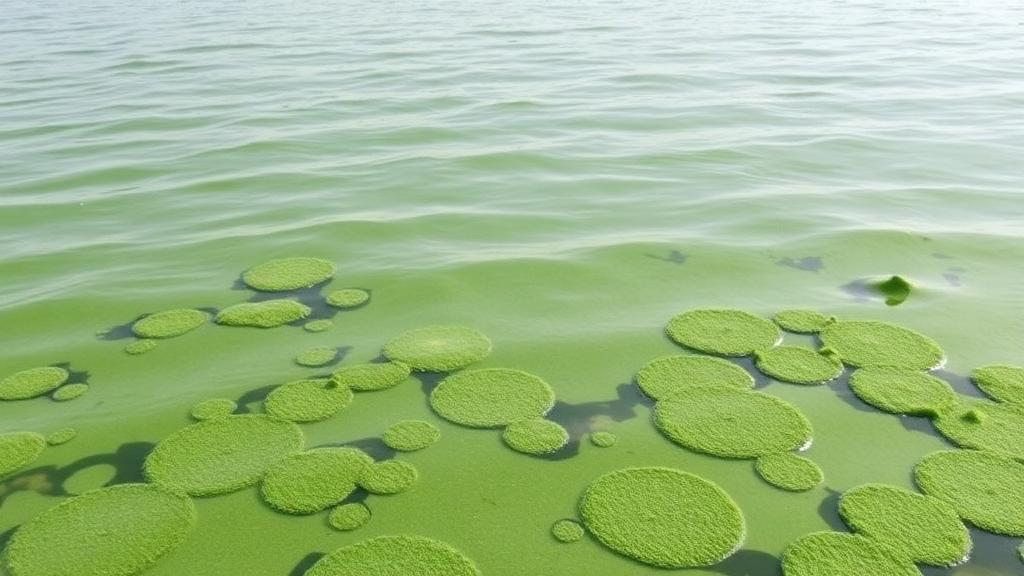
The coastal waters of Lagos, one of the fastest-growing megacities on the African continent, are experiencing a level of algal productivity that is quietly undermining the ecological services the sea has long provided to the city. A new study published in Environmental Monitoring and Assessment by researchers at the University of Lagos has documented, in unusually fine detail, how freshwater inflows carrying nutrients from the surrounding urban landscape are fueling elevated concentrations of chlorophyll-a, the pigment that reveals the abundance of phytoplankton drifting in the water column. The findings paint a picture of a tropical coastal ecosystem under sustained pressure from nutrient enrichment, with consequences for fisheries, navigation, and the broader health of the Gulf of Guinea coastline.
The research team, led by Folake O. Echebiri and including Akeem A. Abayomi, Najeem O. Oladosu, Kehinde O. Olayinka, and Babajide I. Alo, conducted monthly sampling at ten locations across the Lagos coastal waters over a six-month period that spanned both the dry and wet seasons. At each station, they measured a suite of physicochemical parameters at two depths, the surface and mid-water, capturing total phosphorus, dissolved reactive phosphorus, dissolved inorganic nitrate, salinity, dissolved oxygen, turbidity, temperature, and pH. This dual-depth, multi-season design allowed the investigators to separate the vertical structure of the water column from the seasonal signals imposed by the region’s pronounced rainfall regime, a distinction that is critical for understanding how nutrients move through a system where riverine discharge and oceanic exchange compete for influence.
The headline result is striking: chlorophyll-a concentrations were consistently higher in surface waters than at mid-depth, and they rose markedly during the wet season. Mean concentrations reached 35.51 micrograms per liter at the surface and 29.19 micrograms per liter at mid-water during the rainy months, values that place Lagos coastal waters firmly in the range associated with eutrophic conditions. Chlorophyll-a serves as a proxy for phytoplankton biomass, and when it climbs to these levels it signals that microscopic algae are proliferating on a plentiful supply of nutrients. In moderation, phytoplankton form the base of the marine food web and support the fisheries that feed millions of people in the Lagos region. In excess, they can deplete oxygen, shade out submerged habitats, and in some cases produce blooms of cyanobacteria that pose risks to both wildlife and human health.
The seasonal pattern that emerged from the data points directly to freshwater as the dominant driver. During the wet season, heavy rainfall swells the rivers, lagoons, and drainage channels that empty into the coastal zone, delivering a pulse of nutrients washed from urban catchments, agricultural land, and atmospheric deposition. The researchers found significant seasonal differences in temperature, salinity, total phosphorus, and dissolved oxygen, all of which are consistent with a water column being diluted and fertilized by land-derived runoff. Salinity drops as freshwater floods the nearshore zone, while phosphorus concentrations rise, providing precisely the conditions under which fast-growing phytoplankton can capitalize on the sudden abundance of a limiting nutrient. The team identified these elevated nutrient inputs associated with freshwater inflows as a major driver of enhanced primary productivity in the system.
Yet the study also demonstrates that season alone does not explain the distribution of algal biomass. Spatial variability among the ten sampling stations significantly influenced chlorophyll-a concentrations, revealing that local conditions matter enormously in a coastal environment as heterogeneous as Lagos. Some stations, presumably those closer to major discharge points or areas of intense catchment activity, sustained higher algal productivity than others, a pattern the authors attribute to the role of local anthropogenic pressures in shaping eutrophic conditions. In a megacity where industrial effluent, untreated sewage, and stormwater converge on a narrow coastal strip, the geography of pollution is as important as the calendar of the rains. This spatial heterogeneity means that management interventions cannot be uniform; they must be targeted at the specific hotspots where nutrient loading is most intense.
The physical dynamics of the water column add another layer of complexity. The vertical gradient in chlorophyll-a, with surface concentrations exceeding those at mid-depth, reflects the fact that phytoplankton require light for photosynthesis and therefore concentrate in the sunlit upper layer. Turbidity, which the study measured alongside the nutrient variables, modulates this light availability, and in a sediment-laden coastal system the interplay between turbidity and nutrient supply can determine whether a given pulse of phosphorus translates into algal growth. The authors conclude that eutrophication in Lagos coastal waters is regulated by the combined effects of nutrient enrichment, hydrodynamic conditions, and spatial heterogeneity, a three-factor framework that echoes findings from other tropical and subtropical coastal systems, from the Arabian Gulf to the lagoons of West Africa, where similar studies have linked freshwater discharge to phytoplankton dynamics.
The consequences of this sustained eutrophication extend well beyond the water chemistry. The study notes that excessive primary productivity is reducing the capacity of Lagos coastal waters to deliver critical ecosystem services, including navigation and fisheries. Dense algal blooms can clog waterways and fishing gear, while the decomposition of the resulting organic matter consumes dissolved oxygen, creating conditions that stress fish and shellfish populations. Low-oxygen events, or hypoxia, are a well-documented consequence of nutrient over-enrichment in coastal seas worldwide, and the significant seasonal differences in dissolved oxygen recorded in this study suggest that Lagos waters may be moving along a trajectory that other eutrophic systems have followed, one that ends in seasonal dead zones if nutrient inputs are not curtailed.
The Lagos findings also carry a broader scientific significance. Coastal eutrophication is one of the most widespread forms of marine pollution on the planet, and tropical megacities represent some of the most challenging environments for its management, combining rapid population growth, inadequate wastewater infrastructure, and intense seasonal hydrology. Previous work by members of the same research group has documented nitrogen and phosphorus loading to the Lagos Lagoon from both wet and dry atmospheric deposition, and has traced the influence of human population and built-up area on sediment nutrient cycling in estuarine basins. The new study extends this body of work into the coastal waters themselves, closing the loop between catchment processes, nutrient delivery, and the biological response of the receiving marine environment.
For the researchers, the practical message is clear: continuous monitoring of key water quality indicators and of nutrient inflows through coastal inlets is essential for identifying eutrophication hotspots and supporting effective management strategies in tropical coastal ecosystems. Because the study shows that chlorophyll-a distribution is shaped by both season and location, monitoring programs that sample only occasionally or at a handful of sites risk missing the episodes and places where degradation is most severe. The authors argue that sustained observation, ideally at the inlets through which land-derived nutrients reach the sea, would give managers the information needed to intervene before blooms become crises, whether through improved wastewater treatment, control of runoff, or the protection of the hydrodynamic flushing that helps disperse nutrient loads.
As Lagos continues to grow, the pressure on its coastal waters will only intensify, and the study by Echebiri and colleagues provides both a warning and a roadmap. The warning is that freshwater-driven nutrient enrichment is already pushing primary productivity to levels that impair the services the coast provides. The roadmap is the demonstration that the problem is traceable, measurable, and spatially specific, which means it is, in principle, manageable. The research was partly funded by the Tertiary Education Trust Fund through the National Research Fund, and the data generated during the study are available from the corresponding author on request, an openness that may help other researchers and managers across the Gulf of Guinea confront the same challenge in their own coastal waters.
Subject of Research: Seasonal and spatial variability of chlorophyll-a and nutrients in eutrophic tropical coastal waters
Article Title: Freshwater driven seasonal and spatial variability of chlorophyll-a and nutrients in Lagos coastal waters
Article References: Freshwater driven seasonal and spatial variability of chlorophyll-a and nutrients in Lagos coastal waters. (n.d.). https://doi.org/10.1007/s10661-026-15910-0
Image Credits: AI Generated
DOI: 10.1007/s10661-026-15910-0
Keywords: chlorophyll-a, eutrophication, Lagos, coastal waters, nutrients, freshwater inflow, water quality, phosphorus, phytoplankton, tropical ecosystems, dissolved oxygen, Environmental Monitoring and Assessment
Cite Scienmag News
Violet Maxwell. (October 11, 2026). Freshwater Inflows Drive Algal Blooms in Lagos Coastal Waters, Study Finds. Scienmag. https://scienmag.com/freshwater-inflows-drive-algal-blooms-in-lagos-coastal-waters-study-finds/
Violet Maxwell. "Freshwater Inflows Drive Algal Blooms in Lagos Coastal Waters, Study Finds." Scienmag, 11 October 2026, https://scienmag.com/freshwater-inflows-drive-algal-blooms-in-lagos-coastal-waters-study-finds/. Accessed 11 October 2026.
Violet Maxwell. "Freshwater Inflows Drive Algal Blooms in Lagos Coastal Waters, Study Finds." Scienmag. October 11, 2026. https://scienmag.com/freshwater-inflows-drive-algal-blooms-in-lagos-coastal-waters-study-finds/


