


Rice feeds more than half of humanity, yet the way it is grown is quietly failing the planet. Decades of intensive fertilizer and pesticide use have degraded soils, eroded biodiversity, and turned flooded paddies into a major source of methane, a greenhouse gas far more potent than carbon dioxide. A sweeping review published in the Journal of Agriculture and Food Research argues that the way out is not any single miracle technology, but the deliberate fusion of two very different worlds: the microscopic life teeming around rice roots and the digital machinery of precision agriculture. The authors, from Universiti Kebangsaan Malaysia, contend that microbiome science and green engineering only reach their full potential when deployed together as an integrated production system.
At the heart of the biological argument is a reframing of the soil itself. For most of modern agricultural history, the soil microbiome was treated as passive background. The review positions it instead as a primary determinant of agroecosystem sustainability, with bacteria, fungi, archaea and protozoa driving nutrient cycling, plant growth regulation, disease suppression and resilience to drought and salinity. Through biological nitrogen fixation, phosphorus solubilization and organic matter decomposition, these communities regulate the very nutrients on which rice depends, while also shaping root development, hormonal balance and immune responses. Crucially, the authors stress that microbial abundance alone tells researchers little; the future depends on deciphering microbial function, not merely cataloguing microbial diversity.
One of the most striking mechanisms involves plant growth-promoting rhizobacteria equipped with the enzyme ACC deaminase. When rice plants experience drought, salinity or heavy metal stress, they accumulate ethylene, a stress hormone that in excess stunts root growth and accelerates senescence. ACC deaminase-producing bacteria, including species of Pseudomonas and Bacillus, degrade ACC, the immediate precursor of ethylene, into ammonia and alpha-ketobutyrate. This biochemical intervention keeps roots elongating and taking up water under conditions that would otherwise shut them down. The bacteria also prime antioxidant defences, inducing enzymes such as catalase and superoxide dismutase that neutralize the reactive oxygen species responsible for damaging membranes, proteins and DNA during stress.
The review highlights a decisive shift away from single-strain inoculants, which often perform brilliantly in the laboratory but inconsistently in the field, toward synthetic microbial communities, or SynComs, that combine organisms with complementary metabolic functions. The evidence is compelling. In a greenhouse pot experiment, a SynCom of Azotobacter, Azospirillum and Bradyrhizobium strains derived 51.6 percent of root nitrogen from atmospheric fixation, compared with 25 to 45 percent for individual bacteria. In acidic field conditions, a consortium of aluminium-resistant bacteria raised single-panicle rice yields by 26.36 percent by easing soil acidification and aluminium toxicity. In Vietnam, inoculation with Gluconacetobacter diazotrophicus supported normal growth and yield with just 50 kilograms of nitrogen per hectare, half the conventional rate. Metagenomics now allows researchers to identify the gene markers behind nitrogen fixation, phosphate solubilization and siderophore production, moving the field from descriptive diversity studies toward predictive, function-oriented microbiome engineering.
The biological toolkit extends well beyond fertilization. Microbial biocontrol agents suppress pathogens through antibiosis, nutrient competition, niche exclusion and induced systemic resistance. Disease-suppressive soils rely on specialized metabolites such as 2,4-diacetylphloroglucinol, which disrupts fungal cellular processes; lipopeptides, which compromise pathogen membranes; and hydrocyanic acid, which interferes with respiration. Entomopathogenic fungi like Beauveria bassiana and Metarhizium anisopliae penetrate insect cuticles and kill major rice pests, including the brown planthopper and stem borers, with minimal harm to non-target organisms. Delivery, however, remains the weak link: encapsulation in alginate, chitosan or gum Arabic protects inoculants from desiccation and ultraviolet radiation, and in one rice study, alginate-encapsulated Priestia aryabhattai boosted plant dry mass by 74.9 percent and nitrogen uptake by 86.1 percent compared with free cells.
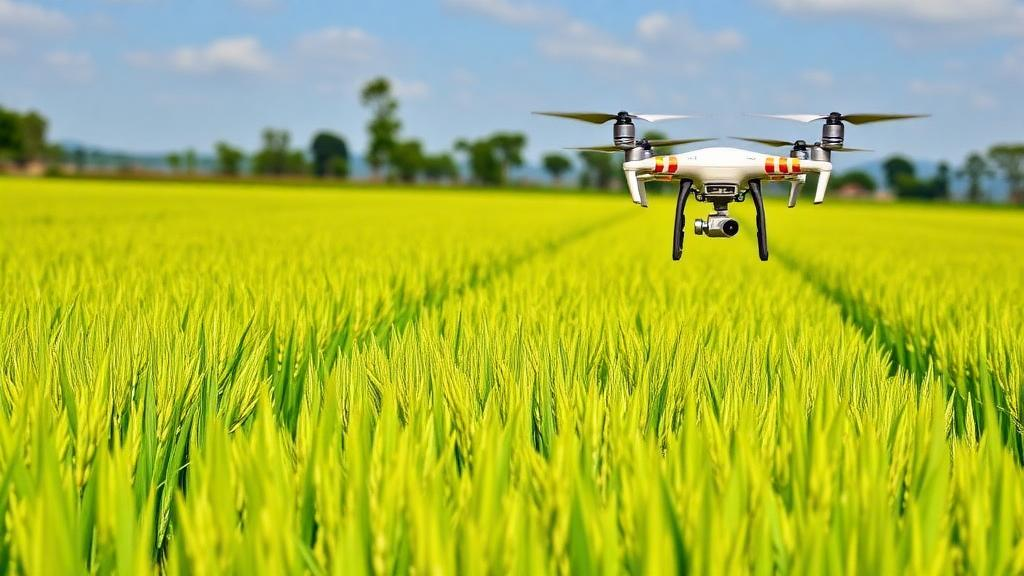
On the engineering side, the review catalogues a digital transformation that is already reshaping rice paddies. Unmanned aerial vehicles fitted with multispectral and hyperspectral sensors can estimate chlorophyll content, biomass and nitrogen status before deficiencies become visible. In field experiments in Southwest China, UAV remote sensing combined with a random forest model predicted the rice nitrogen nutrition index with R-squared values reaching 0.97, enabling targeted top-dressing recommendations. Normalized Difference Vegetation Index-guided systems direct urea and diammonium phosphate to nutrient-deficient zones, cutting runoff and waste. Digital twin models go further, integrating real-time environmental data with metatranscriptomic information on microbial gene expression, so that irrigation and fertilization decisions account for rhizosphere biology as well as soil moisture.
Water and energy innovations complete the non-microbial picture. Alternate wetting and drying irrigation, in which fields are deliberately allowed to dry between floodings, reduced methane emissions by 47.47 percent in a global meta-analysis spanning 93 percent of world rice production, though nitrous oxide emissions rose by 52.20 percent, and severe drying cut grain yields by 22.6 percent. Mild AWD, by contrast, maintained yields while saving 23.4 percent of water. Solar-powered irrigation systems delivered a higher benefit-cost ratio than diesel pumps in Bangladeshi Boro rice production, while rice husk gasification converts residues that would otherwise be burned into electricity and heat. Biochar emerges as a bridge between the two worlds: its porous structure sequesters carbon, retains nutrients and, critically, acts as a biological scaffold that shelters introduced microbial consortia in the field.
The authors are candid about the bottlenecks. Microbial inoculants still fail unpredictably outdoors because of priority effects, niche exclusion and competition with native communities, and their recruitment patterns shift across plant developmental stages, undermining one-size-fits-all products. Host genotype matters enormously: a formulation tuned to one cultivar’s root exudates may colonize poorly on another, and a line bred for acidic soils may fail in saline paddies. Genome-edited microorganisms promise precision but raise biosafety questions about horizontal gene transfer and face fragmented regulation, with the European Union, the United States and India each applying different oversight frameworks. On the digital side, high equipment costs, weak rural connectivity and limited digital literacy exclude precisely the smallholder farmers who need these tools most; a Malaysian survey found middle- and high-income farmers 20 to 22 percent more willing to pay for IoT technologies than their lower-income peers.
The review’s central message is that integration, not replacement, will define the future of rice. Sensor networks can identify where inoculants are most likely to establish; AI-driven decision-support systems can time applications to coincide with favourable soil moisture and nutrient conditions; biochar and conservation tillage can create habitats that keep engineered communities alive; and CRISPR-assisted breeding can produce rice varieties that actively recruit beneficial microbes through tailored root exudates. Emerging directions include stress-responsive SynComs designed to persist through drought and flooding, methanotrophic bacteria that oxidize methane before it escapes paddies, and circular systems in which straw becomes biochar, biochar carries the microbes, and the microbes feed the next crop. Policy will determine the pace: Vietnam’s One Million Hectares of High-Quality and Low-Emission Rice programme, backed by the International Rice Research Institute, shows how national green-growth strategies can pull these technologies from the laboratory into millions of fields. If the authors are right, the next green revolution will not be written in a single molecule, but in the coordinated choreography of genomes, microbes, satellites and sunlight.
Subject of Research: Integrated microbiome and green technologies for sustainable rice production
Article Title: Integrated Microbiome and Green Technologies for Sustainable Rice Production: Current Advances, Challenges and Future Perspectives
Article References: Aminurrasyid, A. H., Nadarajah, K. K., & Ikmal, A. M. (2026). Integrated Microbiome and Green Technologies for Sustainable Rice Production: Current Advances, Challenges and Future Perspectives. Journal of Agriculture and Food Research, Article 103359. https://doi.org/10.1016/j.jafr.2026.103359
Image Credits: AI Generated
DOI: 10.1016/j.jafr.2026.103359
Keywords: rice, microbiome, SynComs, biofertilizers, precision agriculture, alternate wetting and drying, biochar, CRISPR, methane emissions, solar irrigation, digital agriculture, sustainable farming
Cite Scienmag News
Alan Morgan. (October 10, 2026). Rice Farming’s Next Revolution: Microbes, Drones and AI Join Forces. Scienmag. https://scienmag.com/rice-farmings-next-revolution-microbes-drones-and-ai-join-forces/
Alan Morgan. "Rice Farming’s Next Revolution: Microbes, Drones and AI Join Forces." Scienmag, 10 October 2026, https://scienmag.com/rice-farmings-next-revolution-microbes-drones-and-ai-join-forces/. Accessed 10 October 2026.
Alan Morgan. "Rice Farming’s Next Revolution: Microbes, Drones and AI Join Forces." Scienmag. October 10, 2026. https://scienmag.com/rice-farmings-next-revolution-microbes-drones-and-ai-join-forces/


