


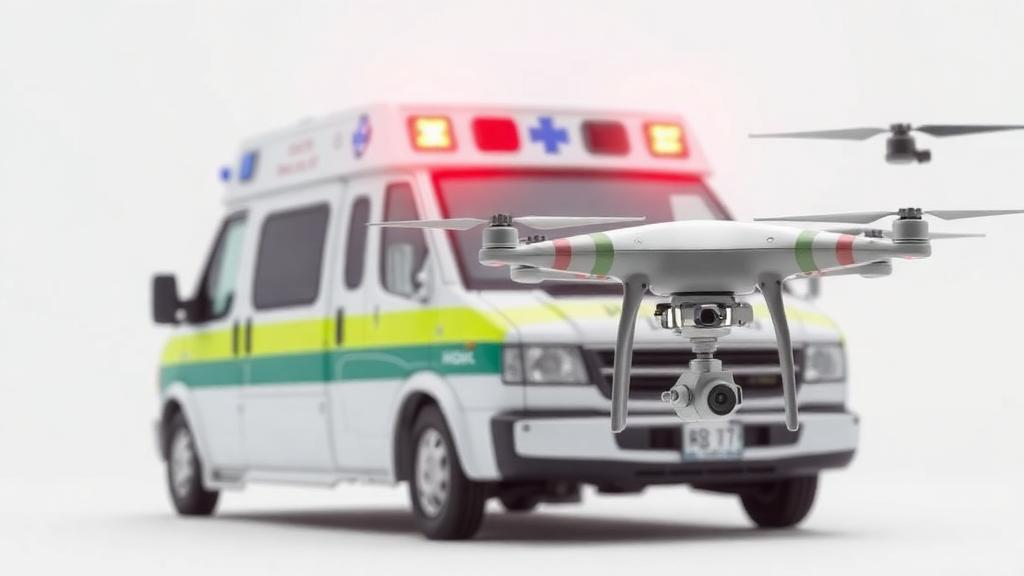
More than 3700 emergency medicine specialists and over 250 expert speakers gathered in Paris between September 23 and 27 for the annual European Emergency Medicine Congress hosted by the European Society for Emergency Medicine (EUSEM). The meeting showcased a strikingly broad portfolio of research aimed at the defining problems of modern emergency care: overcrowded departments, delayed diagnosis, inequitable access to life-saving equipment, and the everyday challenge of relieving pain quickly and safely. From point-of-care blood tests performed in ambulances to virtual reality goggles that lower blood pressure, the presentations offered a glimpse of how emergency medicine is being reshaped by technology, data science, and a renewed focus on patient experience.
One of the most consequential studies presented at the congress addressed a bottleneck that every emergency department will recognise. Around 95% of patients who call an ambulance with chest pain are transported to hospital, yet only a minority turn out to have a condition requiring admission. Barbra Backus of Amsterdam University Medical Center in the Netherlands presented preliminary results of a trial testing whether combining a high-sensitive point-of-care troponin test with the HEART score in the prehospital setting could safely reduce hospital referrals. In the before phase of the trial, 539 patients received usual care before any transport decision was made. In the after phase, 483 patients had a blood sample taken at the scene, analysed by the point-of-care troponin test while crews carried out their usual examinations. Crews then calculated the first four components of the HEART score, covering medical history, age, ECG findings, and risk factors, to estimate each patient’s risk of a major adverse cardiovascular event.
The results were dramatic. Before implementation, only 19 of 539 patients, or 3.5%, were left at home; after implementation, 165 of 483 patients, or 34.2%, avoided hospital transport, a difference of 30.6 percentage points with a 95% confidence interval of 25.9 to 35.3 and a p value below 0.001. Crucially, safety appeared preserved: of the 165 patients left at home, just one, or 0.6%, suffered a major adverse cardiovascular event within 30 days, compared with zero of the 19 left at home under usual care. The researchers concluded that prehospital HEART scoring could significantly reduce hospital referral and medical consumption while allowing more patients to be safely managed at home, a finding with obvious implications for ambulance services across Europe.
Overcrowding, the perennial barrier to safe emergency care, was examined from a different angle by Ryan McHenry of the University of Glasgow. He reported a multicentre prospective snapshot cohort study of the association between emergency department occupancy and all-cause 28-day mortality in adults aged 16 and over. The study spanned 134 emergency departments in Wales, Northern Ireland, and England and recruited 19,034 patients across five time periods in 2025, with associations determined using mixed-effects logistic regression. For every 10% increase in occupancy on the day a patient was seen, the relative risk of 28-day all-cause mortality rose by 1%, with a 95% confidence interval of 0 to 1 and a p value of 0.036. Models assessing the proportion of patients held in escalation areas, the practice often described as corridor care, showed similar findings. The team translated the results into a clinical risk calculator intended to quantify the mortality cost of crowding in real time.
In a striking example of low-cost technology entering the resuscitation room, Safa Dönmez of the University of Health Sciences in Ankara, Türkiye, presented a randomised controlled trial of virtual reality combined with classical music in patients with hypertensive urgency. A total of 130 patients were enrolled, 65 in each arm, with one group receiving standard care alone and the other standard care plus a natural environment simulation delivered through VR goggles accompanied by classical music. Mean arterial pressure was measured at baseline and at 15, 30, 60, 90, and 120 minutes, while anxiety was assessed with the State Anxiety Inventory. Mean arterial pressure was significantly lower in the VR group at 15 minutes and 30 minutes, although not at later timepoints, and anxiety reduction was significantly greater in the VR group, with median change scores of 8.0 versus 4.0 in the control group. The intervention proved effective for early haemodynamic stabilisation but not for long-term blood pressure control, suggesting a niche role as a rapid, drug-free adjunct in the first half hour of care.
Perhaps the most eye-catching presentation concerned the delivery of automated external defibrillators by drone. Hillary Minka of APHP-Hôpital Lariboisière in France reported a geospatial analysis of the Île-de-France region that used national out-of-hospital cardiac arrest registry data from seven departments, excluding central Paris, to model three strategies: strengthening the network of fixed AEDs, deploying drones to deliver AEDs, and combining the two. The region was divided into IRIS units, the smallest census areas used by the French National Institute of Statistics, and the time for an AED to reach the centre of each unit was estimated under each strategy. AED availability proved highly heterogeneous, with clear deficits in rural and peri-urban areas. Fixed AED densification alone would have required 1712 additional devices across 1893 units, some 3605 in total.
The hybrid strategy delivered far better value. Drone deployment significantly reduced access times, producing a median gain of 3.76 minutes, with the greatest improvements in peripheral and highly congested areas. The proportion of cardiac arrest cases in which an AED could arrive within 5 minutes rose from 30 to 40% under road-based strategies to more than 95% once drone delivery was incorporated. The modelling determined that just 200 drone bases combined with 871 fixed AED sites could cover 99.41% of out-of-hospital cardiac arrests in the region, some 28,349 cases. Because every minute of delay in defibrillation after cardiac arrest reduces survival, gains of this magnitude could translate into thousands of additional survivors, and the framework offers a template for other metropolitan regions wrestling with territorial inequalities in AED access.
Pain relief featured prominently in two trials. Rittirak Othong of Vajira Hospital in Bangkok, Thailand, presented a single-centre, randomised, double-blind, placebo-controlled superiority trial of 10% lidocaine spray during rabies immunoglobulin infiltration, an essential but notoriously painful component of post-exposure prophylaxis. Seventy-six participants aged 18 to 65 were randomly assigned 1:1 to lidocaine spray or placebo, with pain assessed on a 100-mm Visual Analog Scale for up to 30 minutes after infiltration and satisfaction on a 10-point Likert scale. The lidocaine group reported significantly lower median pain during needle penetration, 25.0 versus 56.5, and during immunoglobulin infiltration, 46.5 versus 77.0, both with p values below 0.001, and satisfaction was significantly higher at 8.0 versus 6.0. No adverse events occurred during the 30-minute observation window.
For children, needle-free analgesia took centre stage. Shammi Ramlakhan of Sheffield Children’s Hospital in the UK presented the PDC 01-0202 trial, a single-arm, multicentre phase 2/3 study registered as NCT06364072, evaluating intranasal sufentanil/ketamine in paediatric patients with moderate to severe acute pain. Between May 2024 and May 2025, 155 patients aged at least 1 and under 18 years received weight-based dosing at seven emergency departments in the UK and Spain, with 152 included in the efficacy analysis. The primary endpoint was the responder rate, defined as a pain score of 4 or less, at 15 and 30 minutes. Some 54% of participants reached that threshold at 15 minutes and 88% at 30 minutes, while 95.4% achieved at least a 30% reduction in pain intensity from baseline at 30 minutes and 86.2% achieved a 50% reduction. Treatment-emergent adverse events occurred in 46.5% of participants, most mild, and no severe events were reported, supporting the feasibility of rapid intranasal analgesia in children.
Finally, Tommaso Bellini of IRCCS Istituto Giannina Gaslini in Genoa, Italy, reported a prospective single-centre observational study asking whether two immune cell markers, neutrophil CD64 and monocyte CD169, could distinguish bacterial from non-bacterial infections in febrile infants aged 90 days or younger. Existing risk stratification tools are highly sensitive for severe bacterial infections but poorly specific, driving unnecessary antibiotics and invasive procedures. Sixty infants were enrolled, comprising 27 with non-bacterial infections, 12 with bacterial infections, and 21 age-matched healthy controls, with ratios measured by flow cytometry. The combined CD64/CD169 ratio separated the three groups most strongly, with values of 0.33, 16.22, and 1.10 respectively and a p value below 0.001. The area under the receiver operating curve reached 0.993 for the combined ratio, comfortably exceeding 0.951 for CD64 alone, 0.94 for procalcitonin, and 0.89 for C-reactive protein. The researchers concluded that, with validation in larger cohorts, the CD64/CD169 ratio could support antibiotic stewardship and spare infants unnecessary invasive testing, capping a congress that repeatedly demonstrated how refined measurement, whether in an ambulance, a drone flight path, or a flow cytometer, can make emergency care faster, safer, and more humane.
Subject of Research: Emergency medicine research presented at the EUSEM 2026 congress, including prehospital diagnostics, department overcrowding, drone AED delivery, pain management, and paediatric infection biomarkers
Article Title: EUSEM Congress 2026
Article References: EUSEM Congress 2026. (2026). eClinicalMedicine, Article 104277. https://doi.org/10.1016/j.eclinm.2026.104277
Image Credits: AI Generated
DOI: 10.1016/j.eclinm.2026.104277
Keywords: EUSEM, emergency medicine, troponin, HEART score, drones, defibrillators, virtual reality, hypertensive urgency, lidocaine, intranasal analgesia, febrile infants, CD64/CD169
Cite Scienmag News
Ophelia Keating. (October 10, 2026). From Ambulance Troponin Tests to Drone Defibrillators: Emergency Medicine’s New Frontier. Scienmag. https://scienmag.com/from-ambulance-troponin-tests-to-drone-defibrillators-emergency-medicines-new-frontier/
Ophelia Keating. "From Ambulance Troponin Tests to Drone Defibrillators: Emergency Medicine’s New Frontier." Scienmag, 10 October 2026, https://scienmag.com/from-ambulance-troponin-tests-to-drone-defibrillators-emergency-medicines-new-frontier/. Accessed 10 October 2026.
Ophelia Keating. "From Ambulance Troponin Tests to Drone Defibrillators: Emergency Medicine’s New Frontier." Scienmag. October 10, 2026. https://scienmag.com/from-ambulance-troponin-tests-to-drone-defibrillators-emergency-medicines-new-frontier/


