


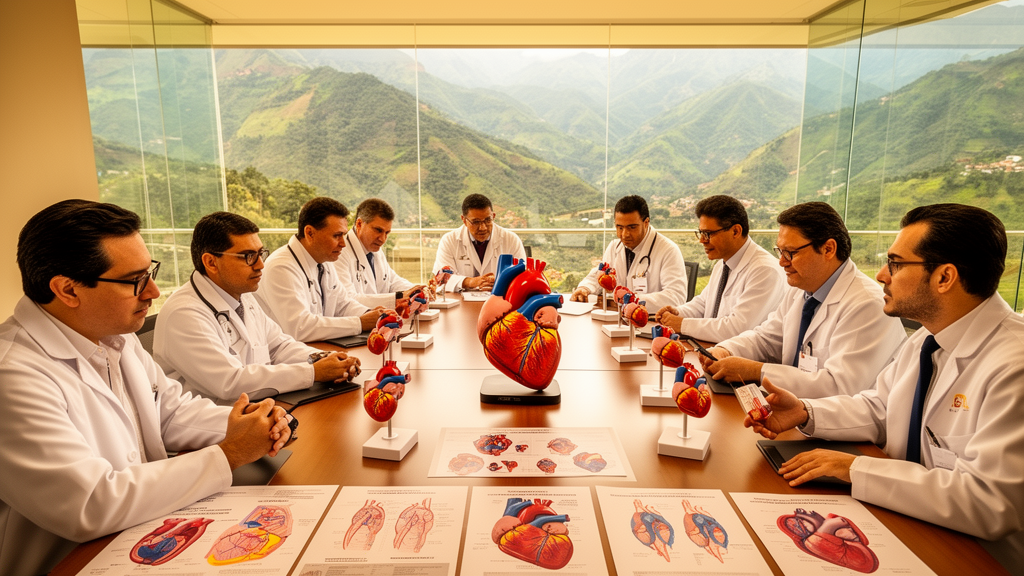
Medellín, Colombia, will become the center of the cardiovascular medicine world this September, as the American College of Cardiology and the Colombian Society of Cardiology and Cardiovascular Surgery host ACC Latin America 2026 from September 17 to 19. The three-day scientific meeting will draw cardiologists, researchers, nurses, fellows-in-training and health care leaders from across Latin America and the United States, all gathered around a single purpose: translating the latest cardiovascular science into practical strategies for a region that carries one of the heaviest heart disease burdens on the planet. For the clinicians who attend, the conference is not simply an educational calendar entry but a working forum where regional challenges meet global evidence.
The urgency behind the meeting is grounded in stark epidemiological reality. Cardiovascular disease remains the leading cause of death worldwide, and the burden falls disproportionately on low-income, low-middle-income and middle-income countries and regions, where health systems often face the double challenge of rising disease prevalence and constrained resources. An updated analysis of the global burden of cardiovascular diseases covering 204 countries and territories, published in the Journal of the American College of Cardiology in 2025, underscored just how unevenly the toll of heart disease is distributed. It is precisely this disparity that the organizers of ACC Latin America 2026 hope to address by bringing world-class education and evidence-based strategies directly to the clinicians who care for the affected populations.
Clara Inés Saldarriaga Giraldo, MD, FACC, co-chair of ACC Latin America 2026 and past president of the Colombian Society of Cardiology and Cardiovascular Surgery, framed the partnership as a milestone for regional collaboration. According to Saldarriaga Giraldo, partnering with the American College of Cardiology represents an important opportunity to strengthen collaboration and advance cardiovascular care across Latin America, and hosting the conference in Colombia brings leading experts and the latest scientific knowledge closer to the regional cardiovascular community. She emphasized that the meeting also provides a platform to showcase the expertise, research and perspectives emerging from Colombia and Latin America, and expressed particular enthusiasm for the exchange of ideas and experiences among colleagues from across the region and around the world.
The scientific program spans the entire field of cardiovascular medicine, reflecting the breadth of conditions that cardiovascular clinicians confront daily, from coronary artery disease and heart failure to arrhythmias, valvular disease, prevention and imaging. Rather than organizing content around narrow subspecialty silos, the meeting is designed to engage the whole cardiology care team, acknowledging that modern cardiovascular care depends on physicians, allied professionals and trainees working in concert. Attendees will be able to question experts directly on the clinical issues most relevant to patient care today, while also gaining insight into strategies tailored to the specific structural, economic and epidemiological challenges facing Latin American health systems.
Among the featured sessions is one devoted to critical care cardiology in Latin America, described as expert-led education designed to meet regional needs. Critical cardiovascular illness, including acute myocardial infarction, cardiogenic shock and decompensated heart failure, demands rapid, coordinated and resource-intensive intervention, and the session acknowledges that the optimal delivery of such care depends on infrastructure and training realities that vary widely across the region. Another headline session tackles artificial intelligence in cardiology under a deliberately skeptical title: what is real, what is ready and what is next. As machine learning tools move from research papers into clinical workflows, that framing signals a commitment to separating validated, deployable technology from speculative hype, a distinction with direct consequences for patient safety and resource allocation.
Prevention across the life course also takes center stage in a session addressing an integrated challenge in subclinical primary prevention, linking the heart health of the young with the brain health of the elderly. The session reflects a growing scientific consensus that atherosclerosis and other cardiovascular processes begin silently decades before symptomatic disease, and that risk factors acting early in life shape both cardiac and cerebrovascular outcomes late in life. By framing heart and brain health as a single integrated prevention challenge, the program highlights the continuum of vascular disease and the importance of intervening before clinical events occur, a message with particular resonance in populations where hypertension, diabetes and obesity are increasingly prevalent at younger ages.
The meeting will also serve as a stage for homegrown science. Participants will have the opportunity to share and learn about new research from across the region through abstract and case presentations, giving Latin American investigators visibility for work conducted in their own clinical settings. Among the clinical cases and posters scheduled for presentation are an updated dose-response meta-analysis of ultra-processed food consumption and incident cardiovascular disease with risk stratification by food subcategory; a multi-regional cross-sectional study of biomass smoke exposure and cardiovascular outcomes across rural and urban Mexican regions; and an analysis of sex disparities among young STEMI patients across Latin America. Each of these contributions speaks directly to regional realities, from dietary transitions and household air pollution to inequities in the recognition and treatment of heart attacks in young women. All clinical cases and poster abstracts are embargoed until Thursday, September 17, 2026, at 7 a.m. Colombia Time, or 8 a.m. Eastern Daylight Time.
Education at the meeting is not confined to lectures. Three ACC Latin America Chapter teams, each composed of three Fellows-in-Training, will compete in ACC FIT Jeopardy, a gameshow-style contest quizzing contestants on topics ranging from imaging and prevention to interventional cardiology. The competition format is more than entertainment; it tests rapid clinical reasoning under pressure and gives the next generation of cardiologists a visible platform before their senior colleagues. The winning team will earn the opportunity to compete again at the ACC Annual Scientific Session, ACC.27, in Houston in April 2027, extending the regional competition onto the global stage. At the Convocation ceremony, the ACC will also recognize individuals from throughout the region who have earned the distinguished Fellow of the ACC designation, a credential that recognizes a sustained commitment to improving patient care and outcomes.
Juan C. Lopez-Mattei, MD, FACC, co-chair of ACC Latin America 2026, described the conference as part of a longer arc of collaboration, noting that ACC Latin America conferences help connect regional and global expertise so the cardiovascular community can better serve patients across diverse communities. He pointed out that the 2026 meeting in Medellín marks a decade of collaboration focused on transforming cardiovascular care, and said he looks forward to engaging with colleagues from across Latin America and around the world to share cutting-edge science, practical education and innovative approaches to improving cardiovascular care. That decade-long trajectory suggests the meeting is not a one-off event but the latest installment of a sustained effort to build durable educational and scientific networks across the hemisphere.
The institutional weight behind the meeting is considerable. The American College of Cardiology, for more than 75 years, has supported a community of over 60,000 cardiovascular professionals in more than 140 countries through education and advocacy, professional credentials, clinical guidance, the JACC journals, the NCDR registries, accreditation services and a global network of Chapters and Sections. By convening that infrastructure in Medellín alongside the Colombian Society of Cardiology and Cardiovascular Surgery, ACC Latin America 2026 aims to do more than disseminate knowledge; it seeks to equip the region’s cardiovascular workforce with the evidence, tools and connections needed to bend the curve of the world’s leading cause of death. For the clinicians gathering in Colombia this September, the measure of success will be written not in the conference hall but in the clinics and catheterization labs where Latin American patients receive their care.
Subject of Research: The ACC Latin America 2026 cardiovascular conference in Medellín, Colombia
Article Title: ACC Latin America 2026 brings together experts to tackle the region’s cardiovascular challenges
Article References: ACC Latin America 2026 brings together experts to tackle the region’s cardiovascular challenges. (n.d.). Original publication
Image Credits: AI Generated
DOI: Not provided
Keywords: ACC Latin America 2026, cardiovascular disease, Medellín, Colombia, American College of Cardiology, global burden of disease, prevention, artificial intelligence in cardiology, critical care cardiology, health disparities, Fellows-in-Training, scientific conference
Cite Scienmag News
Frances Kline. (October 9, 2026). Cardiology Leaders Convene in Medellín to Confront Latin America’s Heart Disease Crisis. Scienmag. https://scienmag.com/cardiology-leaders-convene-in-medellin-to-confront-latin-americas-heart-disease-crisis/
Frances Kline. "Cardiology Leaders Convene in Medellín to Confront Latin America’s Heart Disease Crisis." Scienmag, 9 October 2026, https://scienmag.com/cardiology-leaders-convene-in-medellin-to-confront-latin-americas-heart-disease-crisis/. Accessed 9 October 2026.
Frances Kline. "Cardiology Leaders Convene in Medellín to Confront Latin America’s Heart Disease Crisis." Scienmag. October 9, 2026. https://scienmag.com/cardiology-leaders-convene-in-medellin-to-confront-latin-americas-heart-disease-crisis/


