


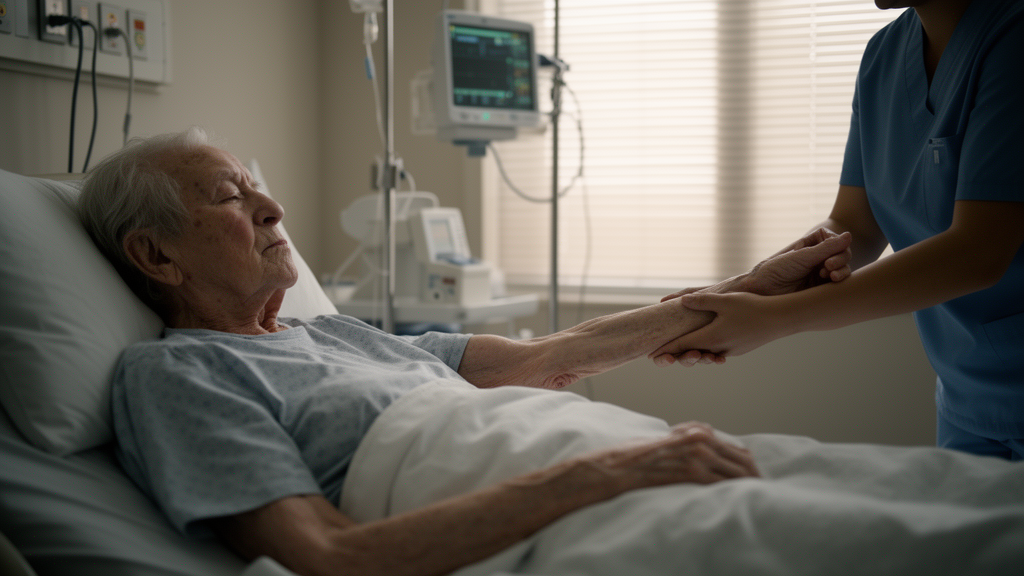
Every year, millions of people undergo major abdominal operations such as removal of part of the liver, pancreas, stomach or bowel, expecting a period of soreness and slow recovery. What most never realise is that their bodies may also be losing skeletal muscle at a startling pace, beginning within days of the scalpel’s first cut. A new systematic review and meta-analysis, published in the Journal of Cachexia, Sarcopenia and Muscle, has for the first time quantified just how widespread and rapid this muscle loss is, and the findings suggest that surgical stress drives a catabolic storm comparable to that seen in critically ill patients in intensive care.
The research team screened nearly 3,700 records and identified 45 studies encompassing 5,283 patients who underwent a broad spectrum of major abdominal procedures, including hepatopancreatobiliary, upper gastrointestinal, colorectal and urological surgery. Of these, 17 studies involving 2,213 patients provided data suitable for quantitative pooling. Using random-effects meta-analysis with Hedges’ small-sample correction and sensitivity analyses across a wide range of plausible correlation values, the researchers calculated standardised mean changes in muscle mass, size and strength at two key intervals: within two weeks of surgery, and between three and six weeks after the operation.
The results were unambiguous. Within two weeks of surgery, skeletal muscle mass or dimensions had declined significantly, with a pooled standardised mean change of 0.34, rising to 0.39 at around one month. By conventional benchmarks these are small-to-moderate effects, but the authors translate them into more tangible terms: a downward shift of roughly 13 percentile points in muscle mass within two weeks, and 15 points by one month. Crucially, the decline appeared regardless of how muscle was measured, whether by computed tomography, ultrasound, bioelectrical impedance analysis or dual-energy X-ray absorptiometry, and it persisted across every surgical specialty examined.
Perhaps the most striking finding is the sheer speed of the process. Of 23 studies that assessed muscle within ten days of surgery, 21 reported measurable declines, and some documented losses within just five days. One study reported a 4.4% drop in total psoas muscle index merely three days after oesophagectomy, while another recorded a 9.16% reduction in the cross-sectional area of the vastus lateralis within five days of open colorectal resection. In critical care medicine, muscle loss of up to 2% per day during the first week of intensive care admission is well documented; the new analysis suggests that major surgery, even in patients who never require intensive care, can trigger a similar accelerated catabolic state.
Muscle function suffers alongside muscle size. Across six studies including 417 patients, handgrip strength fell significantly after surgery, with a pooled standardised mean change of 0.79, an effect the authors describe as indicating clinically relevant perioperative weakness, though they caution that heterogeneity between studies was substantial and the estimate imprecise. Five studies tracked both muscle mass and function simultaneously, and nearly all found parallel declines, suggesting that the loss of tissue seen on scans translates directly into lost strength. Notably, one study of liver transplant recipients found that grip strength returned to baseline within six months, whereas muscle mass took a full year to recover, hinting that function rebounds before structure does.
The clinical consequences of this muscle loss extend far beyond the immediate recovery period. Studies included in the review linked significant perioperative muscle wasting, defined in some analyses as more than a 10% reduction from baseline, with markedly higher rates of postoperative complications, prolonged hospitalisation, anastomotic leakage after oesophagectomy, poorer quality of life and reduced long-term survival. In one pancreatic surgery cohort, restoration of preoperative muscle size within 24 weeks emerged as an independent prognostic factor for survival. Muscle wasting following gastrectomy has likewise been associated with poorer overall survival, indicating that the shadows cast by the surgical catabolic response can stretch for years.
One particularly revealing study examined 457 healthy adult living liver donors, a population with no underlying disease, and found significant muscle wasting within the first postoperative week, with recovery by three months. Because these donors were otherwise well, the finding isolates the effect of surgery itself, though the authors note that hepatic resection and the metabolic demands of liver regeneration may have amplified the loss. All of the studies included in the review were conducted in elective populations, which raises a further concern: patients who undergo emergency abdominal surgery receive no preoperative optimisation and often present with marked inflammation, factors that could predispose them to even greater muscle loss.
Encouragingly, the review identified early signals that the process may be modifiable. Twelve studies tested interventions, seven of them nutritional, including carbohydrate loading, immunonutrition, amino acid supplementation and formulas enriched with the leucine metabolite HMB. Results were mixed but generally modestly positive: perioperative immunonutrition cut muscle wasting at two weeks from 16.9% to 7.04% in one trial, and HMB-enriched supplementation improved both muscle preservation and grip strength one month after liver transplantation. Beyond nutrition, two studies of neuromuscular electrical stimulation showed that stimulating the quadriceps significantly reduced muscle wasting, in one case even implying systemic benefits, while postoperative ghrelin administration reduced loss of erector spinae muscle after oesophagectomy. The evidence base remains limited by small samples and short follow-up, but the direction of effect is promising.
To give the field a common framework, the authors propose a formal concept they call perioperative muscle wasting, or POMW, defined as acute skeletal muscle loss occurring within six weeks of surgery. The threshold is deliberately pragmatic: it aligns with the late postoperative phase, during which patients remain catabolic and functionally impaired, and it coincides with the routine outpatient review that most major surgery patients attend. The authors argue that existing consensus definitions of sarcopenia, developed primarily for older adults by the European and Asian working groups and more recently by the Global Leadership Initiative in Sarcopenia, do not adequately capture the distinctive, rapid, surgery-driven process seen in often younger and fitter patients. A dedicated definition, they contend, would enable standardised measurement, earlier identification and properly powered intervention trials.
The broader message is that muscle health has been a blind spot in perioperative medicine. Enhanced Recovery After Surgery protocols, now standard for most elective major abdominal operations, emphasise early mobilisation and nutrition, yet significant wasting persists even under these regimes. The authors call for routine objective assessment of muscle, whether through CT-derived skeletal muscle index or simple grip strength testing, to be woven into perioperative pathways, alongside targeted multimodal interventions including prehabilitation, even in patients without pre-existing sarcopenia. As surgical and anaesthetic advances allow ever greater numbers of older adults to undergo major operations, the scale of the problem is set to grow. What this analysis makes clear is that the muscle lost in the days after surgery is not an inevitable footnote of recovery but a modifiable, and until now under-recognised, determinant of how well, and how long, patients live afterward.
Subject of Research: Perioperative muscle wasting following major abdominal surgery
Article Title: A Systematic Review and Meta‐Analysis of Perioperative Muscle Wasting Following Major Abdominal Surgery
Article References: Reynolds, A., George, N. M., Papadopoulou, A., & Creagh‐Brown, B. (2026). A Systematic Review and Meta‐Analysis of Perioperative Muscle Wasting Following Major Abdominal Surgery. Journal of Cachexia, Sarcopenia and Muscle, 17(5), Article e70379. https://doi.org/10.1002/jcsm.70379
Image Credits: AI Generated
DOI: 10.1002/jcsm.70379
Keywords: perioperative muscle wasting, sarcopenia, meta-analysis, abdominal surgery, muscle catabolism, handgrip strength, CT imaging, immunonutrition, enhanced recovery, surgical outcomes, Systematic, Review
Cite Scienmag News
Ophelia Keating. (October 9, 2026). Major Surgery Quietly Steals Muscle Within Days, Landmark Analysis Finds. Scienmag. https://scienmag.com/major-surgery-quietly-steals-muscle-within-days-landmark-analysis-finds/
Ophelia Keating. "Major Surgery Quietly Steals Muscle Within Days, Landmark Analysis Finds." Scienmag, 9 October 2026, https://scienmag.com/major-surgery-quietly-steals-muscle-within-days-landmark-analysis-finds/. Accessed 9 October 2026.
Ophelia Keating. "Major Surgery Quietly Steals Muscle Within Days, Landmark Analysis Finds." Scienmag. October 9, 2026. https://scienmag.com/major-surgery-quietly-steals-muscle-within-days-landmark-analysis-finds/


