


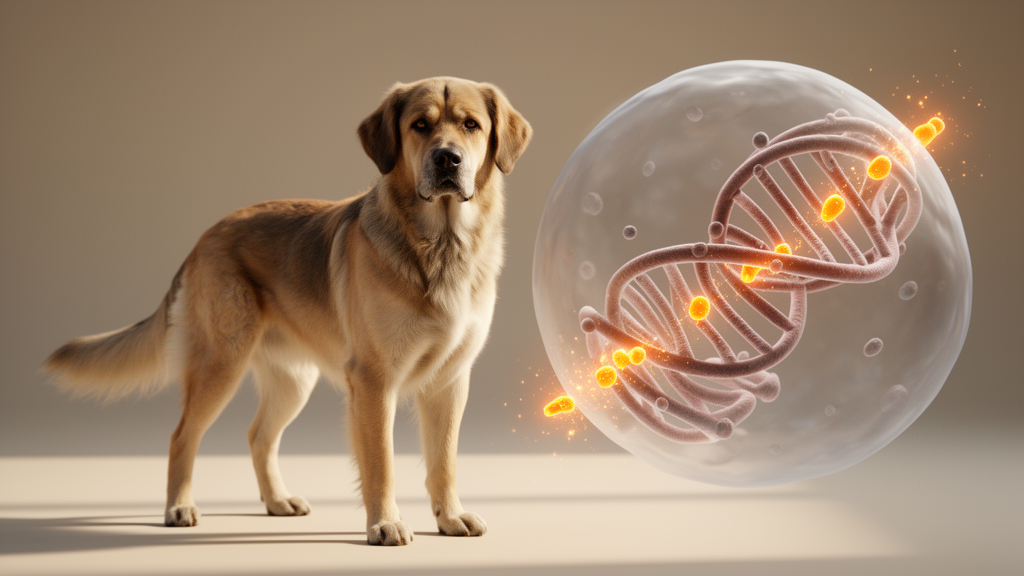
For as long as people have shared their homes with dogs, one of the most bittersweet truths of pet ownership has been that bigger dogs simply do not live as long. A Great Dane may be lucky to reach eight years of age, while a Chihuahua can easily double that figure. Across the mammalian family tree, the pattern is usually the reverse: larger species tend to outlive smaller ones, with mice surviving only a couple of years and some whales approaching two centuries. Dogs are the striking exception within a single species, and a new study led by researchers at Arizona State University now offers the first compelling molecular explanation for why. The work, published in the journal Science, suggests that the answer may lie in how the hallmarks of aging reshape dog DNA, and specifically in how the body loses control over mobile genetic elements known as jumping genes.
The research drew on data from 864 dogs enrolled in the Dog Aging Project, a large collaborative effort that follows companion dogs throughout their lives. The team mapped genome-wide patterns of DNA methylation, a chemical modification that sits on top of the genetic sequence and influences how strongly individual genes are switched on or off. Methylation is a core component of the epigenome, the layer of regulation that does not alter the underlying DNA letters but determines how they are read. Crucially for this study, the epigenome responds to environmental cues such as diet and stress, and DNA methylation is a well-established chemical signpost of biological aging, making it an ideal lens through which to compare dogs of different sizes and ages.
What emerged from the analysis was a clear and consistent signature: as dogs age, they experience a widespread loss of these regulatory marks across the genome, and the loss is concentrated in regions known as transposable elements, or jumping genes. These are stretches of DNA with the remarkable ability to copy themselves and insert new copies elsewhere in the genome, hopping from chromosome to chromosome and damaging DNA in the process. In a healthy cell, methylation keeps these elements locked down and silent. But when the regulatory marks are eroded, transposable elements can become active again, a process that has been linked to genomic instability, cancer and a range of other age-related diseases.
Among the transposable elements, one class stood out. LINE1s, a family of jumping genes that copy and paste themselves through the genome, were found to be a key component of biological aging differences between dogs. More than 40 percent of LINE1-associated regions in the genome lose methylation with aging, making them the single most affected class of transposable elements in the study. The loss was not evenly distributed across the canine population. Larger breeds experienced significantly faster declines in methylation at these sites, and on average giant dog breeds lost approximately 35 percent more LINE1 methylation per year than small breeds.
Senior study author Noah Snyder-Mackler, a professor at Arizona State University’s School of Life Sciences and Center for Evolution and Medicine, described the finding as one of the clearest molecular signatures aligning with the well-known size-lifespan tradeoff in dogs. The pattern suggests that faster aging in larger dogs may be driven, at least in part, by reduced control over these jumping genes. Co-author Blaise Mariner, also a researcher at ASU’s School of Life Sciences and Center for Evolution and Medicine, emphasized that the epigenetic regulation of transposable elements, especially LINE1s, appears to be a major factor shaping how quickly different dogs age. In other words, the molecular clock that ticks faster in giant breeds may be running through the erosion of the very defenses that keep the genome stable.
The scale of the study was essential to detecting these patterns. The team analyzed 864 dog genomes and mapped and sequenced more than three million methylation sites across a large and diverse cohort of animals. Such breadth matters because the differences between breeds, while biologically meaningful, are subtle at the molecular level and would likely remain invisible in smaller datasets. Large, collaborative efforts like the Dog Aging Project, Snyder-Mackler noted, are essential for uncovering these kinds of insights, because they allow researchers to connect molecular changes to real-world variation in health and lifespan across thousands of beloved pets.
The study also uncovered a surprising layer of complexity related to sex. Female dogs, which carry two X chromosomes, and male dogs, which carry one X and one Y, showed different methylation patterns at LINE1 elements. LINE1s on the X chromosome were found to be more methylated in males than in females, suggesting that females may experience higher activity of these elements, potentially influencing sex-specific aging patterns. Brianah McCoy, who co-led the work during her PhD at ASU’s School of Life Sciences Center for Evolution and Medicine, called the result unexpected, noting that it challenges some assumptions about how the X chromosome is regulated and highlights the complexity of epigenetic aging.
Beyond the specific findings about size and sex, the research underscores the central importance of epigenetics in shaping health and longevity. While the genetic sequence itself remains largely fixed over an animal’s lifetime, epigenetic marks change with time and in response to environmental factors, offering a powerful and dynamic window into the biology of aging. Dogs provide an extraordinary model for this kind of research because they show dramatic variation in lifespan within a single species, yet because they are companion animals, the findings carry immediate relevance to human health. Living alongside people means dogs share our experiences and environments, and the food, exercise and lifelong healthcare their owners provide make it possible to translate many findings from these shorter-lived pets to humans.
Indeed, the implications may extend well beyond the dog park. If transposable elements prove to be a fundamental part of the aging process across mammals, as the authors suggest, then targeting these elements or the mechanisms that regulate them could become a promising avenue for future therapies aimed at extending the human health span. Much remains to be determined, particularly whether increased LINE1 activity is a cause or merely a consequence of aging, and the researchers are careful to frame their results as strong evidence that epigenetic changes in these genomic regions are a hallmark of biological aging and a potential driver of its variability rather than a definitive causal verdict.
As scientists continue to unravel the molecular mechanisms of aging, the picture emerging from this work is one in which the secrets of longer, healthier lives may be hidden not just in the genes themselves but in how they are regulated over time. For dog lovers, the study transforms an old observation into a molecular story: the gentle giants who leave us too soon may be losing their grip on the jumping genes within their DNA faster than their smaller companions, and understanding that process could one day benefit both dogs and the humans who cherish them.
Subject of Research: Epigenetic aging and transposable element dysregulation underlying size-related lifespan differences in dogs
Article Title: Why big dogs age faster
Article References: Why big dogs age faster. (n.d.). Original publication
Image Credits: AI Generated
DOI: Not provided
Keywords: dog aging, DNA methylation, epigenetics, transposable elements, LINE1, Dog Aging Project, lifespan, large dog breeds, genomic instability, X chromosome, Arizona State University, Science journal
Cite Scienmag News
Juliet Wilcox. (October 9, 2026). Jumping genes may explain why big dogs age faster and die younger. Scienmag. https://scienmag.com/jumping-genes-may-explain-why-big-dogs-age-faster-and-die-younger/
Juliet Wilcox. "Jumping genes may explain why big dogs age faster and die younger." Scienmag, 9 October 2026, https://scienmag.com/jumping-genes-may-explain-why-big-dogs-age-faster-and-die-younger/. Accessed 9 October 2026.
Juliet Wilcox. "Jumping genes may explain why big dogs age faster and die younger." Scienmag. October 9, 2026. https://scienmag.com/jumping-genes-may-explain-why-big-dogs-age-faster-and-die-younger/


