


Laboratories have long been the engines of discovery, but they are also quiet consumers of enormous amounts of energy and materials. Now, one of the most comprehensive attempts to quantify the environmental cost of the instruments themselves suggests that the scientific community may be focusing its greening efforts on the wrong end of the problem. A new life cycle assessment of more than 3,000 pieces of equipment used by Government of Canada laboratories finds that, for many common devices, the vast majority of their climate impact accumulates not during manufacturing or disposal, but during the years they spend humming away on the bench. The study, published in PLOS Sustainability and Transformation by Alexander Cimprich, Sahand Kasaeipour, and Steven B. Young, arrives as scientists increasingly confront an uncomfortable truth: the pursuit of knowledge carries its own environmental bill.
The research team conducted cradle-to-grave life cycle assessments, or LCAs, a methodology that traces environmental burdens from raw material extraction through manufacturing, transport, use, and final disposal. While LCAs have become standard tools in industry for products ranging from automobiles to packaging, they have rarely been applied systematically to laboratory instrumentation. Previous sustainability work in research settings has concentrated on consumables such as pipette tips and plasticware, or on big-picture drivers like building energy consumption and commuting. Equipment, by contrast, has remained something of a blind spot, partly because laboratories own such a bewildering variety of devices, from ultralow temperature freezers to mass spectrometers, each with its own manufacturing footprint and operating profile.
To cut through that complexity, the authors developed a screening approach designed to handle large and heterogeneous inventories of equipment. Rather than attempting a bespoke, data-intensive assessment of every single instrument, their method identifies which categories of equipment carry the highest potential environmental impacts and therefore deserve deeper scrutiny. Applied to the Government of Canada laboratory inventory of over 3,000 items, the approach demonstrates how institutions with sprawling, varied equipment fleets can prioritize where sustainability interventions will actually matter. That prioritization step, the authors argue, is essential if laboratory greening initiatives are to move beyond symbolic gestures and target the genuine hotspots.
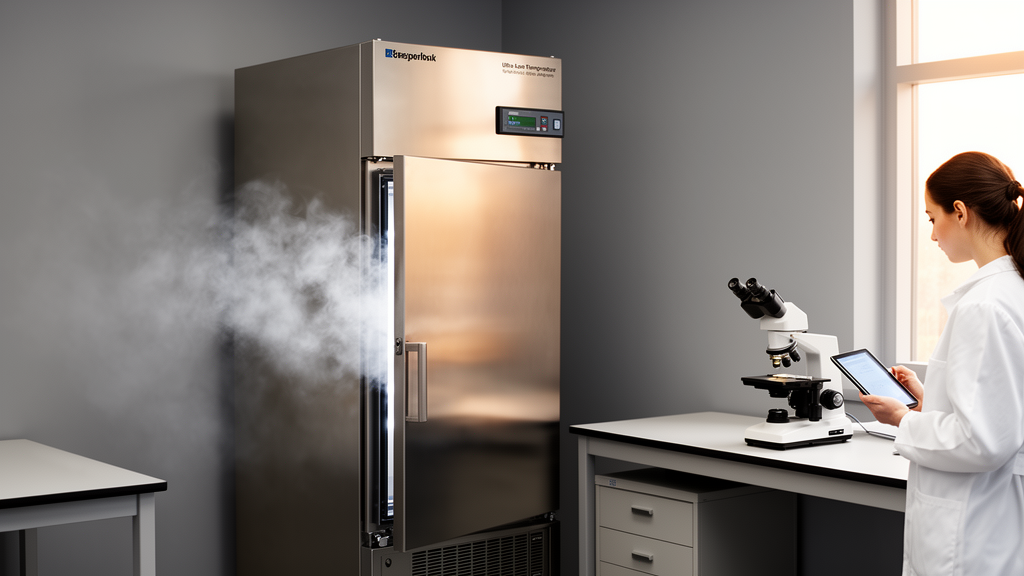
The headline finding concerns refrigerators and freezers, the workhorses of sample storage in virtually every scientific discipline. For these appliances, the use stage accounts for approximately 97 percent of life cycle greenhouse gas emissions. The reason is straightforward physics combined with relentless duty cycles: refrigeration equipment runs continuously, often for decades, compressing refrigerants and rejecting heat around the clock. Manufacturing impacts, while real, are dwarfed by the cumulative electricity demand of tens of thousands of operating hours. The implication is striking for procurement officers and lab managers alike. Choosing a marginally more efficient freezer, or consolidating samples to retire an aging unit, can outweigh nearly any consideration about how the device was built.
Yet the study cautions against a one-size-fits-all rule, because the dominance of the use phase is not universal. The life cycle profile of laboratory equipment varies across environmental indicators, including climate change, acidification, smog formation, and ecological toxicity. An instrument that looks relatively benign from a carbon perspective may carry heavier burdens in categories tied to metal mining, chemical manufacturing, or end-of-life treatment. It also varies with usage frequency, measured in hours per year of operation. A device that is energy-hungry but rarely switched on may have a life cycle dominated by its production, whereas the same model running continuously flips the balance toward use. Sustainability strategies, in other words, need to be matched to both the instrument type and the actual pattern of use in a given laboratory.
Scanning electron microscopes illustrate the production-intensive end of the spectrum. These sophisticated instruments, which raster a focused beam of electrons across samples to reveal nanoscale structure, embody substantial material and manufacturing inputs, from precision-machined vacuum chambers to specialized electron optics and detectors. When such equipment is used relatively infrequently, the manufacturing share of its life cycle impacts rises accordingly. For production-intensive devices, the leverage points shift: extending service life, refurbishing and redeploying instruments, and sharing access across research groups become more consequential than shaving kilowatt-hours during operation. The contrast between freezers and electron microscopes encapsulates the study’s central message that equipment-level sustainability requires understanding where in the life cycle each device’s burdens actually sit.
That message leads to the study’s fourth contribution, a deliberate connection between LCA results and the concept of sustainability transformations. Drawing on leverage-point thinking, the authors argue that effective change requires interventions aligned with each equipment category’s life cycle profile, and that these interventions extend well beyond procurement decisions. Procurement matters, particularly for production-intensive instruments and for efficiency specifications on use-intensive ones. But operational practices, maintenance schedules, utilization rates, sample consolidation, and end-of-life management all shape the total footprint. An institution that green-procures a freezer and then leaves its door seals degraded, or runs half-empty ultralow freezers at minus 80 degrees Celsius when minus 70 would suffice, forfeits much of the benefit.
The breadth of the assessment also matters for how laboratories account for their impacts. Much of the existing conversation about sustainable science has centered on greenhouse gas emissions, driven by institutional net-zero commitments. By broadening the scope to acidification, smog formation, and ecological toxicity, the study reveals trade-offs that a carbon-only lens would miss. For example, strategies that reduce electricity use will generally help across multiple categories, since grid electricity feeds many impact pathways. But decisions about materials, refrigerants, and disposal routes can shift burdens between categories in ways that demand a fuller accounting. Cradle-to-grave system boundaries ensure that problems are not simply pushed upstream to mining and manufacturing or downstream to waste streams.
The timing of this work is significant. Scientific institutions worldwide are under growing pressure to align their operations with climate targets, and initiatives to certify sustainable laboratories have proliferated. Yet without equipment-level data, such programs risk optimizing the visible and the easy, such as single-use plastic reduction, while overlooking the slow, continuous emissions of a freezer fleet running at all hours in corridors across the research enterprise. The Canadian inventory approach offers a template: screen the equipment base, identify the use-intensive and production-intensive hotspots, and then deploy the appropriate mix of efficiency upgrades, usage changes, lifetime extension, and informed purchasing.
For the scientific community, the study reframes laboratory sustainability as a problem of matching interventions to life cycle profiles rather than applying blanket rules. Freezers and refrigerators call for energy-focused action during use; microscopes and similar instruments call for stewardship of embodied impacts across decades of service. As laboratories confront their own environmental accounts, the message from this assessment is that the instruments of discovery are not neutral tools but significant environmental actors, and that managing their footprint requires looking at the whole life of the machine, from the mine to the bench to the scrapyard.
Subject of Research: Life cycle assessment of the environmental impacts of laboratory and scientific equipment operation and procurement
Article Title: Environmental impacts of laboratory and scientific equipment: Focus on equipment operation and procurement
Article References: Cimprich, A., Kasaeipour, S., & Young, S. B. (2026). Environmental impacts of laboratory and scientific equipment: Focus on equipment operation and procurement. PLOS Sustainability and Transformation, 5(8), e0000271. https://doi.org/10.1371/journal.pstr.0000271
Image Credits: AI Generated
DOI: 10.1371/journal.pstr.0000271
Keywords: life cycle assessment, laboratory equipment, greenhouse gas emissions, sustainability, refrigerators and freezers, scanning electron microscopy, procurement, use phase emissions, ecological toxicity, Government of Canada laboratories, leverage points, PLOS Sustainability and Transformation
Cite Scienmag News
Sloane Callahan. (October 9, 2026). Lab Equipment’s Hidden Carbon Footprint: Freezers and Microscopes Under the Sustainability Spotlight. Scienmag. https://scienmag.com/lab-equipments-hidden-carbon-footprint-freezers-and-microscopes-under-the-sustainability-spotlight/
Sloane Callahan. "Lab Equipment’s Hidden Carbon Footprint: Freezers and Microscopes Under the Sustainability Spotlight." Scienmag, 9 October 2026, https://scienmag.com/lab-equipments-hidden-carbon-footprint-freezers-and-microscopes-under-the-sustainability-spotlight/. Accessed 9 October 2026.
Sloane Callahan. "Lab Equipment’s Hidden Carbon Footprint: Freezers and Microscopes Under the Sustainability Spotlight." Scienmag. October 9, 2026. https://scienmag.com/lab-equipments-hidden-carbon-footprint-freezers-and-microscopes-under-the-sustainability-spotlight/


