


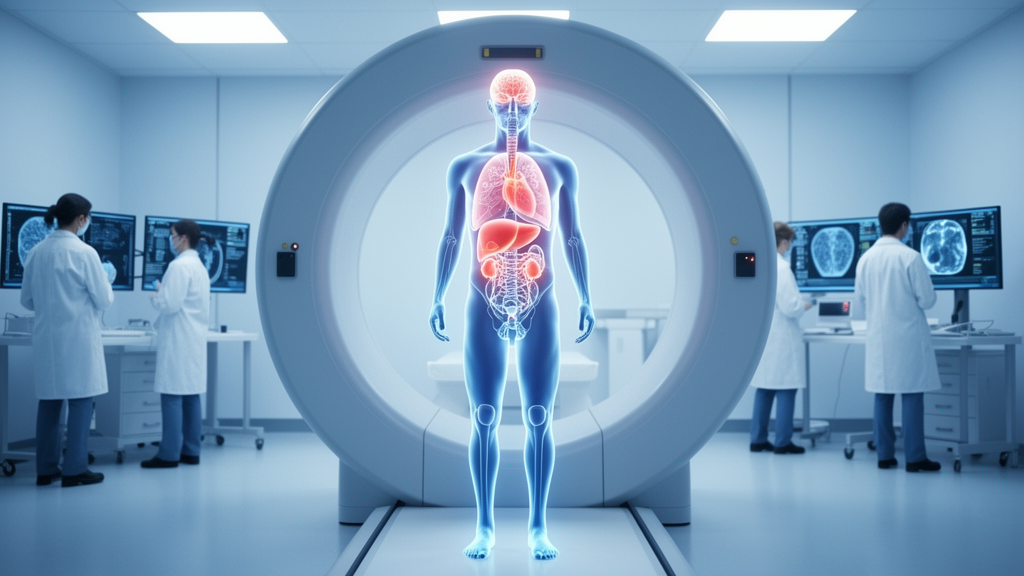
Aging does not happen in a single organ, and a team of researchers in Texas is betting that the only way to truly understand it is to measure nearly all of them at once. The Arlington Study of Healthy Aging, or ASHA, is a newly launched community cohort study based at the University of Texas at Arlington that aims to track how the brain, heart, blood vessels, muscles, liver, and fat tissue change together as people move through the second half of life. Described in a methods paper published in the journal GeroScience, the study will enroll 600 adults aged 50 to 85 from Tarrant County and subject them to one of the most comprehensive phenotyping protocols ever assembled for a single-site aging study, combining whole-body magnetic resonance imaging, vascular physiology, cognitive testing, physical performance measures, blood biomarkers, and a week of continuous wearable monitoring.
The motivation is demographic as much as scientific. The United States now counts nearly 60 million residents aged 65 and older, a figure projected to grow by another 42 percent by 2050, when more than 23 percent of Americans will be over 65. Age remains the single strongest risk factor for chronic disease, and for many older adults the burden is compounded by cognitive decline, including Alzheimer’s disease and related dementias. The researchers argue that promoting healthy aging and blunting the impact of age-related disease has become a major national social and economic challenge, one that demands biobehavioral data detailed enough to guide real public health interventions rather than isolated correlations.
To build that dataset, ASHA convenes experts spanning biomedical imaging, integrative physiology, biomechanics and exercise science, neuroscience, behavioral science, social work, public health, and biostatistics. Each participant completes two in-person visits lasting five to eight hours each. The protocol begins with informed consent and questionnaires delivered through Vibrent Health, a secure, HIPAA-compliant online platform that lets people complete medical histories remotely. Those histories cover medications, surgeries, physical activity, smoking, alcohol consumption, menstruation history, fall history, education, marital status, and even zip code, painting a social and environmental backdrop against which the biological measurements can later be interpreted.
The imaging centerpiece is a whole-body MRI protocol performed on a 3 Tesla Siemens MAGNETOM Vida scanner at the university’s Clinical Imaging Research Center, operated by a licensed radiologic technologist with breaks built in for comfort. The brain portion stacks structural and functional sequences: high-resolution T1-weighted MPRAGE anatomy, T2-weighted FLAIR to flag white matter lesions, and diffusion tensor imaging to probe the integrity of neural wiring. Cerebral blood flow is measured at rest with arterial spin labeling, while resting-state and task-based BOLD functional MRI, recorded alongside end-tidal CO2, quantify intrinsic brain networks, cerebrovascular reactivity, and activation during language, motor, and executive function tasks such as picture naming and finger tapping.
The rest of the body gets equal scrutiny. A head-to-toe stack of DIXON images separates water and fat signals to map skeletal muscle size and fat distribution across every anatomical region, while a multi-echo variant quantifies liver fat and iron, key markers for non-alcoholic fatty liver disease and iron overload. Thigh muscle imaging adds quantitative T1, T2, and fat-fraction mapping to detect intramuscular fat infiltration, a hallmark of muscle degeneration. Cardiac MRI rounds out the session with cine imaging of ventricular function, tissue tagging to measure strain, T1 and T2 mapping for fibrosis and edema, diffusion tensor imaging of heart muscle architecture, aortic distensibility and pulse wave velocity as markers of vascular stiffness, 4D flow imaging of aortic hemodynamics, and oxygen-sensitive sequences that probe coronary endothelial function without ever threading a catheter.
On a separate day, after a six-hour fast, participants undergo a vascular battery that spans macro- and microcirculation. Blood pressure is measured sitting, standing, and supine to assess postural regulation; ankle-brachial and toe-brachial indices screen for peripheral artery disease; and the SphygmoCor system derives central pulse wave analysis and pulse wave velocity. Beat-to-beat pressure is captured from a finger cuff via photoplethysmography, and brachial artery flow-mediated dilation, the standard noninvasive test of endothelial health, is measured with Doppler ultrasound and rapid cuff inflation. Near-infrared diffuse correlation spectroscopy over the forearm adds a window into microvascular reactivity and tissue oxygenation kinetics, complementing the larger-vessel measures.
Following an approximately 80-milliliter blood draw, part of which goes to clinical testing and the rest to a biorepository of PAXgene tubes and frozen plasma and serum for future genetic and transcriptomic work, participants refuel with a snack and face a cognitive battery. It includes the Montreal Cognitive Assessment for global screening, the NIH Toolbox Cognition Battery and an odor identification test for domain-specific evaluation, and a prospective memory test probing the ability to act on future intentions cued by the environment. Physical function testing then begins with the Short Physical Performance Battery and grip strength dynamometry, followed by gait analysis on an instrumented ZenoMat walkway under both normal conditions and cognitive load, counting backward by ones or sevens or naming animals while walking. A six-minute walk test and a DEXA scan for lean mass, fat mass, and bone density close the visit.
Between clinic visits, the study follows participants into daily life. For seven days they wear a Fitbit Inspire 3 tracking steps, activity intensity, and sleep stages; a cuffless Hilo bracelet, formerly known as Aktiia, that captures blood pressure fluctuations around the clock; and a FreeStyle Libre continuous glucose monitor sampling interstitial glucose every fifteen minutes. Together these devices record glycemic variability, postprandial responses, nocturnal glucose trends, and autonomic cardiovascular rhythms in real-world settings, adding ecological validity that clinic snapshots cannot provide. The design also builds in safeguards: incidental MRI findings are reviewed by the imaging center’s medical director and communicated to participants with recommendations for follow-up, and the study itself offers no diagnosis or treatment.
What may set ASHA apart most is its deliberate diversity and equity focus. The 600 participants, recruited beginning in November 2024 with completion expected by late 2028, will be evenly distributed across Non-Hispanic Black, Non-Hispanic White, Hispanic or Latino, and Asian residents of Tarrant County, one of the largest and most demographically diverse counties in the country, with balanced sex representation in each group. Concentrating recruitment in a single county trades some generalizability for rigor: the same instruments and personnel assess every participant, minimizing measurement noise. Exclusions screen out active cancer treatment, advanced chronic disease, dementia, non-ambulatory status, severe gait disorders, and other conditions that would confound the healthy-aging signal. The investigators acknowledge the single-site limitation and plan controlled-access data sharing so that qualified researchers elsewhere can test whether the patterns hold. Ultimately, by measuring organ systems in concert rather than isolation, the team hopes to build biological age metrics, from frailty indices to imaging-derived biomarkers, that reveal why some people age with resilience while others decline, and to identify the modifiable factors that keep more of us independent for longer.
Subject of Research: A multidisciplinary community cohort study investigating biological, psychological, and social mechanisms of age-related functional decline through multi-organ imaging and monitoring.
Article Title: The Arlington study of healthy aging: a multidisciplinary community cohort study of functional decline with age
Article References: Davis, D. L., Shah, R., Pixler, L., Mai, D. M., Santos, J., Chandler, C., White, K., Nguyen, J., Moradi, A. S., Choudhari, J., Arena-Marshall, C., Johnson, C., Kamel, L., Liao, Y., Greer, T. L., Cooper, C., Ball, H., Fields, N. L., Wang, X., … Nelson, M. D. (2026). The Arlington study of healthy aging: a multidisciplinary community cohort study of functional decline with age. GeroScience, 48(5), 6409-6420. https://doi.org/10.1007/s11357-026-02498-z
Image Credits: AI Generated
DOI: 10.1007/s11357-026-02498-z
Keywords: healthy aging, cohort study, whole-body MRI, functional decline, vascular function, cognitive aging, wearable monitoring, sarcopenia, biological age, older adults, geroscience, health equity
Cite Scienmag News
Phoebe Ingram. (October 9, 2026). Inside the Ambitious Texas Study Scanning Every Organ to Decode How We Age. Scienmag. https://scienmag.com/inside-the-ambitious-texas-study-scanning-every-organ-to-decode-how-we-age/
Phoebe Ingram. "Inside the Ambitious Texas Study Scanning Every Organ to Decode How We Age." Scienmag, 9 October 2026, https://scienmag.com/inside-the-ambitious-texas-study-scanning-every-organ-to-decode-how-we-age/. Accessed 9 October 2026.
Phoebe Ingram. "Inside the Ambitious Texas Study Scanning Every Organ to Decode How We Age." Scienmag. October 9, 2026. https://scienmag.com/inside-the-ambitious-texas-study-scanning-every-organ-to-decode-how-we-age/


