

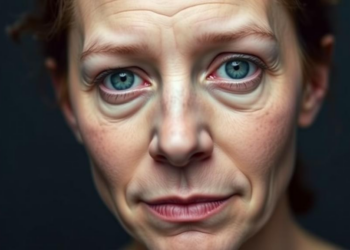
Facial AI estimates biological age and predicts cancer survival
A foundation model trained on more than 40 million facial images produced tools that estimate biological age and directly predict ...
A foundation model trained on more than 40 million facial images produced tools that estimate biological age and directly predict ...

A major new review maps how artificial intelligence is transforming biological age prediction, from epigenetic clocks to multimodal deep learning, ...
A new Frontiers in Aging collection argues that biological aging must be measured through combinations of epigenetic, proteomic and physiological ...
A new control theory framework published in Aging redefines aging as a progressive loss of safe controllability and proposes safety-first ...
Researchers at Guangzhou Medical University developed an LLM-based multimorbidity score that outperformed conventional comorbidity indices for mortality risk stratification across ...
For the first time, six proteomic aging clocks have been deployed as readouts in a clinical trial, revealing more about ...
A new Aging Cell study shows that single-clock reports of biological age reversal often fail when tested against multiple epigenetic ...
A new review in Biogerontology lays out a five-part framework for interpreting AI-derived ocular age estimates, warning that a cross-sectional ...
A new data-driven dietary index built around epigenetic aging clocks is associated with nearly four years slower biological aging, lower ...
A new 600-person Texas cohort study is combining whole-body MRI, vascular testing, cognitive and physical assessments, and wearable monitoring to ...

Embark on a thrilling journey of discovery with Scienmag.com—your ultimate source for cutting-edge breakthroughs. Immerse yourself in a world where curiosity knows no limits and tomorrow’s possibilities become today’s reality!