


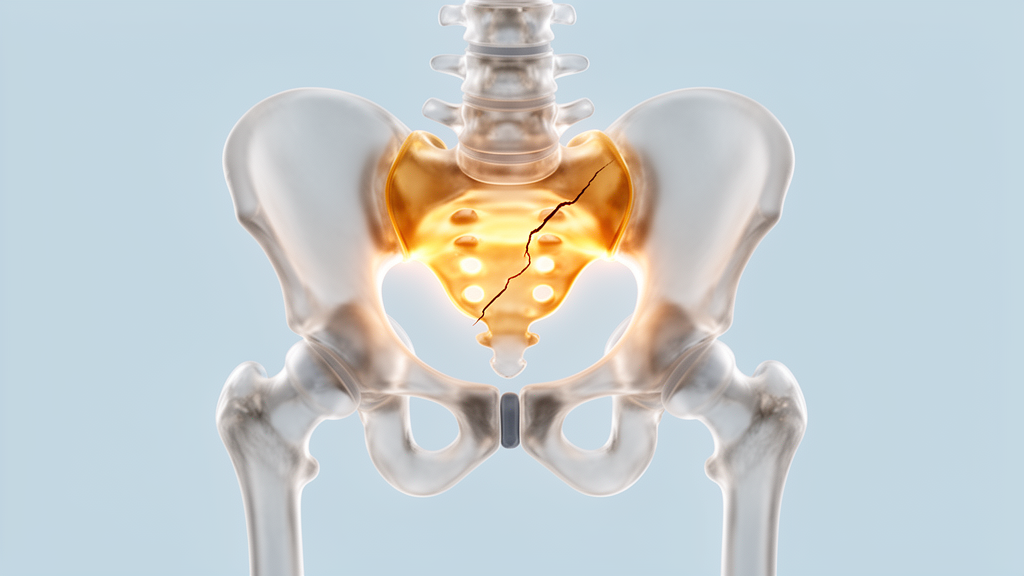
A team of radiologists and orthopedic specialists in Lille, France, has reported the first documented case of a partial injury to the triradiate cartilage in a teenager, an injury so rare that only a handful of complete versions of it have ever been described in the medical literature. The case, published in the journal Pediatric Radiology, involves a 14-year-old athlete who developed sudden hip pain after a low-energy incident, and it carries a message that could change how clinicians evaluate young patients with unexplained hip discomfort. The report comes from Souhir Abidi, Lea Kaadi, Anthony De Leeuw, Anne Cotten, Damien Fron and Nathalie Boutry at the Centre Hospitalier Universitaire de Lille, and it underscores a deceptively simple point: when a growing athlete complains of abrupt hip pain, the growth cartilage deep inside the pelvis deserves a careful look, even when the injury mechanism seems far too trivial to damage bone.
To appreciate why this case matters, it helps to understand what the triradiate cartilage actually is. In children and adolescents, the acetabulum, the socket of the hip joint, is not yet a single piece of bone. Instead, it forms at the junction of three pelvic bones, the ilium, the ischium and the pubis, which meet in the middle at a Y-shaped slab of growth cartilage called the triradiate cartilage. This structure functions like a growth plate, or physis, allowing the acetabulum to expand and remodel as the child grows, ultimately shaping the socket that will house the femoral head for a lifetime. Like all growth plates, it is made of cartilage rather than bone, which makes it mechanically vulnerable in ways that mature skeletons are not. Growth plates are often the weakest link in a child’s skeleton, and forces that would merely bruise muscle in an adult can crack or shear the cartilaginous zones where bone is still forming.
Acute traumatic injuries of the triradiate cartilage are exceedingly uncommon. According to the authors, they typically occur in the setting of high-energy trauma, such as motor vehicle collisions or falls from significant height, and they are almost always accompanied by other pelvic fractures that draw clinical attention. The literature contains only two previously reported sports-related cases of complete triradiate cartilage injuries, making any new case in this category a genuine rarity. What sets the Lille report apart is twofold: the injury was partial rather than complete, and it followed low-energy trauma in a young athlete, a combination that had never been documented before. The fracture was confined to a single arm of the Y-shaped cartilage, specifically the ilioischial synchondrosis, the junction between the ilium and the ischium, while the rest of the triradiate cartilage and the corresponding structure on the opposite side of the pelvis had already fused.
The clinical presentation was strikingly subtle. The 14-year-old patient arrived with sudden-onset hip pain and only moderate functional impairment, a picture that could easily be mistaken for a muscle strain, a hip pointer, or one of the more common apophyseal injuries that plague adolescent athletes. In growing athletes, sudden hip and pelvic pain most often involves avulsion injuries at sites where strong tendons attach to bone, such as the anterior superior iliac spine or the ischial tuberosity. A partial injury buried within the triradiate cartilage would not be high on most differential diagnoses, precisely because it has never been described in this context. The case therefore serves as a caution against anchoring on familiar diagnoses when the clinical picture does not quite fit, particularly in adolescents whose growth plates remain open.
Imaging was the key to unraveling the mystery. Magnetic resonance imaging suggested the diagnosis by revealing abnormalities within the ilioischial portion of the triradiate cartilage, and a subsequent computed tomography scan confirmed the fracture. This two-step imaging pathway reflects the complementary strengths of the two modalities. MRI excels at visualizing cartilage itself, detecting marrow edema, cartilaginous disruption and soft-tissue changes that plain radiographs simply cannot show. CT, by contrast, provides exquisite bony detail and can delineate fracture lines, fragment displacement and the precise relationship of the injury to the remaining growth cartilage. In a structure as small and geometrically complex as the triradiate cartilage, where three synchondroses converge at the center of the acetabulum, having both modalities available proved decisive in establishing a diagnosis that had never before been made.
The rarity of the finding also highlights the biology of pelvic maturation. The triradiate cartilage fuses at a variable age, typically in the mid-to-late teenage years, and the three arms may close at slightly different times. In this patient, the fact that the injury was confined to the ilioischial synchondrosis while the remaining triradiate cartilage was fused suggests that the ilioischial segment was the last to remain open, and therefore the only portion still mechanically vulnerable. Forensic radiology research, including studies of the ischiopubic, ilioischial and iliopubic synchondroses on CT images, has documented this staggered pattern of closure, which is one reason skeletal age estimation can rely on these structures. In the Lille case, that asymmetric maturation created a narrow window of vulnerability that a modest traumatic force was able to exploit.
Why does any of this matter beyond the novelty of a first case report? The answer lies in the long-term consequences that growth plate injuries can produce. Damage to the triradiate cartilage is not just an acute problem; it can disrupt the growth and remodeling of the acetabulum, potentially leading to a shallow or dysplastic hip socket, altered biomechanics and premature osteoarthritis decades later. Classic studies of acetabular triradiate physeal injuries, including work by Bucholz, Ezaki and Ogden in the 1980s, established that these injuries, though rare, can cause growth arrest and secondary acetabular dysplasia. A partial injury that goes unrecognized might heal in a malaligned fashion or trigger asymmetric closure of the remaining cartilage, quietly reshaping the hip socket during the very years when the joint is still developing. Early recognition therefore opens the door to appropriate monitoring, activity modification and follow-up imaging that could protect the long-term health of the joint.
The case also fits into a broader and growing awareness of cartilage vulnerability in adolescent athletes. Previous reports have described bilateral triradiate cartilage injury as an overuse syndrome in an adolescent football player, suggesting that repetitive loading, not just acute trauma, can stress this structure. The new report extends that spectrum by showing that even a single low-energy traumatic event can partially injure the cartilage when only one segment remains open. As youth sports participation intensifies and training loads increase, clinicians in sports medicine, emergency medicine and pediatrics may encounter presentations like this one more often than the historical literature would suggest. The authors’ conclusion is direct: the triradiate cartilage should be carefully evaluated on imaging in young athletes with sudden-onset hip pain, even when the cartilage remains only partially open on one side.
For the practicing clinician, the practical takeaway is a matter of imaging strategy and diagnostic vigilance. Plain radiographs of the pelvis in adolescents are notoriously difficult to interpret around the triradiate cartilage because the cartilage itself is radiolucent and overlying bone shadows obscure the region. When sudden-onset hip pain in a skeletally immature athlete does not correspond to a recognizable muscle or apophyseal injury, MRI becomes the logical next step, with the triradiate cartilage explicitly included in the search pattern. CT can then be reserved for characterizing any suspected fracture. The Lille team’s report, received in August 2026 and published in October 2026, adds a new entity to the differential diagnosis of adolescent hip pain and reminds the medical community that even the rarest structures in the skeleton can fail under the mildest of forces when growth leaves them exposed. For a 14-year-old athlete, that insight may make the difference between a hip that develops normally and one that carries the hidden cost of an injury nobody thought to look for.
Subject of Research: Partial traumatic injury of the acetabular triradiate cartilage in an adolescent following low-energy trauma
Article Title: Partial injury of the triradiate cartilage following low-energy trauma
Article References: Abidi, S., Kaadi, L., De Leeuw, A., Cotten, A., Fron, D., & Boutry, N. (2026). Partial injury of the triradiate cartilage following low-energy trauma. Pediatric Radiology. https://doi.org/10.1007/s00247-026-06798-6
Image Credits: AI Generated
DOI: 10.1007/s00247-026-06798-6
Keywords: triradiate cartilage, pediatric radiology, hip pain, adolescent athlete, growth plate injury, magnetic resonance imaging, computed tomography, acetabulum, pelvic trauma, sports injury, orthopedics, cartilage
Cite Scienmag News
Nathaniel Bowman. (October 8, 2026). Rare Partial Triradiate Cartilage Injury Seen in Teen Athlete After Minor Trauma. Scienmag. https://scienmag.com/rare-partial-triradiate-cartilage-injury-seen-in-teen-athlete-after-minor-trauma/
Nathaniel Bowman. "Rare Partial Triradiate Cartilage Injury Seen in Teen Athlete After Minor Trauma." Scienmag, 8 October 2026, https://scienmag.com/rare-partial-triradiate-cartilage-injury-seen-in-teen-athlete-after-minor-trauma/. Accessed 8 October 2026.
Nathaniel Bowman. "Rare Partial Triradiate Cartilage Injury Seen in Teen Athlete After Minor Trauma." Scienmag. October 8, 2026. https://scienmag.com/rare-partial-triradiate-cartilage-injury-seen-in-teen-athlete-after-minor-trauma/


