


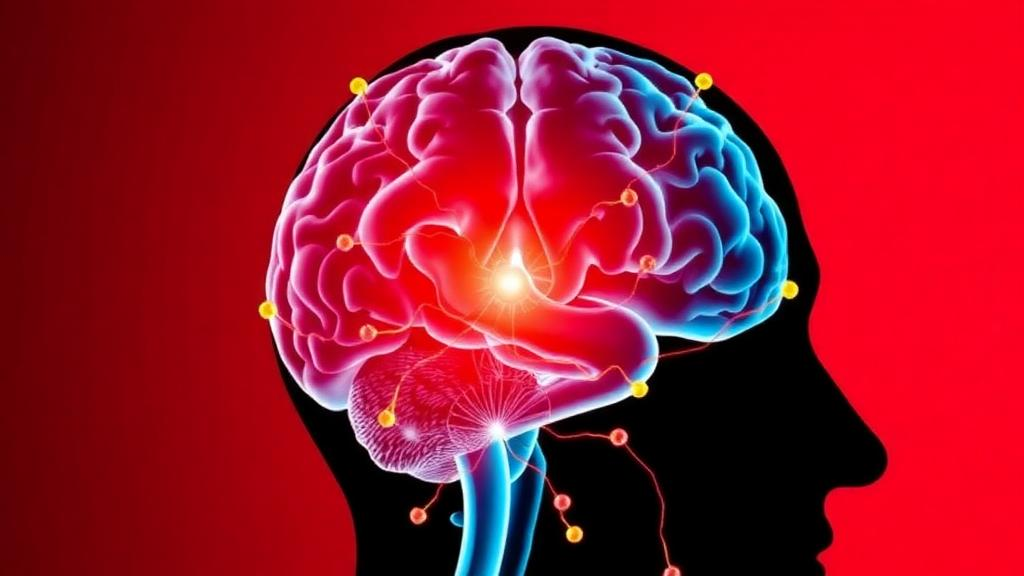
Schizophrenia has long been framed as a disorder of brain chemistry and circuitry, but a growing body of evidence suggests that the immune system may be an overlooked player in its earliest stages. A new study published in the journal Schizophrenia has now linked peripheral inflammation to measurable differences in the way key brain networks communicate in people experiencing their first episode of the illness. The findings, drawn from a large neuroimaging cohort of individuals with first-episode schizophrenia, point to a specific neural signature associated with elevated inflammation and hint that anti-inflammatory strategies could one day help ease some of the most stubborn symptoms of the disorder.
The research, led by Giulia Cattarinussi and Fabio Sambataro of the University of Padova and King’s College London, together with senior author Paola Dazzan and a broad consortium of UK investigators, focused on the striatum, a cluster of deep brain structures that includes the nucleus accumbens and the pallidum. The striatum sits at the heart of fronto-striatal circuits, the loops of communication that connect the basal ganglia to the frontal lobes and that are known to be involved in motivation, reward processing, and cognitive control. Disturbances in these circuits have repeatedly been implicated in schizophrenia, particularly in the negative symptoms of the illness, such as social withdrawal, blunted emotion, and loss of drive, which often respond poorly to existing antipsychotic medications.
To probe the relationship between inflammation and these circuits, the team turned to data from the BeneMin trial, a Medical Research Council-funded study that tested whether the antibiotic minocycline, chosen for its anti-inflammatory properties, could improve negative symptoms in recent-onset schizophrenia. From this trial, the researchers assembled a cohort of 132 individuals with first-episode schizophrenia who had undergone resting-state functional MRI, a technique that maps spontaneous, synchronized activity across the brain while participants simply lie still in the scanner. Because the participants were scanned early in the course of their illness, the study offered a rare window into the biology of schizophrenia before years of illness chronicity, medication exposure, and lifestyle factors could muddy the picture.
A central methodological strength of the study lay in how the researchers defined inflammation. Rather than simply measuring a single inflammatory marker, they applied a previously established semi-supervised machine learning clustering solution that integrates patterns of inflammatory measures to assign each participant to an inflammation group. At baseline, individuals classified into the elevated C-reactive protein group, or High-CRP group, were compared with those in a low-inflammation group. C-reactive protein, or CRP, is a protein produced by the liver in response to inflammatory signaling and is widely used in clinical medicine as a sensitive gauge of systemic inflammation. The clustering approach, having been derived from earlier work, allowed the team to stratify patients in a data-driven way rather than relying on arbitrary cutoffs alone.
The seed-based functional connectivity analysis then asked a straightforward question: do the striatal regions of inflamed and non-inflamed patients talk to the rest of the brain in the same way? The answer was no. At baseline, individuals in the High-CRP group showed significantly higher functional connectivity between the right nucleus accumbens and the left middle frontal gyrus, and between the right pallidum and the left middle frontal gyrus extending into the precentral gyrus, compared with their low-inflammation counterparts. In other words, in patients with elevated peripheral inflammation, the reward-related and motor-related portions of the striatum were more strongly synchronized with regions of the frontal cortex that govern planning, executive control, and movement.
When the researchers repeated the analysis at twelve-month follow-up, the same pattern of heightened fronto-striatal connectivity was still visible in the High-CRP group, although the differences no longer reached statistical significance. This persistence across a year of illness suggests that the inflammatory signature is not a fleeting artifact of an acute psychotic episode but may reflect a more stable biological subgroup within schizophrenia. The authors interpret this greater fronto-striatal connectivity as a distinct neural signature associated with greater inflammation, one that is present from the very beginning of the disorder.
Perhaps the most clinically provocative finding emerged when the researchers connected the imaging results to symptoms. The strength of functional connectivity between the right nucleus accumbens and the left superior and middle frontal gyri correlated with scores on the negative symptom subscale of the Positive and Negative Syndrome Scale, the standard clinical instrument for measuring psychosis severity. Crucially, this correlation was significantly stronger in the High-CRP group than in the low-inflammation group. This means that in patients with elevated inflammation, the degree of fronto-striatal over-connection tracked the severity of the very symptoms, such as apathy and social withdrawal, that most often keep people with schizophrenia from returning to work, study, and relationships.
The cognitive dimension of the study told a more nuanced story. The researchers used the Digit Symbol Substitution Test, a rapid measure of processing speed and attention, as a proxy for cognitive function, but the headline association centered on negative symptoms rather than cognition. This distinction matters, because negative symptoms and cognitive impairment, while often intertwined, are thought to arise from partly separable neural mechanisms, and treatments that target one may not necessarily rescue the other. The present results suggest that inflammation-related alterations in striatal connectivity are more tightly bound to the motivational and affective dimensions of the illness than to its cognitive toll, at least in the early phase.
Why would peripheral inflammation leave its fingerprint on brain circuits at all? Several mechanisms, well established in the broader neuroscience literature, offer plausible routes. Inflammatory cytokines circulating in the blood can signal to the brain through the vagus nerve, through leaky regions of the blood-brain barrier, and through endothelial and glial activation pathways. Once inflammatory signaling reaches the brain, it can alter neurotransmitter metabolism, including the kynurenine pathway of tryptophan degradation and dopamine synthesis, and it can disrupt the synaptic plasticity that underlies coordinated network activity. The striatum, densely innervated by dopaminergic fibers and exquisitely sensitive to immune signaling, is a plausible junction where systemic inflammation could translate into altered circuit dynamics. The observation of increased, rather than decreased, connectivity in the inflamed subgroup is consistent with the idea that inflammation may induce compensatory or maladaptive strengthening of particular fronto-striatal loops rather than a uniform dampening of brain communication.
The clinical implications are considerable. If a subgroup of people with first-episode schizophrenia carries a high-inflammation biological profile with a characteristic connectivity signature, then inflammation itself becomes a potential treatment target. The authors suggest that interventions aimed at reducing inflammation may represent novel strategies for modulating striatal connectivity and ameliorating negative symptoms. The BeneMin trial from which these data derive was, after all, designed to test minocycline for exactly that purpose, and the present findings provide a mechanistic framework for why such approaches might work in some patients and not others. Precision psychiatry, in which biomarkers such as CRP and machine-learned inflammatory profiles guide the selection of anti-inflammatory add-on treatments, moves a step closer to practical reality with results like these.
Important caveats remain. The study is observational in its core analysis, so it cannot determine whether inflammation drives the connectivity differences, whether altered brain activity drives inflammation, or whether both reflect a third underlying process. The follow-up connectivity differences, while directionally consistent, did not reach statistical significance, and the cognitive measure did not show the same group-specific associations as the symptom measures. Replication in independent cohorts and direct tests of whether reducing inflammation normalizes fronto-striatal connectivity will be essential. Even so, by anchoring the inflammation hypothesis of schizophrenia in concrete circuit-level evidence from the earliest stage of illness, the study sharpens a question that psychiatry has been circling for decades: for a substantial subgroup of patients, schizophrenia may be, in part, an inflammatory disorder of the brain, and recognizing that early could change how the illness is detected, stratified, and treated.
Subject of Research: The relationship between peripheral inflammation and striatal functional connectivity in first-episode schizophrenia
Article Title: Neural correlates of peripheral inflammation in individuals with first-episode schizophrenia
Article References: Cattarinussi, G., Sambataro, F., Lalousis, P. A., Suckling, J., Barnes, T. R. E., Byrne, K., Chaudhry, I. B., Drake, R. J., Giordano, A., Husain, N., Jones, P. B., Joyce, E., Knox, E., Krynicki, C., Lawrie, S. M., Lewis, S., Lisiecka-Ford, D. M., Nikkheslat, N., Pariante, C. M., … Dazzan, P. (2026). Neural correlates of peripheral inflammation in individuals with first-episode schizophrenia. Schizophrenia. https://doi.org/10.1038/s41537-026-00811-5
Image Credits: AI Generated
DOI: 10.1038/s41537-026-00811-5
Keywords: schizophrenia, first-episode psychosis, inflammation, C-reactive protein, functional MRI, striatum, nucleus accumbens, fronto-striatal connectivity, negative symptoms, machine learning, neuroimmunology, BeneMin trial
Cite Scienmag News
Cassandra Pierce. (October 8, 2026). Inflammation Reshapes Brain Circuits in Early Schizophrenia, Study Finds. Scienmag. https://scienmag.com/inflammation-reshapes-brain-circuits-in-early-schizophrenia-study-finds/
Cassandra Pierce. "Inflammation Reshapes Brain Circuits in Early Schizophrenia, Study Finds." Scienmag, 8 October 2026, https://scienmag.com/inflammation-reshapes-brain-circuits-in-early-schizophrenia-study-finds/. Accessed 8 October 2026.
Cassandra Pierce. "Inflammation Reshapes Brain Circuits in Early Schizophrenia, Study Finds." Scienmag. October 8, 2026. https://scienmag.com/inflammation-reshapes-brain-circuits-in-early-schizophrenia-study-finds/


