


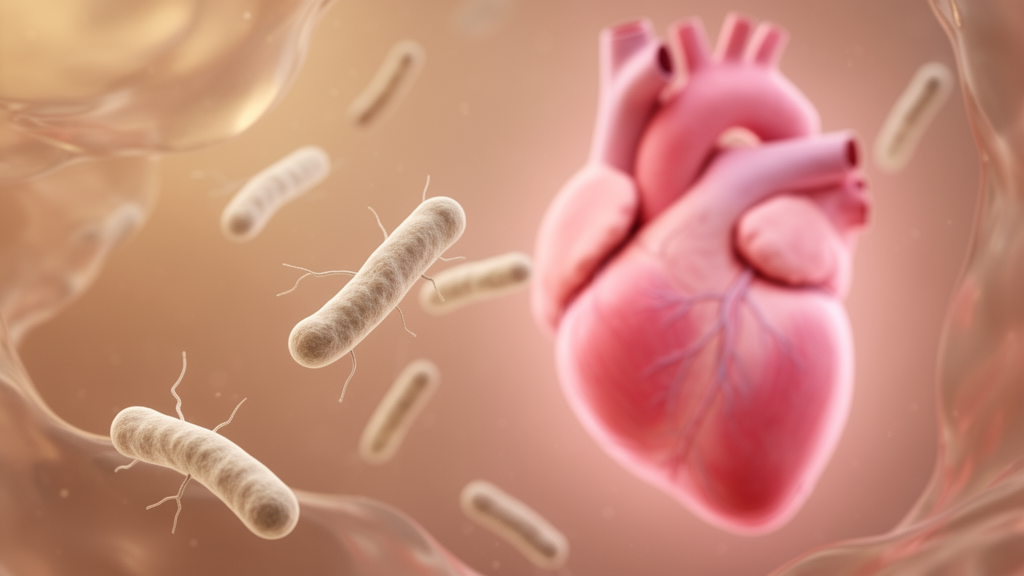
Chronic heart failure affects roughly 6.7 million adults in the United States, and despite decades of therapeutic progress, its trajectory remains stubbornly unpredictable. Two patients with similar pumping function can follow dramatically different paths, one stabilizing for years while the other deteriorates toward transplant or mechanical support. A new multi-omic study published in Nature Cardiovascular Research suggests that part of the answer may lie in the gut, where a depletion of anti-inflammatory bacteria and their cardioprotective metabolites tracks with disease severity and, strikingly, with clinical improvement over time.
A team led by Petra Mamic, Handuo Shi, Kerwyn Casey Huang and Michael P. Snyder at Stanford University enrolled 59 adults with chronic systolic heart failure caused by nonischemic cardiomyopathy, alongside 50 healthy controls drawn from the longitudinal iPOP study. Each heart failure participant underwent an unusually deep baseline workup: whole-genome sequencing of stool microbial DNA, untargeted plasma metabolomics, targeted lipidomics, targeted assays of gut microbial metabolites, and a 76-cytokine immune panel from serum. Their cardiologists assessed cardiac function within days of sampling, and 26 participants returned for repeat profiling after roughly six months, with electronic medical record follow-up extending to an average of 27 months for 51 patients.
The metagenomic sequencing revealed a gut ecosystem that was measurably different in heart failure. Alpha-diversity was lower in patients, and overall community composition differed significantly between cohorts. Differential abundance analysis showed depletion of families Lachnospiraceae and Bifidobacteriaceae and of the genera Bifidobacterium, Anaerostipes, Anaerobutyricum, Lachnospira and Blautia, all with adjusted P values below 0.001. These are taxa closely associated with fermenting dietary fiber into short-chain fatty acids and with dampening host inflammation. Meanwhile, genera linked to pro-inflammatory responses, such as Sutterella and Prevotella, trended upward. Most of the more than 80 differentially abundant species were depleted in the patients, painting a picture of a microbial community stripped of its anti-inflammatory workforce.
The functional consequences were equally pronounced. Pathway-level analysis showed that short-chain fatty acid biosynthesis and formaldehyde detoxification pathways were depleted in heart failure, while biosynthesis of lipopolysaccharide, the pro-inflammatory outer membrane component of Gram-negative bacteria, was enriched. Gene set enrichment analysis confirmed a broad shift from anaerobic carbohydrate fermentation toward oxidative lipid metabolism, a pattern previously observed in other chronic diseases and thought to reflect a more oxygen-rich gut environment favoring facultative anaerobes. Metagenomic prediction indicated reduced luminal production of the short-chain fatty acids butyrate and propionate, molecules known from animal models to regulate cardiac remodeling, vascular tone, immune function and energy supply to the failing myocardium.
Among the circulating metabolites measured, one stood out. Indole-3-propionic acid, or IPA, a microbial derivative of dietary tryptophan, was markedly reduced in the heart failure cohort, even though circulating short-chain fatty acids and the related indole metabolite ILA showed no significant differences. IPA has attracted growing attention for its cardioprotective credentials: it modulates cardiomyocyte mitochondrial function, mitigates the cardiac toxicity of anthracycline chemotherapy and immune checkpoint inhibitors, reduces oxidative stress and inflammation, improves gut barrier function and alleviates diastolic dysfunction in mice. Its reduction in this cohort aligns with recent reports implicating IPA as a biomarker in both compensated and decompensated systolic heart failure.
The immune dimension of the study added another layer. Although individual cytokine differences between the cohorts were modest, the correlation structure between microbial pathways and circulating cytokines differed substantially between patients and controls. The most divergent connections involved microbial arginine and ornithine biosynthesis pathways, which are relevant to gut permeability, nitric oxide production and polyamine synthesis, all implicated in heart failure physiology. In patients, these pathways correlated inversely with tumor necrosis factor, the opposite of the pattern seen in healthy participants, and patients with high pathway abundance had lower C-reactive protein levels. The authors interpret these cohort-specific patterns as evidence that microbiome-immune interactions are systemically reorganized in chronic heart failure.
To test how much diagnostic information the gut holds, the team built machine-learning classifiers using clinical laboratory data, cytokines, microbial taxa and microbial pathways. The full multi-omic model distinguished heart failure from health with an area under the curve of 0.95, but a model built on microbiome pathways alone nearly matched it at 0.94, and the top 50 individual features, more than half of which were microbiome-derived, performed identically. Bifidobacterium and Lachnospira ranked among the most informative features, alongside methanogenesis and formaldehyde detoxification pathways. The implication is that gut microbial function captures a substantial share of the molecular signature of chronic systolic heart failure.
The severity and outcome analyses sharpened the clinical relevance. After adjusting for demographics, body mass index and diet, the genus Butyricimonas was associated with poor clinical outcome, a composite of death, hospice, heart transplant or durable left ventricular assist device implantation, and with worse right ventricular systolic pressure. Higher Bifidobacterium abundance, by contrast, was associated with milder cardiomyopathy, including less left ventricular enlargement and less right ventricular dysfunction. A microbial lysine biosynthesis pathway was enriched in patients with poor outcomes and more severe ventricular dilation, while predicted gut butyrate production tracked with milder disease. Intriguingly, digoxin use was associated with enrichment of the family Ruminococcaceae, probably driven by the beneficial commensal Faecalibacterium prausnitzii, hinting at a previously unrecognized microbiome-mediated dimension to an old drug.
The longitudinal data provided the study’s most compelling finding. Among the 26 resampled patients, higher Bifidobacterium abundance was significantly associated with improvement in New York Heart Association functional class between visits, and species-level analysis implicated Bifidobacterium longum, B. breve and B. pseudocatenulatum. Desulfovibrio, conversely, was inversely associated with improvement in ejection fraction. Circulating IPA was also associated with functional class improvement, and across the broader cohort higher IPA levels accompanied milder disease on nearly every metric examined, from natriuretic peptide levels to patient-reported quality of life. Bile acid profiling reinforced the theme of microbiome-linked metabolic dysregulation, with conjugated bile acids such as glycocholic acid accumulating in more severe disease while a higher unconjugated-to-conjugated ratio marked milder phenotypes.
To probe mechanism, the researchers cultured 19 Bifidobacterium strains in vitro and confirmed that most produced and secreted acetate and ILA, while a smaller subset also produced IPA, establishing a plausible metabolic bridge between the bacterium and cardiac physiology. The authors are careful to note the caveats: the cohort was single-center, predominantly white and male, clinically well compensated, and heavily medicated, and circulating IPA reflects community-wide metabolism, substrate availability and host handling rather than any single taxon. Whether Bifidobacterium drives improvement or merely accompanies it remains open. Even so, the convergence of taxonomic, functional, metabolomic and longitudinal evidence points the same direction, and the authors argue that clinical trials of Bifidobacterium probiotic supplementation in heart failure are now warranted, with IPA production and bile acid modulation as testable mechanisms.
Subject of Research: Gut microbiome signatures and the microbial metabolite indole-3-propionic acid in chronic systolic heart failure severity and clinical improvement
Article Title: Gut microbiome shifts in chronic systolic heart failure are associated with disease severity and clinical improvement
Article References: Mamic, P., Shi, H., Zhou, W., Bararpour, N., Contrepois, K., Park, H., Avina, M., Schüssler-Fiorenza Rose, S. M., Brooks, A. W., Kotaka, M., Heidenreich, P. A., Khush, K. K., Fowler, M. B., Tang, W. H. W., Sallam, K., Sonnenburg, J. L., Huang, K. C., & Snyder, M. P. (2026). Gut microbiome shifts in chronic systolic heart failure are associated with disease severity and clinical improvement. Nature Cardiovascular Research. https://doi.org/10.1038/s44161-026-00854-y
Image Credits: AI Generated
DOI: 10.1038/s44161-026-00854-y
Keywords: gut microbiome, heart failure, Bifidobacterium, indole-3-propionic acid, short-chain fatty acids, metagenomics, multi-omics, nonischemic cardiomyopathy, bile acids, microbiome-immune interactions, probiotics, biomarkers
Cite Scienmag News
Morgan Morrow. (October 8, 2026). Gut Microbe Bifidobacterium Emerges as a Marker of Heart Failure Recovery. Scienmag. https://scienmag.com/gut-microbe-bifidobacterium-emerges-as-a-marker-of-heart-failure-recovery/
Morgan Morrow. "Gut Microbe Bifidobacterium Emerges as a Marker of Heart Failure Recovery." Scienmag, 8 October 2026, https://scienmag.com/gut-microbe-bifidobacterium-emerges-as-a-marker-of-heart-failure-recovery/. Accessed 8 October 2026.
Morgan Morrow. "Gut Microbe Bifidobacterium Emerges as a Marker of Heart Failure Recovery." Scienmag. October 8, 2026. https://scienmag.com/gut-microbe-bifidobacterium-emerges-as-a-marker-of-heart-failure-recovery/


