


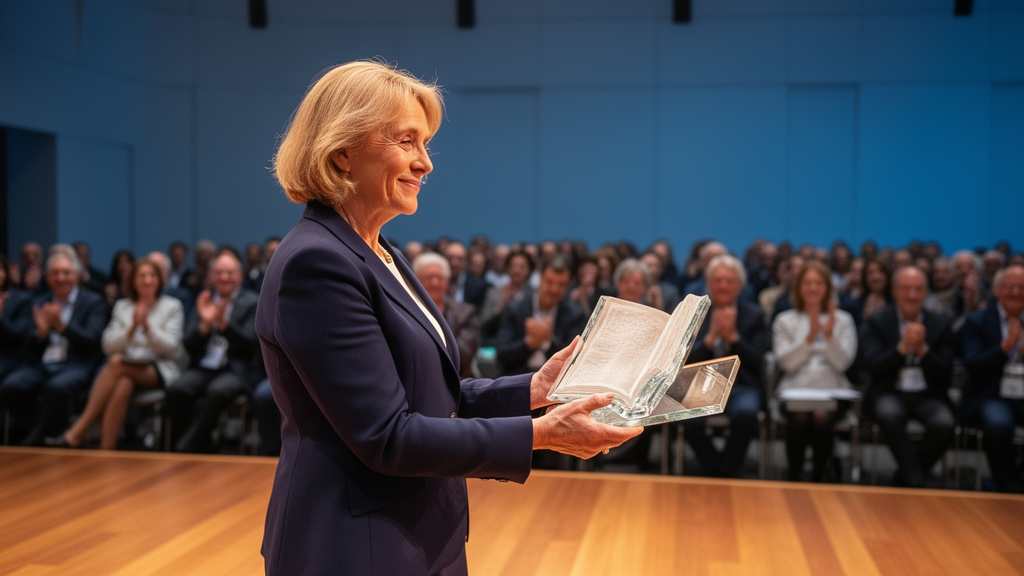
Springer Nature has announced the recipients of its 2026 Editor of Distinction Awards, an annual program that recognizes the academic editors whose behind-the-scenes labor keeps the scientific record accurate, efficient, and fair. Among the journals celebrating this year is BMC Pharmacology and Toxicology, part of the BMC series of open access titles, which named honorees in two categories: the Springer Nature Editorial Contribution Award and the Springer Nature Author Service Award. The announcement, published on the journal’s Springer Nature updates page, highlights a facet of scientific publishing that rarely attracts headlines yet underpins nearly every paper that reaches the literature.
The Editorial Contribution Award, the larger of the two categories this year, was presented to thirteen editors: Abdelwahab Omri, Anshuman Chandra, Catherine Sherwin, Giovanni Tarantino, Hualin Cai, Imran Khan, Jeffrey Raj, Josef Yayan, Koushik Debnath, Marcelo Arbo, Md Jakaria, Zhengwei Huang, and Zhenwei Yu. According to the award citation, the prize is given for meticulous assessment of submissions and rigorous management of the peer review process, work described as safeguarding the scientific accuracy of the published record. In practical terms, that means evaluating whether a manuscript’s methods can support its conclusions, selecting qualified and independent reviewers, weighing conflicting referee reports, and making the final call on whether, and under what conditions, a study enters the literature.
The Author Service Award, a more focused distinction, went to four editors: Anindya Bose, Josef Yayan, Simone Brogi, and Zhenwei Yu. Two of the honorees, Josef Yayan and Zhenwei Yu, appear in both categories, a dual recognition that signals unusually broad contribution to the journal’s operation. This award specifically recognizes exceptional service in improving the author experience and ensuring that peer review is efficient, constructive, and fair. The distinction matters because the editorial experience of submitting authors, particularly early-career researchers and those publishing in a second language, often determines whether the review process functions as a collaborative refinement of science or as an opaque and demoralizing ordeal.
The mechanics of academic editing are easy to underestimate. When a manuscript arrives at a journal such as BMC Pharmacology and Toxicology, the handling editor performs an initial assessment that goes far beyond a simple scope check. The editor must judge whether the pharmacological or toxicological question is clearly framed, whether the experimental design and statistical approach are adequate to the claims being made, and whether the work meets the ethical and reporting standards expected of the field. Only then does the editor recruit peer reviewers, a task that has grown steadily harder as reviewer workloads across science have increased and as the pool of willing experts is stretched thin by rising submission volumes.
Once reviews return, the editor’s judgment becomes decisive. Referee reports frequently disagree: one reviewer may demand additional experiments while another considers the study complete, or two reviewers may draw opposite conclusions from the same data. Reconciling these positions requires domain expertise and a clear sense of what the journal’s standards actually require. The award citation’s emphasis on meticulous assessment reflects this reality. Editors who manage this stage well protect the literature from both false positives, in which flawed studies slip through, and false negatives, in which sound but unconventional work is rejected without constructive guidance. Both failure modes carry costs, and both are largely invisible to the readers who ultimately consume the published record.
The recognition of author service as a distinct category is notable in the context of broader debates about the culture of peer review. Surveys of the research community have repeatedly identified slow, uncommunicative, and inconsistent review processes as among the most damaging features of scholarly publishing, contributing to delays in career advancement and to the loss of findings that are never resubmitted. Editors who invest in clear decision letters, realistic revision timelines, and respectful treatment of authors are, in effect, performing a service function that journals have historically undervalued. By creating an award that names this work explicitly, Springer Nature is signaling that the quality of the author experience is a measurable editorial achievement rather than an incidental byproduct of the review pipeline.
The awards also illuminate the structure of modern open access publishing. BMC journals operate on an open access model in which published articles are freely available to readers worldwide, with publication costs covered by article processing charges rather than subscriptions. In this model, the volume of submissions is high and the speed of publication is a competitive factor, which places additional pressure on editorial teams to maintain rigor without introducing bottlenecks. Editors for BMC Pharmacology and Toxicology, a title covering drug action, toxicological mechanisms, and therapeutic and adverse effects of chemical agents, must therefore balance throughput against scrutiny in a field where publication decisions can influence how new compounds are characterized and how safety findings are communicated.
There is a broader labor question embedded in these awards as well. Academic editing is overwhelmingly performed by working scientists, typically clinicians, pharmacologists, and toxicologists who fit editorial duties around their own research, teaching, and clinical commitments. The compensation, where it exists, is modest, and the primary rewards have traditionally been reputational: a line on a curriculum vitae, a stronger network within a subfield, and early visibility into emerging work. Recognition programs such as the Editor of Distinction Awards formalize that reputational reward, and they arrive at a moment when the sustainability of volunteer peer review is under active discussion across the publishing industry. Studies estimating the global time devoted to peer review run into the tens of millions of hours per year, nearly all of it unpaid, and several funders and publishers have experimented with ways to acknowledge or compensate that contribution.
For the honorees themselves, the practical significance of the award lies partly in career terms. Editorial service is increasingly weighed in hiring, promotion, and grant assessments as evidence of standing within a research community, and a named distinction from a major international publisher provides verifiable documentation of that service. For early- and mid-career researchers among the recipients, such recognition can also strengthen applications for editorial board positions at higher-profile journals, a pathway through which scientists shape the standards of their fields. The list of winners spans institutions and regions, reflecting the international character of the reviewer and editor pools that open access journals depend upon.
The 2026 awards, in the end, are less a story about a ceremony than about the infrastructure of trust in science. Every pharmacological claim, toxicological finding, and therapeutic conclusion that reaches the literature has passed through the hands of editors like those named this year, whose assessments determine whether the evidence presented is sufficient for the claims made. As concerns about reproducibility, paper mills, and the integrity of the scientific record continue to command attention, the quiet work of rigorous editorial gatekeeping has taken on renewed importance. Springer Nature’s decision to name and celebrate that work, and BMC Pharmacology and Toxicology’s decision to spotlight its own editors, offers a public reminder that the reliability of science rests not only on the researchers who produce findings but on the often-unseen editors who decide, review by review, what the published record will contain.
Subject of Research: Recognition of academic editors for peer review and author service at BMC Pharmacology and Toxicology
Article Title: Springer Nature Editor of Distinction Awards 2026
Article References: Springer Nature Editor of Distinction Awards 2026. (n.d.). Original publication
Image Credits: AI Generated
DOI: Not provided
Keywords: Springer Nature, Editor of Distinction Awards, BMC Pharmacology and Toxicology, peer review, academic publishing, open access, editorial awards, scientific integrity, author experience, scholarly communication, research publishing, Springer
Cite Scienmag News
Ophelia Keating. (October 8, 2026). Peer Review Champions Honored in Springer Nature Editor of Distinction Awards 2026. Scienmag. https://scienmag.com/peer-review-champions-honored-in-springer-nature-editor-of-distinction-awards-2026/
Ophelia Keating. "Peer Review Champions Honored in Springer Nature Editor of Distinction Awards 2026." Scienmag, 8 October 2026, https://scienmag.com/peer-review-champions-honored-in-springer-nature-editor-of-distinction-awards-2026/. Accessed 8 October 2026.
Ophelia Keating. "Peer Review Champions Honored in Springer Nature Editor of Distinction Awards 2026." Scienmag. October 8, 2026. https://scienmag.com/peer-review-champions-honored-in-springer-nature-editor-of-distinction-awards-2026/


