


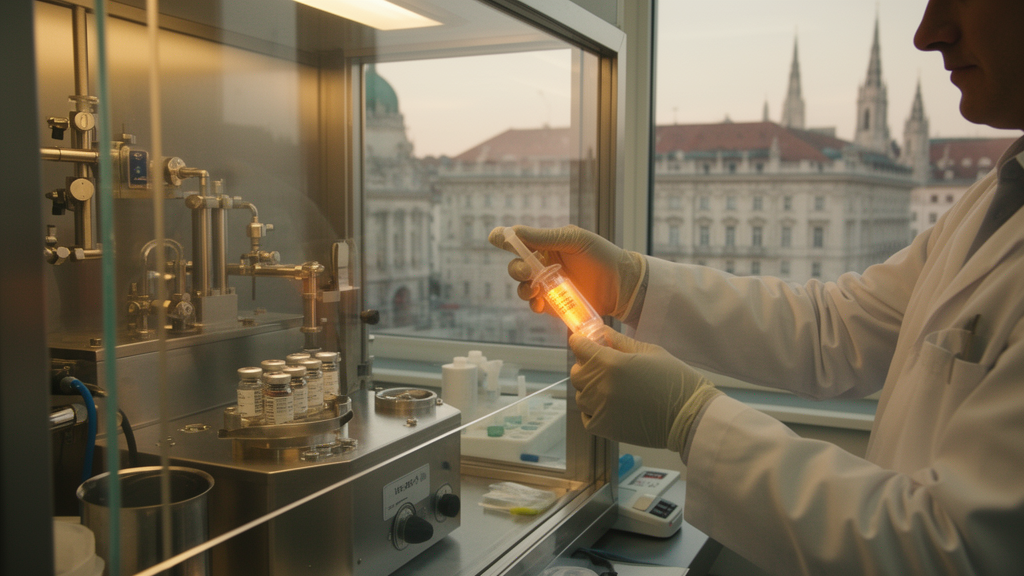
Vienna is preparing to welcome one of the most consequential gatherings in contemporary medicine. From October 17 to 21, 2026, the Austria Center Vienna will host EANM’26, the Annual Congress of the European Association of Nuclear Medicine, an event expected to draw roughly 10,000 clinicians, scientists, and industry leaders from 138 countries. The congress arrives at a moment when the field it represents is expanding at a pace few medical specialties can match. More than 50 million nuclear medicine procedures are now performed worldwide every year, and the clinical trial pipeline for radioactive drugs that can both detect and destroy cancer cells has more than doubled since 2015. For a discipline that long operated in the background of hospitals, quietly producing the scans that guided other specialists’ decisions, the shift is nothing short of a redefinition of its role in patient care.
The technical heart of this transformation lies in radiopharmaceuticals: molecules engineered to carry a radioactive atom to a specific target inside the body. In diagnostic applications, the radionuclide emits photons that positron emission tomography or single-photon emission computed tomography cameras convert into three-dimensional maps of biological activity. Because these tracers bind to receptors or are taken up by metabolic pathways that behave differently in diseased tissue, they reveal physiology rather than mere anatomy. A PET scan with a glucose analogue such as fluorodeoxyglucose shows where cells are consuming energy; newer tracers bind to prostate-specific membrane antigen or somatostatin receptors, illuminating tumour deposits that conventional imaging may miss entirely. The result is a diagnostic sensitivity that has progressively reshaped oncology, cardiology, and neurology, allowing physicians to stage disease, select therapies, and monitor response with a precision that was unimaginable a generation ago.
What has energised the field most profoundly, however, is the rise of theranostics, a portmanteau of therapy and diagnostics that describes a paired approach to disease. The principle is elegant: the same molecular targeting vector, typically an antibody, peptide, or small molecule, is labelled first with an imaging radionuclide to confirm that a patient’s tumour expresses the target, and then with a therapeutic radionuclide such as lutetium-177 or actinium-225 to deliver cytotoxic radiation directly to those cells. Because the diagnostic step verifies target expression before treatment begins, clinicians can personalise therapy in a way that traditional chemotherapy rarely permits. Beta-emitting radionuclides deposit energy over a few millimetres, while alpha emitters such as actinium-225 release dense, double-strand-breaking radiation over just a few cellular diameters, offering maximal tumour kill with minimal collateral damage to surrounding healthy tissue.
The clinical results emerging from this approach explain why trial activity has surged so dramatically. Patients with advanced, previously treatment-refractory cancers have experienced meaningful responses to radioligand therapy, and regulatory approvals in recent years have validated the strategy across prostate cancer and neuroendocrine tumours. Each success has catalysed further investment: pharmaceutical companies that once viewed nuclear medicine as a niche imaging service now compete to develop targeted radiotherapies, and academic centres have expanded radiopharmacy capacity to meet growing demand. The supply chain for medical isotopes, historically fragile and dependent on a small number of reactors and cyclotrons, has become a strategic concern for health systems worldwide. These industrial and logistical dimensions, as much as the underlying science, will feature prominently in Vienna, where industry exhibition space and educational sessions reflect the field’s new commercial weight.
Artificial intelligence constitutes the second pillar of the congress programme. Nuclear medicine generates extraordinarily data-rich studies: dynamic PET acquisitions produce thousands of volumetric frames, and interpreting them demands both pattern recognition and quantitative rigour. Machine learning models are now being trained to reconstruct images from shorter scan times, reducing radiation dose and improving patient throughput; to segment tumour volumes automatically, replacing laborious manual delineation; and to extract radiomic features that correlate with tumour genotype, grade, and prognosis. Deep learning algorithms have demonstrated the ability to flag subtle findings and prioritise urgent cases, helping physicians read scans faster and more accurately. At EANM’26, sessions will examine not only these technical achievements but also the harder questions of validation, regulatory oversight, and clinical integration, because an algorithm that performs well on retrospective data must still prove itself safe and reliable in the messy reality of routine practice.
Equally significant is the congress’s deliberate expansion beyond oncology. Nuclear cardiology uses single-photon and positron-emitting tracers to assess myocardial perfusion and viability, guiding decisions about revascularisation in coronary artery disease. In neurology, amyloid and tau PET tracers now visualise the hallmark proteinopathies of Alzheimer’s disease, and their role has grown more urgent as disease-modifying therapies require biomolecular confirmation of amyloid pathology before treatment can begin. Tracers targeting inflammation allow clinicians to image infection sites, from prosthetic joint infections to vasculitis, with a sensitivity that complements structural imaging. Paediatric nuclear medicine presents its own distinct challenges, requiring careful dosimetry and child-appropriate protocols, and dedicated sessions will address how the youngest patients can benefit from the field’s advances while minimising radiation exposure. This breadth underscores a central message of the meeting: molecular imaging is not a cancer technology but a whole-of-medicine one.
Valentina Garibotto, Chair of the EANM Scientific Events Council, framed the congress as a moment of collective reflection for a discipline in flux. At a time when nuclear medicine is evolving at an unprecedented pace, she observed, the annual congress has become a key opportunity to pause and define the directions that will shape the field. Her emphasis on translating innovation, evidence, and collaboration into meaningful impact for patients and healthcare systems captures a tension that runs through the entire programme. Radioligand therapies are expensive, logistically demanding, and dependent on isotope supplies that must be produced, transported, and administered within tight time windows dictated by radioactive decay. Ensuring that these advances reach patients equitably, rather than concentrating in wealthy centres, is among the most pressing questions the nuclear medicine community faces, and it is a question that Vienna’s programme treats as central rather than peripheral.
The choice of Vienna itself carries symbolic weight. The European Association of Nuclear Medicine, established in 1985 and headquartered in the Austrian capital, has grown into the largest non-profit medical organisation dedicated to the specialty in Europe. Over four decades it has convened physicians, physicists, chemists, technologists, and other medical societies alongside EU policymakers and industry representatives, working to ensure that patients across the continent can access nuclear medicine services. Hosting the congress at the Austria Center Vienna places the meeting physically close to the association’s institutional home, and the city’s long tradition in physics and medicine provides a fitting backdrop for a field that sits at the intersection of both. Around 10,000 participants moving through the venue’s halls will represent an unusually complete cross-section of a translational pipeline, from isotope production and radiochemistry through preclinical research, clinical trials, and bedside practice.
For the wider scientific public, the significance of EANM’26 extends beyond the specialty itself. Nuclear medicine exemplifies a broader convergence in twenty-first-century healthcare, in which chemistry, physics, computing, and clinical medicine combine to produce therapies tailored to the molecular identity of each patient’s disease. The more than doubling of clinical trials since 2015 signals a field that has crossed from proof of concept into industrial-scale development, and the 50 million annual procedures indicate an installed base of infrastructure and expertise ready to absorb new technologies. The coming decade will likely determine whether theranostics becomes a standard of care across multiple tumour types, whether AI-assisted image interpretation becomes routine, and whether amyloid imaging becomes an everyday tool in dementia care. The conversations in Vienna from October 17 to 21 will help set the agenda for all of these questions, and the answers will shape how medicine diagnoses and treats disease for years to come.
Subject of Research: The EANM'26 congress in Vienna and the rapid growth of nuclear medicine, theranostics, and molecular imaging
Article Title: Vienna to host EANM'26 as nuclear medicine enters a period of rapid transformation
Article References: Vienna to host EANM'26 as nuclear medicine enters a period of rapid transformation. (n.d.). Original publication
Image Credits: AI Generated
DOI: Not provided
Keywords: nuclear medicine, EANM'26, theranostics, radiopharmaceuticals, molecular imaging, PET, radionuclide therapy, artificial intelligence, Alzheimer's disease, oncology, Vienna, clinical trials
Cite Scienmag News
Nathaniel Bowman. (October 8, 2026). Vienna Prepares for EANM’26 as Radioactive Drugs Reshape Modern Medicine. Scienmag. https://scienmag.com/vienna-prepares-for-eanm26-as-radioactive-drugs-reshape-modern-medicine/
Nathaniel Bowman. "Vienna Prepares for EANM’26 as Radioactive Drugs Reshape Modern Medicine." Scienmag, 8 October 2026, https://scienmag.com/vienna-prepares-for-eanm26-as-radioactive-drugs-reshape-modern-medicine/. Accessed 8 October 2026.
Nathaniel Bowman. "Vienna Prepares for EANM’26 as Radioactive Drugs Reshape Modern Medicine." Scienmag. October 8, 2026. https://scienmag.com/vienna-prepares-for-eanm26-as-radioactive-drugs-reshape-modern-medicine/


