A team of researchers in Bangladesh has unveiled a new artificial intelligence framework that can detect deepfake images and videos with high accuracy while keeping the underlying training data decentralized and private. The system, called FedHybrid-ViT, was described in a paper published in the journal Machine Learning on 7 October 2026, and it tackles two of the most stubborn problems in the field of synthetic media detection: the tendency of detectors to fail when confronted with data from unfamiliar sources, and the privacy risks that come with pooling sensitive facial imagery in a single central repository.
Deepfakes have grown dramatically more convincing and easier to produce as generative models have advanced. What once required Hollywood-grade visual effects studios can now be done on a laptop with open-source software, and manipulated videos of politicians, celebrities, and ordinary people have become a genuine threat to public trust, digital integrity, and information security. Detection systems have kept pace on paper, often reporting near-perfect accuracy on standard benchmark datasets, but that laboratory performance frequently evaporates in the real world. A detector trained on one set of manipulation techniques may be nearly blind to forgeries produced by a different generator, a phenomenon researchers call domain shift.
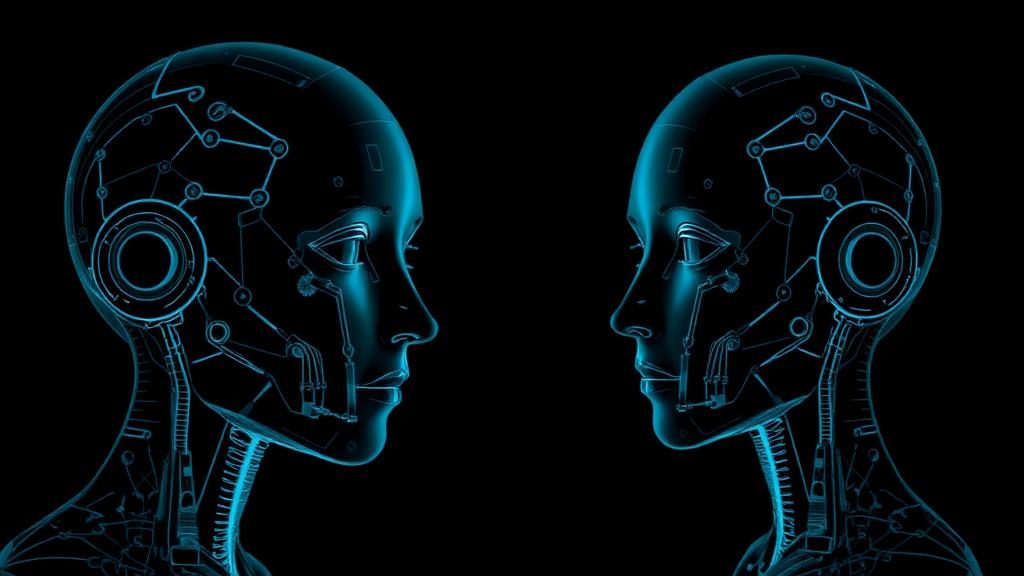
The new framework, developed by Abdullah Mohammad Sakib, Md. Mohashin Hossain, Mahedy Hasan Foysal, Ishtiak Al Mamoon, and colleagues at the International University of Business Agriculture and Technology and United International University in Dhaka, addresses the generalization problem with a hybrid neural architecture. The system combines two complementary types of deep learning models inside a single detector. The first branch is a convolutional neural network, or CNN, the workhorse of modern image analysis. Convolutional filters excel at picking up local, high-frequency patterns, and in the deepfake context that means subtle forensic traces: blending seams where a synthesized face meets the original head, compression artifacts left behind by the generation pipeline, and other pixel-level inconsistencies that betray manipulation.
The second branch is a Vision Transformer, or ViT, a relatively newer architecture that treats an image as a sequence of small patches and uses attention mechanisms to model relationships between distant parts of the picture. Where the CNN sees the fine texture of a boundary, the transformer captures the global semantic structure of a face: whether the eyes, nose, mouth, and surrounding regions are mutually consistent in lighting, geometry, and expression. Deepfake artifacts often manifest at both scales simultaneously, so fusing the local evidence from the CNN with the global reasoning of the ViT gives the detector a multi-scale representation that neither model could achieve alone. The authors report that this fused representation is what allows the system to remain robust when the characteristics of the data shift between sources.
The second half of the innovation lies in how the model is trained. In conventional machine learning, all data is gathered into one place and the model learns from it centrally. That approach is problematic for deepfake detection because the training material consists largely of real faces, and collecting facial imagery from hospitals, social media platforms, banks, or government agencies into a single database raises serious privacy and legal concerns. Federated learning offers an alternative: instead of sending data to the model, the model is sent to the data. Multiple clients, such as institutions or devices, each train the model locally on their own private data, and only the resulting parameter updates, not the raw images, are shared and aggregated into a global model.
Federated learning, however, comes with its own well-known difficulty. When the data held by different clients is statistically dissimilar, a situation known as non-independent and identically distributed, or non-IID, data, the local updates can pull the shared model in conflicting directions, causing unstable convergence and degraded performance. A hospital’s dataset might contain mostly one type of manipulation, while a social media company’s dataset contains entirely different forgery methods and image qualities. Standard federated optimization can struggle to reconcile these divergent signals. The researchers designed FedHybrid-ViT around this challenge, using a collaborative federated optimization protocol intended to keep training stable even under highly heterogeneous client distributions.
To test the framework rigorously, the team constructed a heterogeneous multi-source dataset from publicly available deepfake benchmarks, including FaceForensics++, a widely used collection of manipulated facial videos, and evaluated the system under both independent and non-IID distribution settings. The non-IID configuration simulates the messy reality of deployment, where each participating client sees only a narrow and skewed slice of the world’s deepfake varieties. The results showed that FedHybrid-ViT consistently outperformed standalone CNN models, standalone ViT models, and standard federated learning baselines across the test conditions.
The headline number is an area under the curve, or AUC, score of 0.925. AUC measures a detector’s ability to distinguish genuine media from fakes across all possible decision thresholds, with 1.0 representing perfect separation and 0.5 representing random guessing. A score of 0.925 indicates strong discriminative power, but the more significant finding, according to the paper, is the stability of that performance across highly heterogeneous conditions. Detectors that overfit to dataset-specific artifacts typically show sharp performance drops when evaluated on data from sources they never saw during training. The hybrid federated model maintained its accuracy under exactly those stresses, suggesting that the combination of dual-stream architecture and federated optimization genuinely improves generalization rather than merely inflating benchmark scores.
The implications extend beyond the immediate technical achievement. A privacy-preserving deepfake detector that generalizes across data sources could be deployed in federated settings where no single organization can or should aggregate facial data: networks of banks verifying customer identities, social media platforms moderating content, or forensic labs collaborating across jurisdictions. Each participant would benefit from a detector trained on the collective experience of the network without ever exposing its own users’ images. The authors argue that this makes the approach promising for scalable, distributed deepfake detection scenarios, where the diversity of manipulation techniques is precisely what defeats centralized models trained on narrow datasets.
The work also reflects a broader trend in machine learning research toward architectures that combine the complementary strengths of convolutional and transformer-based models, and toward training paradigms that respect data sovereignty. As generative models continue to improve, the arms race between forgery and detection will likely intensify, and the systems that endure may be those that can learn from many distributed sources of evidence without collapsing under the weight of their diversity. FedHybrid-ViT, with its reported AUC of 0.925 and stable behavior on non-IID data, offers one blueprint for that next generation of detectors, demonstrating that the path to robust synthetic media forensics may run not through bigger centralized datasets, but through smarter collaboration among many smaller ones.
Subject of Research: A federated hybrid CNN and Vision Transformer framework for privacy-preserving, generalizable deepfake detection on heterogeneous non-IID data
Article Title: FedHybrid-ViT: A Federated-Hybrid Framework for Generalizable Deepfake Detection on Heterogeneous Data
Article References: Sakib, A. M., Hossain, M. M., Foysal, M. H., Muzahidul Islam, A. K. M., & Mamoon, I. A. (2026). FedHybrid-ViT: A Federated-Hybrid Framework for Generalizable Deepfake Detection on Heterogeneous Data. Machine Learning, 115(10), Article 235. https://doi.org/10.1007/s10994-026-07171-2
Image Credits: AI Generated
DOI: 10.1007/s10994-026-07171-2
Keywords: deepfake detection, federated learning, vision transformer, convolutional neural network, non-IID data, domain generalization, privacy-preserving AI, hybrid models, statistical heterogeneity, machine learning, media forensics, synthetic media
Cite Scienmag News
Blake Davidson. (October 7, 2026). Hybrid AI Learns to Spot Deepfakes Without Sharing Sensitive Data. Scienmag. https://scienmag.com/hybrid-ai-learns-to-spot-deepfakes-without-sharing-sensitive-data/
Blake Davidson. "Hybrid AI Learns to Spot Deepfakes Without Sharing Sensitive Data." Scienmag, 7 October 2026, https://scienmag.com/hybrid-ai-learns-to-spot-deepfakes-without-sharing-sensitive-data/. Accessed 7 October 2026.
Blake Davidson. "Hybrid AI Learns to Spot Deepfakes Without Sharing Sensitive Data." Scienmag. October 7, 2026. https://scienmag.com/hybrid-ai-learns-to-spot-deepfakes-without-sharing-sensitive-data/