


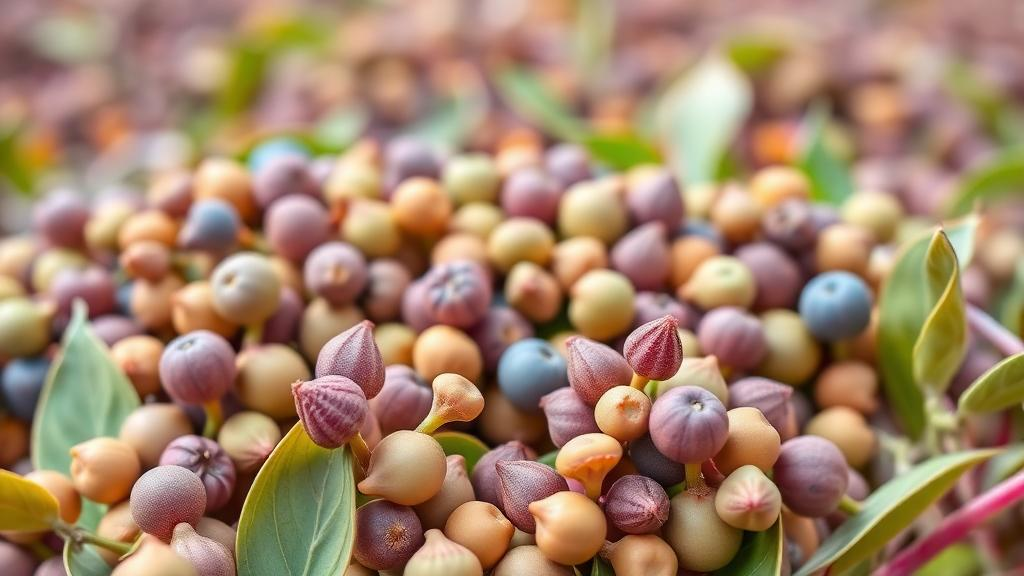
Faba bean is having a moment. As the global appetite for plant-based protein grows, this ancient legume is being repositioned as a cornerstone crop for sustainable agriculture, prized for its ability to fix atmospheric nitrogen in partnership with Rhizobium bacteria and to leave residual nitrogen behind for whatever crop follows it in a rotation. Meta-analyses of legume-based rotations have reported yield improvements of up to twenty percent compared with systems that rely solely on non-legume crops, and the seeds themselves pack a protein and mineral punch that makes them an attractive raw material for meat substitutes and other alternative protein products. Yet for all its promise, faba bean remains haunted by a persistent problem: unstable yields, driven largely by drought and heat stress, that have kept the crop from reaching its full potential on farms around the world.
One of the most powerful tools for stabilizing and boosting yields in any crop is hybrid breeding, which exploits heterosis, the phenomenon by which the offspring of two genetically distinct parents outperform both. In crops like maize and rye, hybrid cultivars have delivered dramatic gains in both yield and yield stability. Faba bean, unfortunately, has never been able to join the hybrid club. Although cytoplasmic male sterility systems, the biological machinery that makes large-scale hybrid seed production possible in other crops, have been identified in faba bean since the 1960s, they have proven too unreliable for commercial use. Breeders have instead turned to synthetic cultivars, which combine at least two inbred parental lines and propagate them together under open pollination. The resulting mixtures capture some of heterosis’s benefits, but at a cost: the best yields typically appear only in the second or third synthetic generation, requiring up to two additional generations of costly field propagation before seed reaches farmers.
A research team working within the BreedPath project, led by scientists at Justus Liebig University Giessen in collaboration with the breeding company NPZ Innovation GmbH, has now tested a strikingly different approach to this problem, one that begins with a camera and a phenomenon first described in 1881. That year, the German botanist Wilhelm Focke noticed that fruits arising from crosses between radish species could be distinguished from those of the parents by their color, an influence of pollen on fruit and seed characteristics that he termed xenien. Today, xenia effects, the measurable impact of paternal pollen on seed traits such as weight, shape, and chemical composition, are documented in crops including maize and pea. In faba bean, earlier studies had reported increases in seed weight and cotyledon cell number in hybrid seeds. The German team reasoned that if hybrid faba bean seeds carry even subtle physical or chemical signatures of their hybridity, hyperspectral imaging might be able to detect them, allowing breeders to sort hybrid seeds from self-pollinated ones without a single DNA test.
The technical setup was ambitious. The researchers assembled eighteen biparental synthetic Syn-1 combinations of spring faba bean, each produced by open-pollinating two nearly homozygous parental lines under isolation tents stocked with bumblebees to guarantee outcrossing. Each Syn-1 lot therefore contained a mixture of F1 hybrid seeds from cross-pollinations and homozygous inbred seeds from self-pollinations. Seeds from each combination, along with pure seeds of the parental lines, were placed into 24-well tissue culture trays and imaged with two hyperspectral line-scanning sensors covering an extraordinary range from 400 to 2500 nanometers, spanning the visible, near-infrared, and short-wave infrared regions. A 1000-watt halogen spotlight provided illumination, and every image was calibrated against a Zenith Polymer diffuser of known reflectance, with dark-current correction applied pixel by pixel. Segmentation algorithms then isolated each individual seed from the tray images, extracting mean reflectance, reflectance variability, and seed size for every single seed in the experiment.
To know the truth about each seed’s genetic status, the team grew all the imaged seeds and genotyped them. Using SNP chip data from the parental lines, they designed Kompetitive Allele Specific PCR markers that could classify each offspring as homozygous, corresponding to one of the two parents, or heterozygous, meaning a true F1 hybrid. This ground-truthing revealed that the proportion of hybrid seeds in the Syn-1 lots ranged from 13.5 to 26.9 percent, with a mean of 17.9 percent, reflecting the modest natural outcrossing rates of the material. With spectral data in hand and genetic labels attached, the researchers deployed five machine learning algorithms: k-nearest neighbors, naive Bayes, C5.0 decision trees, random forest, and support vector machines. Spectral curves were denoised with Savitzky-Golay filtering, hyperparameters were tuned by Bayesian optimization, and performance was assessed through fivefold cross-validation repeated ten times, with accuracy as the target metric for parental classification and the F1 score, a balance of precision and recall, for hybrid identification.
The first question was whether the algorithm could tell the two parental lines of each cross apart from their spectra alone. In the initial global scenario, with 96 seeds per combination, the answer was a qualified yes. The single best combination, a random forest classifier fed with spectral data plus seed weight, size, and cross-identity information, achieved a mean accuracy of 90.5 percent across the eighteen crosses, with individual runs reaching 95.1 percent. Notably, the weight and size data contributed little; the spectral signatures alone carried most of the discriminating power. When the team then resampled two selected combinations with 300 additional seeds each, performance climbed further still, reaching a mean accuracy of 95.6 percent for one combination and an impressive 98.9 percent for the other, where random forest correctly assigned nearly every seed to its parental line. These figures place faba bean alongside wheat, maize, okra, and loofah, where spectral variety identification has previously achieved accuracies of up to 98 percent.
Identifying the hybrid seeds themselves proved far harder. When all seeds in a Syn-1 lot, hybrids and inbreds alike, were thrown into the classification task, the best F1 score in the global scenario was a meager 19.7 percent. Principal component analysis offered an explanation: the spectra of F1 seeds generally fell within the clusters formed by their parental lines, a pattern consistent with strong maternal effects on seed spectral properties, which encompass seed color, known to be maternally inherited in faba bean. In other words, the hybrid seeds looked, spectrally, like their mothers. Yet the picture was not entirely hopeless. When the eighteen crosses were ranked by the spectral distance between their parental components, the more divergent crosses yielded consistently better predictions, echoing earlier findings that xenia effects are more pronounced between genetically distant parents. And in the enlarged second-stage experiments, F1 scores rose to around 38 to 40 percent, above the 33 percent expected from random assignment among three seed classes.
The most intriguing result emerged when the researchers exploited the maternal clustering directly. For one Syn-1 combination whose parental components could be cleanly separated in a principal component analysis, the team assigned each hybrid seed to the parental cluster it resembled, on the hypothesis that maternal effects pulled hybrids toward their seed parent. Analyzing the two parental components separately, they found that for one parent the decision tree algorithm reached an F1 score of 62.2 percent with 64.8 percent accuracy, and for the other, naive Bayes achieved an F1 score of 60.4 percent with 59.0 percent accuracy, both well above the 50 percent random-assignment threshold. A wavelength-specific strategy, restricting the analysis to spectral regions where hybrid seeds deviated from the midpoint between their parents, also nudged performance upward. The authors suggest that future gains could come from hybrid convolutional neural networks that combine spectral reflectance with structural and textural seed features, an approach that has already outperformed single-feature models in wheat variety identification.
The practical implications, while modest on the surface, could be meaningful for breeders. With outcrossing rates in the studied material between roughly 14 and 20 percent, an F1 score of 39 percent would translate into a sorted seed lot containing around 39 percent hybrid seed, up from under 20 percent naturally. Given that heterosis for midparent yield in faba bean has been estimated at 33 to 51 percent, even a partially enriched synthetic cultivar could be expected to yield more than a conventional one. Better still, if hybrid-enriched Syn-1 seed could match the performance that normally requires propagation through Syn-2 or Syn-3 generations, breeders could save an entire generation of expensive seed multiplication. The same spectral pipeline might also serve as a screening tool to identify parental lines with naturally high outcrossing rates, or to replace costly DNA marker checks for confirming the hybridity of offspring from controlled crosses. The method has not yet produced a pure hybrid cultivar, and the authors caution that their results, obtained exclusively from breeding material, still need validation across the remarkable diversity of faba bean germplasm, which ranges from small-seed Minor types to large-seed Major types in colors spanning violet, red, green, beige, brown, black, and spotted. But the study demonstrates, for the first time in a legume, that a camera, a lamp, and a machine learning model can peer into a pile of seeds and begin to pick out the hybrids hiding among them, a small optical trick that could help bring the yield benefits of hybrid breeding to one of the world’s most sustainable protein crops.
Subject of Research: Using hyperspectral imaging and machine learning to differentiate parental and F1 hybrid seeds in faba bean synthetic cultivars
Article Title: Progeny Differentiation in Faba Bean Using Hyperspectral Images and Machine Learning
Article References: Schlichtermann, R.-H., Warnemünde, S., Tietgen, H., Welna, G., Stahl, A., Wittkop, B., & Snowdon, R. J. (2026). Progeny Differentiation in Faba Bean Using Hyperspectral Images and Machine Learning. Plant Direct, 10(10), Article e70193. https://doi.org/10.1002/pld3.70193
Image Credits: AI Generated
DOI: 10.1002/pld3.70193
Keywords: faba bean, hyperspectral imaging, machine learning, xenia effect, hybrid breeding, synthetic cultivars, heterosis, seed sorting, near-infrared spectroscopy, plant breeding, Vicia faba, phenomics
Cite Scienmag News
Alan Morgan. (October 6, 2026). Hyperspectral Cameras and Machine Learning Sort Hybrid Faba Bean Seeds. Scienmag. https://scienmag.com/hyperspectral-cameras-and-machine-learning-sort-hybrid-faba-bean-seeds/
Alan Morgan. "Hyperspectral Cameras and Machine Learning Sort Hybrid Faba Bean Seeds." Scienmag, 6 October 2026, https://scienmag.com/hyperspectral-cameras-and-machine-learning-sort-hybrid-faba-bean-seeds/. Accessed 6 October 2026.
Alan Morgan. "Hyperspectral Cameras and Machine Learning Sort Hybrid Faba Bean Seeds." Scienmag. October 6, 2026. https://scienmag.com/hyperspectral-cameras-and-machine-learning-sort-hybrid-faba-bean-seeds/


