


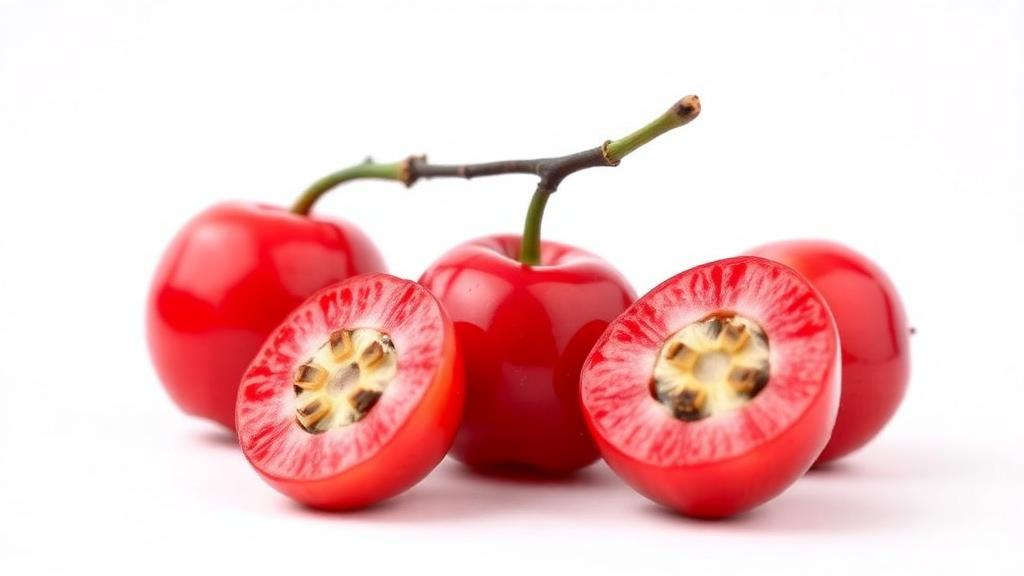
Few fruits inspire as much quiet devotion in China as the jujube, the russet-red drupe of Ziziphus jujuba that has been cultivated for thousands of years. Yet behind every satisfying snap of a fresh jujube or the dense chew of a dried one lies a biological program that scientists have only now begun to decode in detail. A new study published in Food Chemistry: X followed nine jujube varieties across their entire development and found that the fruit’s final texture is not set by any single property. Instead, it emerges from a precisely timed collaboration between the architecture of the fruit’s cells and the metabolism of its cell walls, with a narrow developmental window acting as the switch that sends each fruit down one of three very different sensory paths.
The research team, working at Tarim University’s jujube nursery in Xinjiang, began by sorting a large collection of germplasm into three textural categories using texture profile analysis and professional sensory panels: soft-fleshed, crisp-fleshed, and hard-fleshed types. Nine representative varieties were selected, three from each category, and all trees were ten years old, identically managed, and sampled at five time points spanning 50 to 110 days after full bloom. At each harvest, seventy fruits were collected from all sides of the canopy, then divided into groups for mechanical texture testing, biochemical assays, and microscopy. This design deliberately preserved the natural diversity within each textural class, which matters for breeders and food processors who deal with real-world variation rather than laboratory clones.
The texture measurements told a story of divergence that begins surprisingly early. By 50 days after full bloom, hard-fleshed fruits already outperformed the other types in hardness, gumminess, and chewiness, and these initial differences were maintained or amplified as development proceeded. After 80 days, hard-fleshed fruit hardness climbed by 3.16 to 10.57 percent relative to the 80-day baseline, while soft and crisp varieties generally softened. Adhesiveness rose gradually in all fruits, cohesiveness declined, and by the final harvest the three groups were statistically distinct. The authors emphasize that mature texture is built upon, and magnified from, disparities established at the young-fruit stage, meaning the die is cast long before harvest.
Microscopy revealed the structural logic behind these numbers. Scanning electron microscopy showed that soft-fleshed jujubes possess loosely arranged, heterogeneous flesh cells riddled with large intercellular cavities, while crisp-fleshed fruits display cells that have expanded dramatically and undergone localized collapse, producing irregular tissue. Hard-fleshed fruits, by contrast, maintain turgid, uniformly small, tightly packed cells with virtually no cavities at all. Transmission electron microscopy added finer detail: soft-fleshed fruits have thin middle lamellae, the pectin-rich glue between cells, whereas hard-fleshed fruits show intact walls and compact lamellae. The quantitative differences were striking. By 110 days, crisp-fleshed cell areas were 77 to 198 percent larger than those of hard-fleshed fruits, and the cellular cavity area of soft-fleshed fruits reached 1.91 to 4.48 times that of crisp types and up to 12.90 times that of hard-fleshed fruits.
Beneath the visible architecture, the cell wall itself was being rebuilt. The team tracked three pectin fractions, water-soluble, ionic-soluble, and chelator-soluble pectins, along with hemicellulose and cellulose. All pectin fractions rose through development and peaked near maturity, but the accumulation was especially pronounced in hard-fleshed fruits from around 80 days onward. At the final two harvests, hard-fleshed fruits carried significantly more cellulose than the other types. This matters because ionic and chelator-soluble pectins form calcium-bridged networks that hold neighboring cells together, while cellulose microfibrils provide tensile strength. A fruit that keeps depositing these structural polysaccharides faster than enzymes can dismantle it effectively armors itself against softening.
The enzymes that remodel this wall behaved in ways that overturned simple expectations. Polygalacturonase, beta-galactosidase, pectinmethylesterase, and cellulase are conventionally cast as softening agents, yet their correlation with texture flipped depending on fruit type. In crisp-fleshed jujubes, polygalacturonase and beta-galactosidase activities correlated positively with hardness, springiness, gumminess, and chewiness. The authors propose a mechanism of controlled and limited degradation: in crisp fruits, these enzymes selectively trim weakly cross-linked pectin domains, relieving wall tension enough to permit controlled cell expansion without collapsing the overall network. In hard-fleshed fruits, the dense calcium-bridged pectin shield apparently limits enzyme access, so polygalacturonase activity instead reflects turnover of a minor, non-structural pectin pool and correlates negatively with hardness, while beta-galactosidase may aid wall remodeling that stiffens rather than softens.
Principal component analysis pulled the whole dataset into a coherent framework. Three components explained 85.10 percent of total variance, with the first, dominated by hardness, gumminess, and chewiness, accounting for 48.50 percent alone and functioning as a clean fruit texture factor. The second component loaded on the four cell wall enzymes, and the third on acidity and specific wall materials including ionic-soluble pectin, chelator-soluble pectin, and cellulose. Each textural type occupied its own region of this space: hard-fleshed fruits scored high on the texture factor, crisp fruits on the enzyme factor, and soft fruits on the acidity-wall factor. Notably, one crisp accession, C-2, separated cleanly from its peers, combining extremely high enzyme activity with high hardness and springiness and minimal cell collapse, a paradox the authors attribute tentatively to possible cellulose crystallinity, pectin esterification status, or spatial separation of enzymes from their substrates, all hypotheses requiring direct testing.
The practical implications reach from orchard to factory floor. The study pins 80 to 90 days after full bloom as the critical initiating window when cellular divergence begins, even though full biochemical separation of the types does not crystallize until 100 to 110 days. After roughly 90 days, hard-fleshed fruits enter what the authors call a processing-tolerant phase, able to withstand mechanical washing, pitting, long-distance transport, and drying without shriveling. Soft-fleshed fruits, with their porous, cavity-rich tissue, are ideally suited to sugar-curing and to products like jujube paste, jujube powder, and infant foods, where easy crushing and a smooth mouthfeel are assets. Crisp-fleshed fruits, whose cells show sensitivity to physical compression, demand gentler packaging and logistics for the fresh market. The mealy soft subtype S-3, which pairs large cavities with relatively higher structural polysaccharides within its group, challenges the assumption that cavities inevitably mean collapse.
Perhaps the most forward-looking contribution is the suggestion that polygalacturonase and beta-galactosidase activity patterns could serve as type-specific biomarkers for breeding programs, accelerating marker-assisted selection of varieties tailored to drying, fresh consumption, or processing endpoints. The authors also point toward integrating these biochemical markers with non-destructive sorting technologies such as near-infrared spectroscopy or hyperspectral imaging, which could classify fruit texture in real time on packing lines and route each batch to its most profitable use. The researchers are careful to flag the limits of their work: the proposed causal chain from structural change to wall remodeling to final texture rests on correlative evidence, hormone signals such as ethylene and abscisic acid were not directly measured, and the fine chemistry of pectin esterification and calcium binding remains to be worked out. Even so, the study delivers something rare in fruit biology, a unified account of how one enzyme can soften one fruit and stiffen another, depending entirely on the cellular and biochemical context in which it acts.
Subject of Research: Cell wall metabolism and cellular structure regulating texture development in jujube fruit
Article Title: Cell wall metabolism and cellular structure synergistically regulate texture in jujube fruit: implications for quality classification and processing adaptability
Article References: Yan, M., Zhang, X., Lin, M., Shi, Q., Hao, Q., Li, X., Zhou, X., & Wu, C. (2026). Cell wall metabolism and cellular structure synergistically regulate texture in jujube fruit: implications for quality classification and processing adaptability. Food Chemistry: X, 39, Article 104536. https://doi.org/10.1016/j.fochx.2026.104536
Image Credits: AI Generated
DOI: 10.1016/j.fochx.2026.104536
Keywords: jujube, fruit texture, cell wall, pectin, cellulose, polygalacturonase, beta-galactosidase, food processing, postharvest, plant microscopy, principal component analysis, breeding
Cite Scienmag News
Bethany Barker. (October 6, 2026). Scientists Reveal the Hidden Cellular Clock That Decides Whether a Jujube Turns Crisp, Soft, or Hard. Scienmag. https://scienmag.com/scientists-reveal-the-hidden-cellular-clock-that-decides-whether-a-jujube-turns-crisp-soft-or-hard/
Bethany Barker. "Scientists Reveal the Hidden Cellular Clock That Decides Whether a Jujube Turns Crisp, Soft, or Hard." Scienmag, 6 October 2026, https://scienmag.com/scientists-reveal-the-hidden-cellular-clock-that-decides-whether-a-jujube-turns-crisp-soft-or-hard/. Accessed 6 October 2026.
Bethany Barker. "Scientists Reveal the Hidden Cellular Clock That Decides Whether a Jujube Turns Crisp, Soft, or Hard." Scienmag. October 6, 2026. https://scienmag.com/scientists-reveal-the-hidden-cellular-clock-that-decides-whether-a-jujube-turns-crisp-soft-or-hard/


