


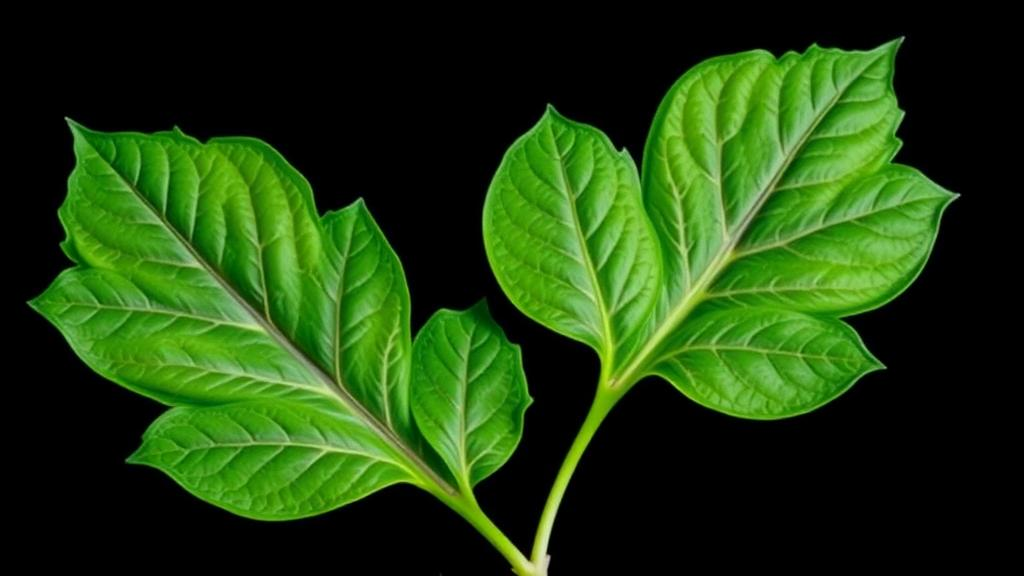
Two of the most familiar plants in tropical kitchens and traditional medicine cabinets, Indian borage and neem, are now the focus of a detailed laboratory investigation into how the chemistry of their leaves changes with the solvent used to extract it. A research team led by A. R. Khairunnisa-Yusra and S. Raseetha at Universiti Teknologi MARA, working with colleagues in Malaysia, New Zealand and Indonesia, has published a study in the journal Plant Biosystems showing that the choice between a water-rich and an alcohol-rich ethanol solution determines whether the resulting extract behaves primarily as an antioxidant or as an antimicrobial agent. The finding matters because it offers a simple, tunable dial for manufacturers who want plant-derived ingredients for food preservation, pharmaceuticals or cosmetics without resorting to synthetic additives.
Indian borage, known scientifically as Coleus amboinicus and sometimes called Mexican mint or country borage, is a fleshy-leaved herb in the mint family whose aroma comes from a dense payload of volatile compounds. Neem, Azadirachta indica, is a tree revered across South Asia for centuries of medicinal use, and its leaves contain a complex mixture of limonoids, flavonoids and other defensive chemicals. Both plants have long folk histories, but the research team set out to address a more modern problem: the limited availability of sustainable and efficient extraction methods that reliably deliver bioactive compounds from these leaves. Their approach was to characterise the extracts not just for the headline activities, but for the physicochemical fingerprints that explain them, including colour, chlorophyll content, functional groups and volatile profiles.
The experimental design hinged on a single variable with outsized consequences: solvent polarity. The researchers prepared ethanolic extracts of both leaves using two concentrations, 50 percent and 95 percent ethanol, the remainder being water. This seemingly small difference in the water-alcohol ratio changes which molecules the solvent can dissolve. Water-rich mixtures favour hydrophilic compounds such as phenolic acids and polar flavonoids, while nearly pure ethanol preferentially pulls out hydrophobic constituents such as terpenoids and lipophilic phenolics. By running both conditions side by side for both plants, the team could directly attribute differences in biological activity to the chemistry that each solvent mobilised, rather than to the plant species alone.
To measure antioxidant power, the team used the DPPH assay, a widely adopted test in which a stable purple free radical is decolourised when an antioxidant donates a hydrogen atom or electron. The results were striking for the 50 percent ethanol extracts, which achieved DPPH radical scavenging activity between 87 and 89 percent. That level of radical quenching indicates that the half-strength ethanol was highly effective at extracting hydrophilic antioxidants, the water-soluble phenolic compounds that plants deploy against oxidative stress. For food formulators, such extracts could serve as natural alternatives to synthetic antioxidants, which have faced increasing consumer scrutiny, in products where preventing lipid oxidation and colour degradation is the priority.
The antimicrobial story inverted that picture. When the 95 percent ethanol extracts were tested against common foodborne pathogens, they produced inhibition zones ranging from 1.06 to 1.52 centimetres, a measure of how far the antibacterial effect spread from a test well or disk in an agar plate assay. The team attributed this stronger antimicrobial performance to the extraction of hydrophobic bioactive compounds, which can integrate into and disrupt bacterial cell membranes. Pathogens of this kind include organisms responsible for food spoilage and foodborne illness, so an extract that suppresses their growth could extend shelf life or improve safety. The practical implication is that a manufacturer seeking an antimicrobial ingredient should reach for the stronger ethanol, while one seeking an antioxidant should choose the weaker one.
Beyond activity assays, the study built a detailed physicochemical portrait of each extract. Colour was quantified with a Chromameter CR-400, an instrument that converts visual appearance into objective numerical values, an important step for any ingredient destined for food or cosmetics where appearance drives consumer acceptance. Chlorophyll-a, chlorophyll-b and total chlorophyll were measured spectrophotometrically, exploiting the characteristic wavelengths at which these pigments absorb light. Chlorophyll is not merely a marker of plant material; its degradation products and associated compounds such as phytol have drawn scientific interest in their own right, and pigment content influences both the colour stability and the potential bioactivity of a leaf extract during storage and processing.
Functional group analysis was carried out with Fourier-transform infrared spectroscopy, or FT-IR, a technique that shines broadband infrared light through a sample and records which frequencies are absorbed. Each absorption band corresponds to a specific molecular bond, such as the stretches of hydroxyl groups in phenolics, carbonyl groups in acids and esters, or carbon-hydrogen bonds in lipids and terpenes. By comparing the spectra of the 50 percent and 95 percent ethanol extracts, the researchers could confirm at the molecular level that the two solvents had indeed pulled out chemically distinct suites of compounds, providing a mechanistic underpinning for the divergent antioxidant and antimicrobial results.
The most granular layer of characterisation came from gas chromatography-mass spectrometry, or GC-MS, which separates volatile compounds in a heated column and then identifies each one by the characteristic fragmentation pattern it produces when bombarded with electrons. This technique is ideally suited to plants like Indian borage, whose aromatic identity is defined by volatile terpenes, and to neem, whose leaf chemistry includes an array of volatile and semi-volatile constituents. The volatile profiles documented in the study help explain both the traditional sensory appeal of these plants and the biological activities observed, since many terpenoids are known to contribute to both antioxidant defences and membrane-disrupting antimicrobial action.
The broader significance of the work lies in its framing of solvent polarity and processing methods as design levers rather than fixed choices. Instead of asking simply whether a plant extract is active, the study demonstrates that the same leaf can yield two functionally different ingredients depending on a single processing parameter that is cheap and easy to control industrially. That flexibility is valuable for the growing market for clean-label preservatives and bioactive ingredients, where producers want predictable performance. It also supports sustainability goals: leaves of widely cultivated, fast-growing plants can be valorised as sources of high-value compounds, reducing reliance on synthetic antioxidants and antimicrobials derived from petrochemical feedstocks.
The authors, whose collaboration spanned the Faculty of Applied Sciences and Faculty of Health Sciences at Universiti Teknologi MARA, Auckland University of Technology in New Zealand, and Universitas Brawijaya in Indonesia, emphasise the potential of Coleus amboinicus and Azadirachta indica as sustainable sources of antioxidants and antimicrobials for applications spanning food, pharmaceuticals and cosmetic products. As with any laboratory study, the path from inhibition zones and spectrophotometer readings to commercial products will require further work on safety, dosage, stability and sensory impact in real formulations. But the core message is already clear and actionable: when it comes to extracting useful chemistry from these two familiar leaves, the solvent is not just a medium, it is the recipe.
Subject of Research: Solvent-dependent antioxidant and antimicrobial activities of ethanolic leaf extracts from Indian borage and neem
Article Title: Antioxidant and antimicrobial activities of Indian borage leaves (Coleus amboinicus, Lamiaceae) and neem leaves (Azadirachta indica, Meliaceae) ethanolic extracts
Article References: Khairunnisa-Yusra, A. R., Wan-Razarinah, W. A. R., Aida, F. M. N. A., Dasiman, R., Hamid, N., Huda, N., Murtini, E. S., & Raseetha, S. (2026). Antioxidant and antimicrobial activities of Indian borage leaves (Coleus amboinicus, Lamiaceae) and neem leaves (Azadirachta indica, Meliaceae) ethanolic extracts. Plant Biosystems, 160(5), Article 277. https://doi.org/10.1007/s44473-026-00272-9
Image Credits: AI Generated
DOI: 10.1007/s44473-026-00272-9
Keywords: Indian borage, neem, Coleus amboinicus, Azadirachta indica, ethanolic extraction, antioxidant activity, antimicrobial activity, DPPH assay, GC-MS, FT-IR, chlorophyll, natural preservatives
Cite Scienmag News
Alan Morgan. (October 6, 2026). Two Kitchen-Garden Leaves Show Powerful Antioxidant and Germ-Killing Potential. Scienmag. https://scienmag.com/two-kitchen-garden-leaves-show-powerful-antioxidant-and-germ-killing-potential/
Alan Morgan. "Two Kitchen-Garden Leaves Show Powerful Antioxidant and Germ-Killing Potential." Scienmag, 6 October 2026, https://scienmag.com/two-kitchen-garden-leaves-show-powerful-antioxidant-and-germ-killing-potential/. Accessed 6 October 2026.
Alan Morgan. "Two Kitchen-Garden Leaves Show Powerful Antioxidant and Germ-Killing Potential." Scienmag. October 6, 2026. https://scienmag.com/two-kitchen-garden-leaves-show-powerful-antioxidant-and-germ-killing-potential/


