


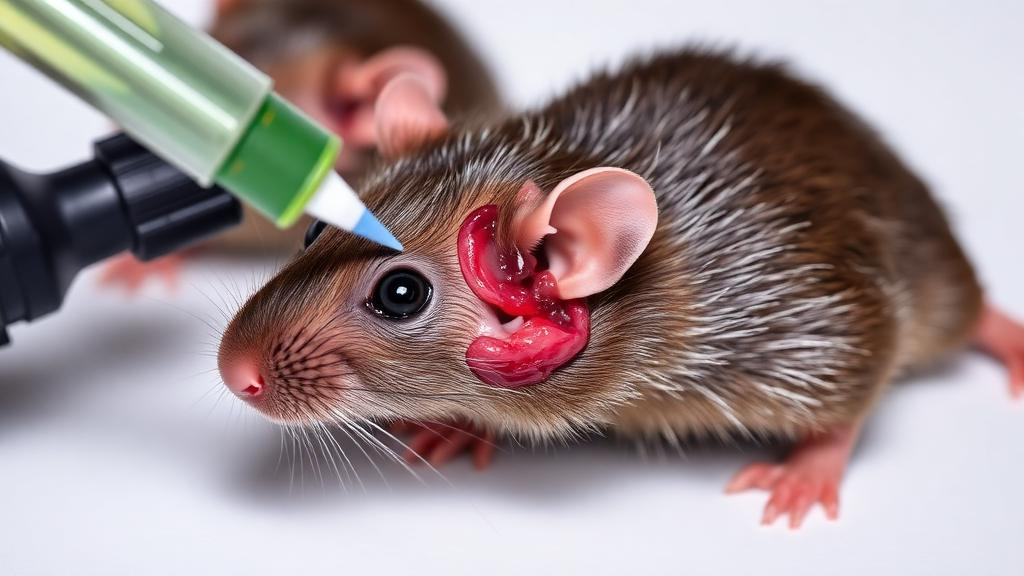
Traumatic brain injury kills or disables millions of people every year, and the deadliest damage often begins after the initial blow. A new study published in Materials Today Bio reports that a biodegradable sponge, placed directly into the wound cavity and loaded with cannabidiol, the non-psychoactive compound from cannabis, kept brain swelling and inflammation in check in rats for at least two days after injury. The work, led by researchers at Kunming Medical University, offers a fresh answer to one of neurotrauma’s most stubborn delivery problems: how to get a fat-loving, poorly absorbed drug to stay where it is needed, at the injured cortex, during the narrow window in which secondary injury cascades decide a patient’s fate.
The scale of the problem is enormous. Roughly 50 million people sustain traumatic brain injuries annually, and the global economic burden exceeds 400 billion US dollars. Surgeons can relieve pressure and clinicians can manage symptoms with osmotic agents, diuretics, and glucocorticoids, but none of these supports repair of the injured tissue. The real killers are the secondary cascades that unfold over hours to days: rising intracranial pressure, cerebral edema, breakdown of the blood-brain barrier, ischemia, redox imbalance, and a self-reinforcing wave of neuroinflammation. Edema and inflammation feed each other. A leaky barrier lets immune cells and plasma flood into brain tissue, swelling activates resident microglia, and the inflammatory signals they release further destabilize the endothelial tight junctions that hold the barrier together. Breaking that loop is a central therapeutic goal.
Cannabidiol, or CBD, has long been an attractive candidate for exactly this job. It is anti-inflammatory, antioxidant, and non-intoxicating, and the team’s earlier work showed that CBD restores blood-brain barrier integrity after brain injury through the PGE2-EP2-cAMP pathway while also damping microglial activation. The obstacle has always been delivery. Because CBD is highly lipophilic, intraperitoneal injection sends much of the drug into adipose tissue rather than the brain. Oral dosing loses more than 70 percent of the compound to first-pass metabolism in the liver. Intravenous injection achieves full bioavailability but suffers from a short half-life and demands professional administration, an awkward constraint in acute care. None of the conventional routes keeps therapeutic levels of CBD parked at a contused cortex for the critical first days.
The researchers’ solution was a sponge made of gelatin methacryloyl, or GelMA, a photocrosslinkable hydrogel already used in drug delivery, ophthalmic therapy, and cardiac repair. The team synthesized GelMA by reacting gelatin with methacrylic anhydride, confirmed the modification with proton nuclear magnetic resonance spectroscopy and infrared spectroscopy, and screened twelve candidate formulations by varying the gelatin-to-anhydride ratio and ultraviolet crosslinking time. They judged each variant on swelling behavior, mass loss in simulated body fluid, and microstructure imaged by scanning electron microscopy. The winning formulation swelled only modestly, between 13 and 25 percent, retained a porous interconnected architecture, and fully degraded within five days under the tested conditions, a profile suited to a temporary implant that releases drug and then disappears.
Loading the sponge with CBD changed none of those material properties. Infrared spectra of the finished product showed the hydroxyl and aliphatic carbon-hydrogen stretching peaks characteristic of cannabidiol, while swelling and degradation curves remained essentially identical to the blank scaffold. Ultraperformance liquid chromatography measured encapsulation efficiencies between roughly 50 and 63 percent, with batch-to-batch variation below 3 percent and, remarkably, center-to-periphery drug ratios of almost exactly one, meaning the CBD was distributed evenly through each sponge. In a release assay, about 22 percent of the payload emerged in the first two hours, followed by a steady trickle that reached roughly 58 percent at 24 hours and 80 percent by 72 hours, precisely the sustained profile the early post-injury phase demands.
Safety testing came next, and it was thorough. Extracts of the sponge were applied to hippocampal neurons, astrocytes, and brain endothelial cells; viability remained high up to 5 micrograms per milliliter, defining a safe exposure window, while hemolysis assays with rat red blood cells showed rates below 5 percent. The team then implanted the sponges into rats subjected to a standardized weight-drop cortical contusion and tracked CBD with high-resolution liquid chromatography mass spectrometry. The pharmacokinetic contrast with conventional dosing was striking. After intraperitoneal injection, CBD in the injured cortex peaked at about 91 nanograms per gram and faded quickly. With the sponge, cortical concentrations reached about 251 nanograms per gram and remained detectable for the entire 48-hour observation window, while blood levels stayed low, an inversion of exposure that concentrates the drug at the lesion and spares the rest of the body. Serum chemistry and organ histology showed no treatment-related abnormalities.
The therapeutic results followed. Forty-eight hours after injury, rats receiving the medium and high doses of the CBD sponge scored significantly better on a standardized neurological deficit scale, traveled farther in open-field tests, and explored the open arms of an elevated plus maze more readily than injured controls, with mannitol and injected CBD providing comparable but generally weaker benefits. Under the microscope, the treated cortex retained orderly neuronal architecture and intact Nissl bodies, showed fewer TUNEL-positive apoptotic cells, and released lower levels of neuron-specific enolase and S-100 calcium-binding protein beta, two canonical markers of neural damage. The blank sponge alone conferred little benefit, indicating that sustained CBD release, not the scaffold itself, drove the protection.
Mechanistically, the study points to the blood-brain barrier and the water channel aquaporin-4. Treated rats had less brain water content and far less Evans blue dye leaking across the barrier, alongside restored expression of the tight junction proteins ZO-1, occludin, and claudin-5. Molecular docking predicted that CBD binds aquaporin-4 with a binding energy of minus 6.7 kilocalories per mole, and surface plasmon resonance confirmed a measurable micromolar interaction with a dissociation constant of 56.6 micromolar. After injury, aquaporin-4 shifted away from vascular endothelial structures and toward reactive, GFAP-positive astrocytes; the sponge reversed that redistribution, reduced astrocytic overactivation, and preserved endothelial markers. On the inflammatory front, the treatment lowered interleukin-6, interleukin-1 beta, and tumor necrosis factor-alpha, raised the anti-inflammatory interleukin-10, and calmed Iba-1-stained microglia. RNA sequencing of the injured cortex identified nearly 800 differentially expressed genes and pointed to dampened NF-kappaB and TNF signaling alongside enhanced PI3K-Akt survival signaling, changes the authors confirmed by Western blot and quantitative PCR.
The authors are careful about the limits of their work. The study captured only the acute, two-day phase, leaving long-term cognitive and behavioral recovery untested, and the local and injected CBD regimens were not matched for dose or exposure, so some benefits may reflect the delivery platform rather than the drug alone. No formal power calculation was performed, and the transcriptomic analysis omitted the blank-sponge and injected-CBD groups. Even so, the concept is compelling: a cheap, photocrosslinkable gelatin sponge that turns a one-shot drug depot into a 48-hour local infusion, right where edema and inflammation are born. If future studies with exposure-matched controls and longer follow-up bear out these results, the humble gelatin sponge could become a serious contender in the long-delayed search for the first true neuroprotective therapy for traumatic brain injury.
Subject of Research: Local delivery of cannabidiol using a GelMA hydrogel sponge to treat cerebral edema and neuroinflammation after traumatic brain injury
Article Title: In situ delivery of cannabidiol-loaded GelMA sponge attenuates cerebral edema and neuroinflammation in traumatic brain injury
Article References: Li, H., Luo, X., Cao, Y., Jiang, H., Guo, Z., Zhu, Y., Zhang, L., Li, Z., Li, J., Wu, H., & Li, P. (2026). In situ delivery of cannabidiol-loaded GelMA sponge attenuates cerebral edema and neuroinflammation in traumatic brain injury. Materials Today Bio, 41, Article 103721. https://doi.org/10.1016/j.mtbio.2026.103721
Image Credits: AI Generated
DOI: 10.1016/j.mtbio.2026.103721
Keywords: traumatic brain injury, cannabidiol, GelMA hydrogel, drug delivery, cerebral edema, blood-brain barrier, neuroinflammation, aquaporin-4, microglia, NF-kappaB signaling, biomaterials, rat model
Cite Scienmag News
Cassandra Pierce. (October 6, 2026). Cannabidiol Sponge Implanted at Injury Site Cuts Brain Swelling After Trauma in Rats. Scienmag. https://scienmag.com/cannabidiol-sponge-implanted-at-injury-site-cuts-brain-swelling-after-trauma-in-rats/
Cassandra Pierce. "Cannabidiol Sponge Implanted at Injury Site Cuts Brain Swelling After Trauma in Rats." Scienmag, 6 October 2026, https://scienmag.com/cannabidiol-sponge-implanted-at-injury-site-cuts-brain-swelling-after-trauma-in-rats/. Accessed 6 October 2026.
Cassandra Pierce. "Cannabidiol Sponge Implanted at Injury Site Cuts Brain Swelling After Trauma in Rats." Scienmag. October 6, 2026. https://scienmag.com/cannabidiol-sponge-implanted-at-injury-site-cuts-brain-swelling-after-trauma-in-rats/


