


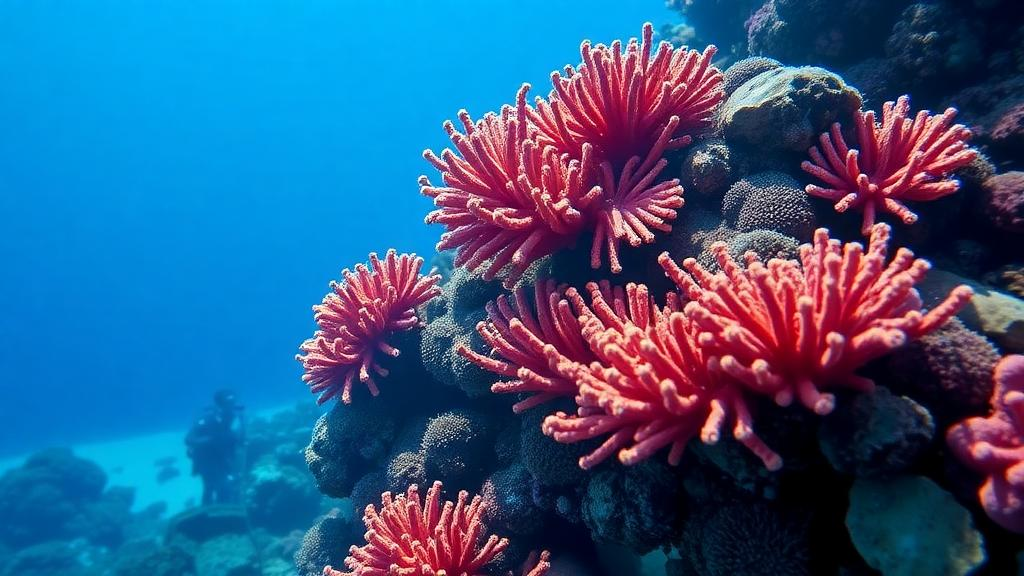
For the first time, scientists have shown that microbial therapy can rescue corals suffering from heat stress not in the controlled comfort of an aquarium, but in the open ocean during a real marine heatwave. In a study published in the Cell Press journal Cell Reports on September 3, a research team led by investigators at the King Abdullah University of Science and Technology in Saudi Arabia demonstrated that both live probiotic treatments and inactivated postbiotic formulations significantly improved the health of corals exposed to sustained high seawater temperatures in the central Red Sea. The finding marks a pivotal step forward for a field that has long struggled to translate promising laboratory results into meaningful conservation outcomes on natural reefs, and it opens what the researchers describe as an entirely new avenue for coral microbial therapies.
The urgency behind this work is difficult to overstate. Coral reefs support at least a quarter of all marine life, yet they remain among the ecosystems most imperiled by climate change. As ocean temperatures climb, corals increasingly experience thermal stress that disrupts the delicate symbiosis between the coral animal and the photosynthetic algae living inside its tissues. When this partnership breaks down, the corals expel their algae and turn ghostly white in the process known as bleaching, a visible signal of severe physiological distress that can lead to starvation and death if conditions do not improve. Co-lead author Erika Santoro, a postdoctoral fellow at King Abdullah University of Science and Technology, framed the motivation plainly: the team wants a future with coral reefs in it, and that requires urgently understanding both the natural mechanisms that allow some corals to tolerate heat and how those mechanisms can be safely enhanced.
Corals are not solitary animals but hosts to complex communities of beneficial bacteria, including types that help them adapt to their environment. This insight underpins the emerging discipline of coral microbial therapy, which aims to restore not just the coral animals themselves but also the microbiomes they sustain. Probiotics, in this context, are groups of living microbes obtained from healthy corals that may be applied to stressed corals to bolster their resilience. Previous aquarium experiments had shown that such probiotics could rehabilitate corals, but demonstrating efficacy in the ocean has proven notoriously difficult. Field conditions introduce currents, natural microbial competition, fluctuating temperatures, and countless variables that cannot be controlled the way they are in a tank, which is why many promising interventions fail to survive the transition from laboratory to reef.
A particularly innovative element of the new study was its focus on postbiotics, which are inactivated probiotics and, or their bioactive components. Rather than administering living bacteria, the researchers tested whether dead microbial cells and their constituent molecules could deliver similar benefits. The possibility of using postbiotics is especially exciting when thinking about scaling microbial therapies across entire reef systems, Santoro noted. Inactivated microbial formulations could potentially offer practical advantages that live preparations cannot match, including longer shelf life, easier storage and transportation, and reduced production costs. For any intervention that might one day be deployed across vast and often remote reef tracts, these logistical considerations could determine whether microbial therapy remains a laboratory curiosity or becomes a genuine tool for reef managers.
The experiment itself was ambitious in design and demanding in execution. Santoro and colleagues worked with Acropora cf. valida, a branching coral species, in the central Red Sea during a summer 2022 heatwave. Throughout the fifteen-day field experiment, daily average seawater temperatures ranged from 87.6 to 89.5 degrees Fahrenheit, equivalent to 30.9 to 31.9 degrees Celsius, conditions well within the range that induces thermal stress in corals. The team had previously isolated beneficial bacterial strains from Red Sea corals and used these isolates to concoct two distinct probiotic treatments, along with postbiotic counterparts derived from each. Treating corals in situ, while a natural heatwave pushed temperatures upward, provided the most realistic possible test of whether microbial therapy could function under the very conditions it is meant to counter.
Measuring coral health in the field requires careful and objective indicators, and the researchers relied on two complementary metrics. The first was coloration: white or bleached hues indicate poor health, because they reflect the loss of the pigmented symbiotic algae that give healthy corals their color and supply most of their energy. The second was the photosynthetic efficiency of the algae living within the coral tissues, a physiological measure that reveals how well the symbionts are performing under stress. After fifteen days of treatment, the results were unambiguous. One of the two probiotic formulas and one of the two postbiotic formulas had significantly improved coral health compared with untreated corals, demonstrating for the first time in a natural setting that both living and inactivated microbial interventions can deliver measurable benefits during an actual thermal stress event.
Santoro admitted to genuine surprise that the innovative approach worked under field conditions, noting that the most exciting takeaway is that the study opens a new avenue for coral microbial therapies. That surprise is understandable given the odds stacked against in situ experiments. The treated corals were subject to the full force of the heatwave, exposed to the ambient microbial community of the Red Sea, and unable to receive any of the careful acclimation that aquarium subjects enjoy. Yet the microbial treatments nonetheless shifted the trajectory of coral health in a measurable way, suggesting that the beneficial bacteria and their components can establish themselves and exert their effects even amid the ecological noise of a real reef environment.
To understand how the treatments worked, the researchers ran genetic and metabolic tests on the treated corals, and these analyses revealed that the probiotic and postbiotic therapies had restructured the corals’ microbial and metabolic profiles in different ways. In other words, living microbes and inactivated microbial components did not act identically, even though both improved health outcomes. Notably, corals that received the postbiotic treatment showed an increase in strains of Cobetia, a genus of bacteria known to help corals tolerate heat stress. This finding hints that the bioactive molecules in the postbiotic formulation may have favored the proliferation of naturally heat-protective bacterial residents already present in the reef environment, effectively recruiting the coral’s own microbial community into the defense effort. More research is needed to understand the mechanisms behind the treatments’ success, Santoro emphasized, especially for postbiotics, whose mode of action remains less well characterized than that of live probiotics.
The implications extend well beyond a single species in a single sea. If inactivated microbial formulations can improve coral health during heatwaves, reef restoration programs could eventually deploy shelf-stable treatments without the cold chains, culturing facilities, and strict biosafety handling that live bacterial preparations demand. Combined with genetic and metabolic monitoring, microbial therapy could become a targeted complement to conventional restoration methods such as coral gardening and assisted gene flow. The researchers are careful, however, to position the approach correctly within the broader conservation landscape. They see probiotics and postbiotics as additional tools that could help improve coral resilience and support restoration efforts, while broader actions address the causes of climate change. Microbial therapy cannot substitute for emissions reductions; it can only buy time and bolster the odds for reefs already facing temperatures their evolutionary history never prepared them for.
The study, titled Probiotic and postbiotic treatment in situ during a marine heat wave improves coral health and promotes specific metabolic and microbiome changes, was supported by the King Abdullah University of Science and Technology and the Ocean Science and Solutions Applied Research Institute within the Education, Research, and Innovation Sector of NEOM in Tabuk, Saudi Arabia. As marine heatwaves grow longer and more frequent across the tropics, the demonstration that a fifteen-day microbial intervention can measurably improve coral survival prospects in the wild offers a rare piece of good news for the world’s reefs. The next challenge will be understanding exactly how these treatments confer their benefits, refining the formulations, and testing them across species, reefs, and seasons, so that the promise first realized in the warm waters of the Red Sea can one day be extended to threatened reef systems around the globe.
Subject of Research: Probiotic and postbiotic microbial therapies for improving coral health during marine heatwaves
Article Title: Probiotic and postbiotic treatments revive heat-stressed corals
Article References: Probiotic and postbiotic treatments revive heat-stressed corals. (n.d.). Original publication
Image Credits: AI Generated
DOI: Not provided
Keywords: coral reefs, probiotics, postbiotics, marine heatwave, coral bleaching, microbiome, Red Sea, thermal stress, Cobetia, microbial therapy, reef restoration, Cell Reports
Cite Scienmag News
Morgan Morrow. (October 5, 2026). Microbial Therapy Comes of Age as Probiotics and Postbiotics Rescue Heat-Stressed Corals at Sea. Scienmag. https://scienmag.com/microbial-therapy-comes-of-age-as-probiotics-and-postbiotics-rescue-heat-stressed-corals-at-sea/
Morgan Morrow. "Microbial Therapy Comes of Age as Probiotics and Postbiotics Rescue Heat-Stressed Corals at Sea." Scienmag, 5 October 2026, https://scienmag.com/microbial-therapy-comes-of-age-as-probiotics-and-postbiotics-rescue-heat-stressed-corals-at-sea/. Accessed 5 October 2026.
Morgan Morrow. "Microbial Therapy Comes of Age as Probiotics and Postbiotics Rescue Heat-Stressed Corals at Sea." Scienmag. October 5, 2026. https://scienmag.com/microbial-therapy-comes-of-age-as-probiotics-and-postbiotics-rescue-heat-stressed-corals-at-sea/


